中国科技论文统计源期刊 中文核心期刊
美国《化学文摘》《国际药学文摘》
《乌利希期刊指南》
WHO《西太平洋地区医学索引》来源期刊
日本科学技术振兴机构数据库(JST)
第七届湖北十大名刊提名奖
美国《化学文摘》《国际药学文摘》
《乌利希期刊指南》
WHO《西太平洋地区医学索引》来源期刊
日本科学技术振兴机构数据库(JST)
第七届湖北十大名刊提名奖


 , 伍三兰
, WU Sanlan
, 伍三兰
, WU Sanlan
作者简介 王文茜(1990-),女,湖北汉川人,药师,学士,研究方向:临床药学。电话:0712-8377230,E-mail:

目的 了解艾司西酞普兰不良反应发生情况及注意事项。方法 计算机检索万方数据库、中国知网、Pubmed数据库有关艾司西酞普兰不良反应,重点分析发生不良反应的患者性别、年龄、临床表现、累及系统等。结果 收集文献31篇,共纳入患者31例,艾司西酞普兰不良反应发生男女比例相当,不良反应发生在用药后几小时至6个月,累及器官系统较多,包括神经系统、循环系统、内分泌系统、消化系统、生殖系统、运动系统等。结论 艾司西酞普兰使用应遵医嘱,不宜随意加量,定期监测不良反应,确保临床合理用药。
Objective To investigate the adverse drug reactions (ADRs) induced by escitalopram and precautions. Methods
抑郁症是一种以显著而持久的心境低落为主要特征的综合征,在我国抑郁症发病率高,具有复发率高、致残率高、致死率高的特点,严重影响患者生活质量。目前,治疗抑郁症的药物主要有传统抗抑郁症药和新型选择性5-羟色胺(5-HT)再摄取抑制药(SSRIs)两大类;SSRIs类抗抑郁症药主要包括舍曲林、帕罗西汀、氟西汀、氟伏沙明、西酞普兰等[1]。艾司西酞普兰属于高选择性的SSRIs,于2002年1月在瑞典上市。它是西酞普兰的
采用计算机分别以“艾司西酞普兰”“来士普”“Escitalopram”“不良反应”“adverse reaction”“case report”为主题词,检索万方数据库、中国知网、Pubmed数据库,收集国内外医药期刊上关于艾司西酞普兰的ADR报道,检索时间截至2016年7月,剔除综述类,以个案报道为主,排除使用量超过正常使用剂量者,排除信息收录不详的报道,排除文献中未说明和未验证到可能是由艾司西酞普兰引起的,共收集到艾司西酞普兰ADR文献31篇,共31例。
阅读纳入文献,用Excel软件建立数据表,记录参考文献、累及器官系统、临床表现、出现时间、 治疗措施与转归情况以及年龄、性别、用量用法等有效信息,逐一输入数据,然后进行统计分析,并依据“Naranjo ADR Probability Sacle”依次对报道的案例进行关联性评价,≥9分:高度可能有关;5~8分:很可能有关;1~4分:可能有关;≤ 0分:可疑。
共检索到关于艾司西酞普兰不良反应报道31篇[3,4,5,6,7,8,9,10,11,12,13,14,15,16,17,18,19,20,21,22,23,24,25,26,27,28,29,30,31,32,33],其中中文文献3篇,英文文献28篇,发表时间范围2004—2016年。收集病例31例,其中男14例(45.2%),女17例(54.8%),年龄9~83岁,平均(45.4±16.0)岁,其中>65岁者5例(16.1%)。具体情况见
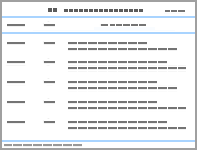
| 年龄/岁 | 男 | 女 | 构成比/% | |
|---|---|---|---|---|
| 例 | ||||
| <20 | 2 | 2 | 12.9 | |
| 20~40 | 5 | 5 | 32.3 | |
| >40~65 | 5 | 7 | 38.7 | |
| >65 | 2 | 3 | 16.1 | |
| 合计 | 14 | 17 | 100.0 | |
表1 艾司西酞普兰ADR的年龄段分布情况
Tab.1 Age distribution of escitalopram ADR
从发生时间来看,艾司西酞普兰引发ADR多发生在1周以上,提示该药在临床使用过程中容易发生迟发型ADR,发生不良反应最快在使用几小时后即出现,最迟在用药6个月后出现。
艾司西酞普兰用药剂量均为5~20 mg·d-1,有9例患者在小剂量治疗抑郁症后效果不明显,将药物剂量增加后出现不良反应,表明艾司西酞普兰的ADR可能呈剂量相关性,特别是1例鼻出血 [25],患者将艾司西酞普兰增至20 mg·d-1后出现,后将剂量调整为15 mg·d-1,患者未再出现相关不良反应。艾司西酞普兰的ADR在患者中个体差异大,不良反应发生情况各有轻重。见
31例患者均给予对症处理治疗,29例ADR在判断可能与艾司西酞普兰有关后均立即停用,1例逐渐减量停用,1例减少剂量继续使用。虽然部分不良反应较为严重,但患者症状在停药及对症处理后均好转,预后良好,未导致残疾或死亡等严重不良反应,患者症状缓解时间,最短2 d即缓解,最长持续20周。见
31例报道中,高度可能有关2例(6.5%),很可能有关10例(32.3%),可能有关19例(61.3%),可疑0例(0%),其中1例不宁腿综合征[3]与1例脱发[28]患者停药后症状缓解,重复用药后ADR重复出现,再次停用后再次好转,判定为高度可能相关。见
| 累及器官 系统 |
例次 | % | 主要临床表现 | 治疗 | 转归 | 治疗 时间 |
出现 时间 |
关联性 评价 |
|||||||
|---|---|---|---|---|---|---|---|---|---|---|---|---|---|---|---|
| 神经系统[ |
7 | 22.6 | 严重不宁腿综合征 | 停药 | 改善 | 2 d | 2 d | 高度可能 | |||||||
| 躁狂、多语、多动、失眠、唱歌、跳舞 | 停用艾司西酞普兰,肌内注射奥氮平 | 好转 | 7 d | 7 d | 很可能 | ||||||||||
| 10 mg·d-1 | |||||||||||||||
| 看见不存在的陌生人并与其讲话 | 1周内逐渐将艾司西酞普兰由10 mg·d-1减为 | 好转 | 1个月 | 3 d | 可能 | ||||||||||
| 5 mg·d-1,2周后停用 | |||||||||||||||
| 静坐不能 | 停药3 d未缓解后,使用地西泮5 mg·d-1 | 缓解 | 2 d | 2 d | 可能 | ||||||||||
| 静坐不能,躁动不安 | 停药,口服普萘洛尔+氯硝西泮 | 好转 | 3周 | 2周 | 很可能 | ||||||||||
| 震颤、僵直、运动缓慢、小步行走、言语障碍 | 肌内注射双环哌丙醇5 mg,停药 | 好转 | 2周 | 2周 | 很可能 | ||||||||||
| 吐词不清,流涎,少动,眼球转动 | 肌内注射异丙嗪25 mg,停药,改用阿米替林 | 好转 | 不详 | 3 h | 很可能 | ||||||||||
| 25 mg·d-1 | |||||||||||||||
| 循环系统[ |
6 | 19.4 | 轻度头痛,恶心,疲劳,口干和腹部不适,血 | 停药,静脉使用0.9%氯化钠溶液 | 好转 | 3周 | 2周 | 可能 | |||||||
| 清Na+110 mmol·L-1,尿Na+53 mmol·L-1 | |||||||||||||||
| 血清Na+ 116 mmol·L-1,尿Na+106 mmol·L-1 | 停药,对症处理 | 恢复正常 | 6 d | 6 d | 可能 | ||||||||||
| 昏睡,深部腱反射减退,右侧Babinski征阳性, | 静脉滴注3%氯化钠溶液,停药 | 好转 | 4周 | 4周 | 可能 | ||||||||||
| 血清Na+113 mmol·L-1 | |||||||||||||||
| 严重头痛、头晕,血压180/110 mmHg | 停药,口服降压药,改用舍曲林50 mg·d-1 | 痊愈 | 1周 | 1周 | 可能 | ||||||||||
| 心率103次·min-1,QTc 503 ms | 采取电休克疗法,停药 | 好转 | 7 d | 2 d | 可能 | ||||||||||
| 血常规:Hb137 g·L-1,WBC 8.4×10⁹·L-1, | 停药,地塞米松静脉滴注 | 好转 | 14 d | 6 d | 可能 | ||||||||||
| RBC 4.82×10¹²·L-1,PLT 28×109·L-1 | |||||||||||||||
| 运动系统[ |
3 | 9.7 | 横纹肌溶解 | 停药,对症处理 | 好转 | 11 d | 12 d | 可能 | |||||||
| 两侧股四头肌疼痛,腹痛,CPK 1245 U·L-1 | 停药,对症处理 | 恢复 | 3个月 | 3个月 | 可能 | ||||||||||
| 脖子进行性僵硬,疼痛 | 静注苯海拉明,停药 | 好转 | 不详 | 11周 | 可能 | ||||||||||
| 内分泌系统[ |
3 | 9.7 | 血清TSH 209.61 μU·mL-1,T4 85 μg·L-1, | 停药,左甲状腺素的剂量由125 μg·d-1调至 | 好转 | 82 d | 78 d | 很可能 | |||||||
| T3 10.2 ng·L-1 | 150 μg·d-1 | ||||||||||||||
| 血清TSH 9.2 mU·L-1,FT3 3.4 pg·mL-1, | 停药,左甲状腺素替代治疗 | 恢复 | 6个月 | 6个月 | 可能 | ||||||||||
| FT4 13 ng·L-1 | |||||||||||||||
| 空腹血糖升高到2 690 mg·L-1 | 格列本脲剂量由7.5 mg·d-1调至15 mg·d-1, | 好转 | 17 d | 5 d | 很可能 | ||||||||||
| 停药 | |||||||||||||||
| 消化系统[ |
2 | 6.5 | 皮疹瘙痒,乏力,尿黄、黄疸,肝功能检查: | 停药,对症治疗 | 恢复正常 | 8周 | 7周 | 可能 | |||||||
| AST 10 650 U·L-1,ALT 24 000 U·L-1, | |||||||||||||||
| GGT 2 240 U·L-1 | |||||||||||||||
| 肝功能:ALT 3257 U·L-1,白蛋白37 g·L-1, | 停药,静脉滴注还原型谷胱甘肽+腺苷蛋氨酸+ | 好转 | 2个月 | 1个月 | 很可能 | ||||||||||
| T-BiL37.7 μmol·L-1,D-BiL21.3 μmol·L-1, | 复方甘草酸苷+多烯磷脂酰胆碱 | ||||||||||||||
| 血氨51.3 μmol·L-1 | |||||||||||||||
| 生殖系统[ |
3 | 9.7 | 勃起功能障碍,自发射精 | 停药,改用氟伏沙明 | 好转 | 4周 | 1周 | 可能 | |||||||
| 乳房胀痛、溢乳 | 停药,改用阿米替林 | 好转 | 5周 | 5周 | 很可能 | ||||||||||
| 溢乳 | 停药 | 好转 | 1个月 | 1个月 | 可能 | ||||||||||
| 泌尿系统[ |
1 | 3.2 | 排尿困难,尿潴留,残余尿量239 mL | 停药,改用阿米替林10 mg·d-1 | 恢复 | 9 d | 4 d | 很可能 | |||||||
| 呼吸系统[ |
1 | 3.2 | 鼻出血 | 药物减量为15 mg·d-1 | 好转 | 2个月1周 | 2个月 | 很可能 | |||||||
| 消化系统[ |
1 | 3.2 | 双侧脚大拇趾指甲盖下出血,每次大便有血 | 停药,改服氟伏沙明 | 好转 | 4周 | 2个月 | 可能 | |||||||
| 其他[ |
4 | 12.9 | 视力模糊,眼科检查显示双眼矫正视力为20— | 局部给予噻吗洛尔,多佐胺,溴莫尼定,醋酸泼 | 改善 | 4周 | 几小时 | 可能 | |||||||
| 40,两侧眼内压分别为5.320和5.985 kPa,脉络 | 尼松,口服乙酰唑胺,泼尼松1 mg·kg-1,停药 | ||||||||||||||
| 膜积液 | |||||||||||||||
| 纵火癖 | 停药 | 好转 | 1个月2周 | 10 d | 可能 | ||||||||||
| 脱发,再次使用后再次出现脱发现象 | 停药 | 好转 | 3个月 | 3周 | 高度可能 | ||||||||||
| 发音困难 | 停药,改用安非他酮150 mg·d-1 | 改善 | 12周 | 8周 | 可能 | ||||||||||
Hb:hemoglobin;WBC:white blood cell;RBC:red blood cell;PLT :platelet;CPK:phosphocreatine kinase;T4:thyroxine;T3:triiodothyronine;FT3:free triiodothyronine;FT4:free thyroxine;AST:aspartate aminotransferase;ALT:alanine aminotransferase;GGT:γ-glutamyl transpeptidase;T-BiL:total bilirubin;D-BiL:direct bilirubin
Hb:血红蛋白;WBC:白细胞;RBC:红细胞;PLT:血小板:CPK:肌酸磷酸激酶;T4:甲状腺素;T3:三碘甲状腺原氨酸:FT3:游离三碘甲状腺原氨酸;FT4:游离甲状腺;AST:天冬氨酸氨基转移酶;ALT:丙氨酸氨基转移酶;GGT:γ-谷氨酰转酞酶;T-BiL:总胆红素;D-BiL:直接胆红素
表2 艾司西酞普兰ADR报道统计
Tab.2 Statistics of escitalopram ADR reports
艾司西酞普兰作为目前选择性最强的SSRIs,在推荐剂量范围内(10~20 mg·d-1)对抑郁症和焦虑症的有效性和耐受性均已被证实[34],临床也用于躯体形式障碍、强迫症、主观性头晕等[35,36,37],临床使用安全性良好,但其上市时间较短,在使用过程中仍需密切关注其引起的不良反应。
通过年龄统计发现,艾司西酞普兰ADR主要以中老年(41~65岁)为主,不良反应表现以神经系统损伤为主,临床表现包括静坐不能、躁狂、锥体外系反应、不宁腿综合征、幻觉等。部分患者在用药过程中出现相应的神经系统症状以为疾病本身的症状加重,继续服用本品或加量使用,导致症状进一步加重,医师在遇到患者出现该情况时需仔细甄别。根据ADR的发生情况,其中9例患者均在增加剂量后出现,推测艾司西酞普兰ADR的发生可能呈剂量依赖性,因而在逐渐增加使用剂量的过程中需特别关注ADR的发生,在患者病情可以控制的情况下,尽量采取小剂量治疗,且应避免突然停药,需要停止本品治疗时,应该在1~2周内逐渐减小剂量,以避免出现停药症状。1例患者在小剂量(5 mg·d-1)使用该药时出现QT间期延长[14],过去也有关于过量使用该药导致QT间期延长的报道[39],但该报道属于用药差错导致的不良事件,因而未被纳入。因此,对于本身存在QT间期延长的患者服用本品需谨慎,如必须用药,应进行心电图监测,并且注意不要超量使用。有2例患者服用本品后分别出现消化道出血和鼻出血,其可能机制与血小板内5-HT减少有关[41],因此,应用本品时要注意避免合用非甾体类抗炎药等容易导致胃黏膜损伤的药物或华法林等抗凝药。本品还可导致患者出现肝功能严重受损,虽然说明书中有提及,但发生率未知,出现时间距离用药时间较长,且肝功能在停药后相当长时间内都不能恢复正常,需使用保肝药物治疗。VOICAN等[41]研究表明所有抗抑郁症药均可能引起肝毒性,且其发生可能为不可逆的,一旦发生需立即停药,并进行肝功能检测;王润梅等[42]研究发现艾司西酞普兰对肝功能影响多出现于服药4周内,临床医生需引起重视。
本综述有4例小于18岁的青少年及儿童使用本品出现ADR的报道,艾司西酞普兰在儿童和18岁以下青少年的临床试验中,发现艾司西酞普兰组发生与自杀相关的行为(自杀企图和自杀观念)和敌意(攻击性、对抗行为和易怒)的频率高于安慰药组。欧洲药品管理局的人用医药产品委员会2005年曾审查儿童和青少年使用SSRIs潜在的自杀行为的危险,并在欧盟范围内向医生和患者发出警告,建议该类药物不要超出批准的适应证范围用于儿童和青少年的治疗[43]。
临床药师应积极开展药学信息与咨询服务,进行用药教育,宣传、指导患者安全用药。在日常工作中遇到ADR需及时上报,并进行信息汇总,充分发挥自身的优势,有效减少ADR的发生,促进临床合理用药。
The authors have declared that no competing interests exist.
| [1] |
艾司西酞普兰为S-西酞普兰,以其较好的疗效及较高的耐受性,在抑郁症及焦虑症等的治疗中得到广泛应用。笔者对其药理作用、药动学特点、临床应用及安全性等方面做一综述。
[本文引用:1]
|
| [2] |
目的:观察艾司西酞普兰治疗老年抑郁症的疗效和不良反应。方法:61例符合CCMD-3诊断标准的老年抑郁症患者随机分为两组,分别给予艾司西酞普兰和舍曲林治疗6周。采用汉米尔顿抑郁量表(HAMD)评定临床疗效,副作用量表(TESS)评定不良反应。结果:两药治疗6周时的疗效与不良反应均相当(P0.05),艾司西酞普兰组起效时间比舍曲林组快(P0.05)。结论:艾司西酞普兰和舍曲林治疗老年抑郁症的疗效及不良反应相当,而艾司西酞普兰起效快。
[本文引用:1]
|
| [3] |
Restless legs syndrome (RLS) is a sensorimotor disorder characterized by distressing sensations deep inside the limbs, typically occurring at bedtime or rest. These paresthesias involve an irresistible urge to move the limb, which provides temporary relief but at the expense of sleep and quality of life. The pathophysiology of RLS has been related to dopaminergic pathway dysfunction, thereby aligning it closely with depression from both pathophysiologic and treatment perspectives. Certain antidepressant drugs, including the selective serotonin reuptake inhibitors (SSRIs) and serotonin-norepinephrine reuptake inhibitors (SNRIs), may induce or exacerbate RLS. We describe the case of a 34-year-old woman with no history of RLS who came to the emergency department with acute decompensated heart failure. After 7 days of hospitalization, she was waitlisted to receive a heart transplant. Her mood became depressed, and she requested a psychiatric consultation; escitalopram 10 mg at bedtime was started. Within 2 days of starting therapy, she developed very severe (determined by a score based on an RLS symptom rating scale) RLS symptoms, warranting the discontinuation of escitalopram. Within 2 days of stopping therapy, her RLS symptoms improved considerably (rated as mild). One week later, the patient was rechallenged with a lower dose of escitalopram, and her very severe RLS symptoms reappeared. Within 2 days of stopping escitalopram, her RLS symptoms again improved, with complete resolution 1 week later. Using the Naranjo adverse drug reaction probability scale, which assesses the probability of a drug causing an adverse event, the patient's score was 9, indicating a definite adverse drug reaction. Although published case reports have linked fluoxetine, sertraline, citalopram, paroxetine, and mirtazapine to RLS, this is the first report, to our knowledge, of escitalopram as a cause of RLS. Based on this case and additional data published with other SSRIs and SNRIs, we believe that escitalopram should be added to the list of agents that can induce RLS.
[本文引用:5]
|
| [4] |
J Child Adolesc Psychopharmacol. 2008 Feb;18(1):119-20. doi: 10.1089/cap.2007.0099. Case Reports; Letter
[本文引用:4]
|
| [5] |
Lai CH.
[本文引用:3]
|
| [6] |
Albayrak Y, Karaka06 U06urlu G, Ekinci O, Cayk02ylü A.
[本文引用:4]
|
| [7] |
|
| [8] |
|
| [9] |
Amongst antidepressant drugs (ADDs), selective serotonin reuptake inhibitors ( SSRIs ) are well known to induce extrapyramidal symptoms (EPS) as a consequence of serotonergically mediated inhibition of the dopaminergic system in the basal ganglia. However, reports of same with escitalopram are sparse. We hereby report a case of acute EPS that developed within hours of intake of a single 5-mg dose of escitalopram. A 40-year-old female presented to psychiatry outpatient department with complaints of sadness of mood, heaviness in the head, decreased interest in previously pleasurable activities, weakness, lethargy and disturbed biological functions for the last month. Her past and family history was non-contributory. Personal history revealed her being a divorcee, with the divorce occurring 2聽years back. General and systemic examination was within normal limits. Mental status examination revealed a middle-aged female with decreased psychomotor activity, depressed affect, ideas of hopelessnes ...
[本文引用:4]
|
| [10] |
Nahshoni E, Weizman A, Shefet D, Pik N.
[本文引用:3]
|
| [11] |
|
| [12] |
Author information: (1)Faculty of Medicine, Department of Geriatric Medicine, Dokuz Eylul University, Izmir, Turkey.
[本文引用:3]
|
| [13] |
|
| [14] |
Prolongation of the corrected QT interval (QTc) on the electrocardiography is an important clinical condition because it increases the risk of torsade de pointes, a medical emergency that can cause sudden cardiac death. QTc prolongation can be induced by many drugs, including antipsychotics and tricyclic antidepressants (TCAs). Compared with TCAs, use of selective serotonin reuptake inhibitors (SSRIs) was less likely to cause severe cardiac adverse effects. Escitalopram, one of the SSRIs, has shown significant antidepressant efficacy and well tolerability. Here, we present one female patient showing QTc prolongation induced by low-dose (5 mg/day) treatment of escitalopram for 2 days. The QTc returned to normal soon after discontinuation of escitalopram. Clinicians should be cautious about cardiac effects when using a SSRI, even in a low dose.
[本文引用:4]
|
| [15] |
药源性血小板减少症是指药物使血小板计数低于正常范围(〈100×10^9/L)。常见引起 血小板减少的药物有:肝素、奎宁、奎尼丁、阿昔单抗、金盐、利奈唑胺、利福平、磺胺类、卡马西平、丙戊酸、西咪替丁、对乙酰氨基酚、氯噻嗪、氯霉素、氟达 拉滨、奥沙利铂、环孢素、利妥昔单抗、硫酸鱼精蛋白等。文献报道,在抗抑郁药物中,可引起血小板减少症的药物有:三环类抗抑郁药(TCA)、单胺氧化酶抑 制剂(MAOI)、选择性5.羟色胺再摄取抑制剂(SSRIs)中的舍曲林、西酞普兰、a2-肾上腺素受体拮抗剂和5.羟色胺1,5.羟色胺2受体拮抗剂 米安色林以及去甲肾上腺素和特异性5.羟色胺抗抑郁药(NaSSA)米氮平。而由艾司西酞
[本文引用:3]
|
| [16] |
|
| [17] |
An abstract is unavailable.
[本文引用:2]
|
| [18] |
Author information: (1)Department of Psychiatry and Psychology, Mayo Clinic, Rochester, MN. Electronic address: morgan.robert@mayo.edu. (2)Department of Psychiatry and Psychology, Mayo Clinic, Rochester, MN.
[本文引用:2]
|
| [19] |
|
| [20] |
Several conditions and drugs induce subclinical hypothyroidism. We report the first case of subclinical hypothyroidism in a 65-year-old woman with breast cancer receiving therapy with the third-generation aromatase inhibitor exemestane 25 mg/day for 2 months. The patient presented with complaints of increasing fatigue and weakness since being commenced on exemestane and was taking no other drugs. There was no past history or family history of thyroid disease. Thyroid function tests prior to breast cancer surgery were normal. Detailed clinical examination and laboratory tests to determine the cause of the patient's increasing fatigue and weakness revealed only subclinical hypothyroidism, that is, an elevated level of thyroid-stimulating hormone (thyrotropin, TSH) only. Ultrasonography revealed a normal thyroid gland. Based on a diagnosis of symptomatic subclinical hypothyroidism, the patient was commenced on levothyroxine sodium 50 microg/day and exemestane was withdrawn. Thyroid dysfunction was restored 4 months after her admission with a significant improvement in symptoms. Levothyroxine sodium was withdrawn 6 months later and no recurrence of thyroid dysfunction occurred during a 1-year follow-up. We believe that the increasing fatigue and weakness in our patient might have been associated either with subclinical hypothyroidism or with administration of exemestane (a known adverse effect of the drug) or both. Further studies are required to investigate how exemestane influences thyroid function.
[本文引用:2]
|
| [21] |
The incidence of depression in diabetic patients is quite high; moreover, it has been suggested that the presence of depression itself may increase the risk of diabetes mellitus. Hence, it follows that the simultaneous use of antidiabetic and antidepressant drugs is common. Some clinical evidence indicates that selective serotonin re-uptake inhibitors (SSRIs) could be very useful in treating overweight patients, both with and without diabetes. However, recent deregulation of glucidic metabolism was tested in diabetic subjects treated with antidepressants. Several cases of hyperglycaemia and hypoglycaemia associated with other SSRIs have been published, whereas only one case of escitalopram inducing hyperglycaemia has been noted. The exact mechanism of glucose control impairment in patients taking SSRIs--escitalopram in particular--still remains unclear. We describe a diabetic 83-year-old woman with good glycaemic control (as evinced by glycaemic and glycosylated haemoglobin assay--HbA1c--values) before escitalopram initiation in response to therapy with glibenclamide. Escitalopram resulted in a significantly increased glycaemia values 5 days following administration. Glycaemia values returned to normality only after suspension of escitalopram, despite antidiabetic dosage increase. We report this case to draw attention to escitalopram as a possible cause of glycaemic control loss.
[本文引用:3]
|
| [22] |
|
| [23] |
<FONT face=Verdana>1例16岁女性患者,因神经性厌食服用草酸艾司西酞普兰10 mg,1次/d。服用1个月余,因闭经于外院就诊,查肝功能示丙氨酸转氨酶(ALT)222 U/L,天冬氨酸转氨酶(AST)124 U/L,白蛋白45 g/L。停用草酸艾司西酞普兰,1周后再次使用,同时给予保肝治疗,但无好转,遂入住北京协和医院。入院查肝功能:ALT 3257 U/L,白蛋白37 g/L,总胆红素(TBil)37.7 μmol/L,直接胆红素(DBil)21.3 μmol/L。停用草酸艾司西酞普兰,给予谷胱甘肽、腺苷蛋氨酸、复方甘草酸苷、多烯磷脂酰胆碱、谷氨酸钠和谷氨酸钾等保肝治疗, 2个月后患者肝功能指标恢复正常,出院。</FONT>
[本文引用:3]
|
| [24] |
West Indian Med J. 2010 Dec;59(6):715-6. Case Reports
DOI:10.2298/VSP1012029S
PMID:21702248
[本文引用:2]
|
| [25] |
Escitalopram, one of the newest Selective Serotonin Reuptake Inhibitor (SSRI) available, has been reported to be slightly more effective than other SSRls in adults with major depressive disorder (Kennedy et al., 2006). SSRI's are the most common drugs used for anxiety and depressive disorders, both by psychiatrists and physicians. Although SSRIs exhibit a favorable safety profile, some case reports and studies associate SSRIs with increased risk of bleeding events (Sugiyama et al., 2007; Sharma, 2009). Caution has been advised about the risk of bleeding associated with co-prescription of escitalopram with nonsteroidal anti-inflammatory drugs (NSAIDs), aspirin, or other medications that affect coagulation, in patients with liver disease and those undergoing surgery (Loke et al., 2008; Schalekamp et al., 2008; Martin et al., 2007; Movig et al., 2003). Most of the case reports have been related to gastrointestinal (GI) bleed. SSRI-related abnormal bleeding is infrequently reported from non-GI sites. To the best of our knowledge, epistaxis has been reported with a fluoxetine and risperidone combination, with sertra-line, and with paroxetine and limaprost alfadex combination (Mowla et al., 2009; Lake et al., 2000; Sugiyama et al., 2007), but not with escitalopram. We hereby report a case of escitalopram related epistaxis in a 31 years old male with depressive disorder.
[本文引用:4]
|
| [26] |
Praharaj SK.
[本文引用:2]
|
| [27] |
New-onset urinary retention can typically be explained by the use of the routine normally suspected medications (e.g., anticholinergics, antihistamines). However, selective serotonin-reuptake inhibitors are not typically presumed as the cause of acute urinary retention (AUR). The following case describes the introduction of escitalopram in a patient and the subsequent development of AUR. Medical causes of urinary retention had been ruled out, and ipratropium was initially suspected to be the cause of urinary difficulties and was discontinued. However, the retention persisted four days after suspending the ipratropium. Normal micturition resumed only after stopping the escitalopram without further need for catheterization. Escitalopram may cause rare cases of AUR and may often times be overlooked possibly because of the paucity of reporting.
[本文引用:2]
|
| [28] |
Aggarwal A, Kumar R, Sharma RC, Sharma DD.
[本文引用:4]
|
| [29] |
患者,男,18岁,主诉担心别人向他水里投毒、反复洗手4个月,于2011年9月来我院就诊,7个月前诊断精神分裂症,既往无血液系统疾病,4周前门诊诉:早服艾司西酞普兰(百适可)20mg,晚服喹硫平(启维)300mg,近2个月来双侧脚大拇趾指甲盖下出血,为此综合医院医生已将其双侧大拇趾指甲拔掉,每次大便有血,比服药前多.怀疑是艾司西酞普兰引起的出血,停艾司西酞普兰,改早服氟伏沙明(兰释)100mg,晚服50mg,继续晚服喹硫平300mg,因激惹而加用碳酸锂250mg,每日2次,4周后复诊,未见其他指(或趾)甲盖下有新出血,大便基本无出血.
[本文引用:3]
|
| [30] |
To report the onset of bilateral angle closure glaucoma resulting from ciliochoroidal effusions noted after taking escitalopram.Case report.A 41-year-old woman with a medical history of depression was placed on escitalopram and presented with acute bilateral angle closure glaucoma. A medical history and ophthalmic examination (including slit-lamp photography and high-frequency ultrasonography) were performed at the time of diagnosis and at resolution of her symptoms.High-frequency ultrasonography revealed bilateral choroidal effusions with ciliary body detachments and angle closure. Attempts to reduce intraocular pressure with topical ocular antihypertensive drugs and subsequent laser peripheral iridotomy were unsuccessful. Over the course of four days, the use of topical cycloplegics, corticosteroids, and discontinuation of escitalopram resulted in normalization of intraocular pressures, deepening of anterior chamber depths, and resolution of her uveal effusions.The use of escitalopram resulted in uveal effusions, angle rotation, and acute bilateral angle closure glaucoma. Discontinuation of escitalopram and corticosteroid therapy resulted in normalization of the patient's eyes.
[本文引用:2]
|
| [31] |
To the Editor: The term pyromania comes from the Greek words "pyr" (fire) and "mania" (madness). This disorder is characterized by the repeated setting of fires with no apparent reason, such as for financial gain, vengeance, or political extremism. The subject shows interest in observing fires and feelings related with increased tension before committing the act and intense excitement immediately after doing it (American Psychiatric Association 2000). Firesetting in childhood and adolescence is a relatively rare phenomenon, compared with psychiatric disturbances such as anxiety and depression. Nevertheless, the associated potential risk of harm to self and others is great (Chen et al. 2003). Our case was a 9-year-old boy with separation anxiety disorder and encopresis who developed pyromania at 10 days after initiation of escitalopram treatment. Thus, pyromania might be induced by escitalopram. The case was referred to our outpatient clinic for his soiling, overanxiety, shyness, fears, and difficulty in sleeping alone. His mother reported that fecal soiling was rarely seen since he was 5 years old, but was now occurring approximately every day. Fecal soiling was usually seen during play and he would be stubborn and angry with his mother about going to the toilet. A complete medical work-up was done, but no organic etiology was determined. He was then referred to a child and adolescent psychiatry outpatient clinic. He was unable to stay alone in a room because of fear and he went to sleep at night with his mother. He was good at his lessons, but he was sometimes alienated and ridiculed because of his bad smell caused by fecal soiling. He was born after a full-term uneventful pregnancy as the first child of his family. His early motor and language development was within normal limits. His psychometric testing revealed a normal intelligence level. His mother had been treated for obsessive-compulsive disorder. In addition, his grandmother was being treated for schizophrenia. The patient was found to have separation anxiety disorder and encopresis according to Diagnostic and Statistical Manual of Mental Disorders, 4th edition, Text Revision (DSM-IV-TR) (American Psychiatric Association 2000) criteria. Escitalopram was initiated at 5 mg/day and behavioral interventions were used...
[本文引用:3]
|
| [32] |
PMCID: PMC3219523
[本文引用:2]
|
| [33] |
|
| [34] |
|
| [35] |
目的探讨艾司西酞普兰治疗慢性主观性头晕的疗效与安全性。方法将90例慢性主观性头晕患者随机分为药物治疗组(32例)、前庭康复组(27例)和心理干预组(31例)。药物治疗组给予艾司西酞普兰10~20 mg·d-1,po;前庭康复组进行前庭功能康复训练;心理干预组进行认知行为疗法。疗程均为6周。治疗前后,3组患者分别进行眩晕残障程度评定量表(DHI)、汉密尔顿焦虑量表(HAMA)、汉密尔顿抑郁量表(HAMD)评定疗效。结果治疗6周后,3组间HAMA、HAMD、DHI总评分及各因子分均较治疗前显著下降(P0.01)。药物治疗组与前庭康复组治疗后DHI总评分[分别为(30.45±15.84)和(36.15±13.07)分]、躯体因子分[分别为(10.06±4.49)和(10.23±4.64)分]及功能因子分[分别为(10.71±5.95)和(11.23±5.03)分]均差异无统计学意义(P0.05),但均明显低于心理干预组[分别为(43.86±12.48),(14.43±4.37),(17.57±4.37)分](P0.05,或P0.01)。药物治疗组与心理干预组治疗后DHI情感因子分[分别为(9.68±5.68),(11.86±4.74)分]、HAMA[分别为(9.97±4.72),(12.18±4.16)分]及HAMD[分别为(10.26±4.91),(12.32±4.53)分]评分差异无统计学意义(P0.05),均明显低于前庭康复组[分别为(14.69±4.76),(14.96±4.77),(14.88±4.65)分](P0.05,或P0.01)。结论艾司西酞普兰可较全面改善慢性主观性头晕患者躯体、情感、功能等症状,前庭康复训练与认知行为疗法则有其各自的优势。
[本文引用:1]
|
| [36] |
目的 针对强迫症患者分别采用艾司西酞普兰和氯米帕明进行治疗,对比其有效性和安全性.方法 选取我院2014年2月-2015年10月收治的52例强迫症患者按照随机数字法分成2组,实验组26例采用艾司西酞普兰进行治疗,对照组26例采用氯米帕明进行治疗,对比2组患者8周后的治疗有效率、不良反应发生率,按照每半年随访一次的频率随访2年,对比2组患者的SDSS评分、就业率、强迫思想检出率.结果 治疗8周后,2组患者的治疗有效率对比差异没有统计学意义(P>0.05),实验组不良反应发生率显著低于对照组,2组对比差异具有统计学意义(P<0.05);随访2年实验组患者的强迫思想检出率显著低于对照组、SDSS评分显著低于对照组、就业率显著高于对照组,2组对比差异具有统计学意义(P<0.05).结论针对强迫症患者,采用艾司西酞普兰进行治疗能够有效保证近、远期疗效,且安全性相对较高,临床上该药物为优选药物.
[本文引用:1]
|
| [37] |
目的:观察艾司西酞普兰治疗老年躯体形式障碍的疗效、安全性及对生活质量的影响。方法将躯体形式障碍老年 患者按照随机数字表法随机分为两组,经过清洗期后分别应用艾司西酞普兰和多塞平治疗,最终艾司西酞普兰组完成研究98例,多塞平组95例,比较两组疗效与 不良反应,以及生活质量变化。结果治疗第8周末,艾司西酞普兰组老年躯体形式障碍疗效显著(P<0.01)。艾司西酞普兰组与多塞平组在治疗第2周 疗效开始出现差异(P<0.05),第8周末差异有统计学意义(P<0.01),且艾司西酞普兰组不良反应少,对于生活质量的改善均优于多塞 平组( P<0.01)。结论艾司西酞普兰治疗老年躯体形式障碍起效快,安全,有助于提高躯体形式障碍老年患者生活质量。
[本文引用:1]
|
| [38] |
|
| [39] |
|
| [40] |
艾司西酞普兰是西酞普兰的右旋体(S-异构体),具有很强的活性,有较好的疗效及较高的耐受性,因此在抗抑郁障碍及抗焦虑障碍症状中得到广泛的应用,笔者对其药理作用、药动力学特点与临床应用及安全性等方面做一综述.
[本文引用:0]
|
| [41] |
Antidepressant drugs can cause drug-induced liver injury (DILI). The authors review clinical data relevant to antidepressant-induced liver injury and provide recommendations for clinical practice. A PubMed search was conducted for publications from 1965 onward related to antidepressant-induced liver injury. The search terms were "liver injury," "liver failure," "DILI," "hepatitis," "hepatotoxicity," "cholestasis," and "aminotransferase," cross-referenced with "antidepressant." Although data on antidepressant-induced liver injury are scarce, 0.5%-3% of patients treated with antidepressants may develop asymptomatic mild elevation of serum aminotransferase levels. All antidepressants can induce hepatotoxicity, especially in elderly patients and those with polypharmacy. Liver damage is in most cases idiosyncratic and unpredictable, and it is generally unrelated to drug dosage. The interval between treatment initiation and onset of liver injury is generally between several days and 6 months. Life-threatening antidepressant-induced liver injury has been described involving fulminant liver failure or death. The underlying lesions are often of the hepatocellular type and less frequently of the cholestatic and mixed types. The antidepressants associated with greater risks of hepatotoxicity are iproniazid, nefazodone, phenelzine, imipramine, amitriptyline, duloxetine, bupropion, trazodone, tianeptine, and agomelatine. The antidepressants that seem to have the least potential for hepatotoxicity are citalopram, escitalopram, paroxetine, and fluvoxamine. Cross-toxicity has been described, mainly for tricyclic and tetracyclic antidepressants. Although an infrequent event, DILI from antidepressant drugs may be irreversible, and clinicians should be aware of it. Aminotransferase surveillance is the most useful tool for detecting DILI, and prompt discontinuation of the drug responsible is essential. The results of antidepressant liver toxicity in all phases of clinical trials should be available and published. Further research is needed before any new and rigorously founded recommendations can be made.
[本文引用:2]
|
| [42] |
|
| [43] |
欧洲药品评价局(EMEA)已经完成了对两类抗抑郁药——5-羟色胺再摄取抑制剂(SSRIs)和5-羟色胺去甲肾上腺素再摄取抑制剂(SNRIs)的评价工作,并得出结论:这两类药品不应超出批准的适应证范围用于儿童和青少年的治疗。
[本文引用:1]
|
| 累及器官 系统 |
例次 | % | 主要临床表现 | 治疗 | 转归 | 治疗 时间 |
出现 时间 |
关联性 评价 |
|||||||
|---|---|---|---|---|---|---|---|---|---|---|---|---|---|---|---|
| 神经系统[ |
7 | 22.6 | 严重不宁腿综合征 | 停药 | 改善 | 2 d | 2 d | 高度可能 | |||||||
| 躁狂、多语、多动、失眠、唱歌、跳舞 | 停用艾司西酞普兰,肌内注射奥氮平 | 好转 | 7 d | 7 d | 很可能 | ||||||||||
| 10 mg·d-1 | |||||||||||||||
| 看见不存在的陌生人并与其讲话 | 1周内逐渐将艾司西酞普兰由10 mg·d-1减为 | 好转 | 1个月 | 3 d | 可能 | ||||||||||
| 5 mg·d-1,2周后停用 | |||||||||||||||
| 静坐不能 | 停药3 d未缓解后,使用地西泮5 mg·d-1 | 缓解 | 2 d | 2 d | 可能 | ||||||||||
| 静坐不能,躁动不安 | 停药,口服普萘洛尔+氯硝西泮 | 好转 | 3周 | 2周 | 很可能 | ||||||||||
| 震颤、僵直、运动缓慢、小步行走、言语障碍 | 肌内注射双环哌丙醇5 mg,停药 | 好转 | 2周 | 2周 | 很可能 | ||||||||||
| 吐词不清,流涎,少动,眼球转动 | 肌内注射异丙嗪25 mg,停药,改用阿米替林 | 好转 | 不详 | 3 h | 很可能 | ||||||||||
| 25 mg·d-1 | |||||||||||||||
| 循环系统[ |
6 | 19.4 | 轻度头痛,恶心,疲劳,口干和腹部不适,血 | 停药,静脉使用0.9%氯化钠溶液 | 好转 | 3周 | 2周 | 可能 | |||||||
| 清Na+110 mmol·L-1,尿Na+53 mmol·L-1 | |||||||||||||||
| 血清Na+ 116 mmol·L-1,尿Na+106 mmol·L-1 | 停药,对症处理 | 恢复正常 | 6 d | 6 d | 可能 | ||||||||||
| 昏睡,深部腱反射减退,右侧Babinski征阳性, | 静脉滴注3%氯化钠溶液,停药 | 好转 | 4周 | 4周 | 可能 | ||||||||||
| 血清Na+113 mmol·L-1 | |||||||||||||||
| 严重头痛、头晕,血压180/110 mmHg | 停药,口服降压药,改用舍曲林50 mg·d-1 | 痊愈 | 1周 | 1周 | 可能 | ||||||||||
| 心率103次·min-1,QTc 503 ms | 采取电休克疗法,停药 | 好转 | 7 d | 2 d | 可能 | ||||||||||
| 血常规:Hb137 g·L-1,WBC 8.4×10⁹·L-1, | 停药,地塞米松静脉滴注 | 好转 | 14 d | 6 d | 可能 | ||||||||||
| RBC 4.82×10¹²·L-1,PLT 28×109·L-1 | |||||||||||||||
| 运动系统[ |
3 | 9.7 | 横纹肌溶解 | 停药,对症处理 | 好转 | 11 d | 12 d | 可能 | |||||||
| 两侧股四头肌疼痛,腹痛,CPK 1245 U·L-1 | 停药,对症处理 | 恢复 | 3个月 | 3个月 | 可能 | ||||||||||
| 脖子进行性僵硬,疼痛 | 静注苯海拉明,停药 | 好转 | 不详 | 11周 | 可能 | ||||||||||
| 内分泌系统[ |
3 | 9.7 | 血清TSH 209.61 μU·mL-1,T4 85 μg·L-1, | 停药,左甲状腺素的剂量由125 μg·d-1调至 | 好转 | 82 d | 78 d | 很可能 | |||||||
| T3 10.2 ng·L-1 | 150 μg·d-1 | ||||||||||||||
| 血清TSH 9.2 mU·L-1,FT3 3.4 pg·mL-1, | 停药,左甲状腺素替代治疗 | 恢复 | 6个月 | 6个月 | 可能 | ||||||||||
| FT4 13 ng·L-1 | |||||||||||||||
| 空腹血糖升高到2 690 mg·L-1 | 格列本脲剂量由7.5 mg·d-1调至15 mg·d-1, | 好转 | 17 d | 5 d | 很可能 | ||||||||||
| 停药 | |||||||||||||||
| 消化系统[ |
2 | 6.5 | 皮疹瘙痒,乏力,尿黄、黄疸,肝功能检查: | 停药,对症治疗 | 恢复正常 | 8周 | 7周 | 可能 | |||||||
| AST 10 650 U·L-1,ALT 24 000 U·L-1, | |||||||||||||||
| GGT 2 240 U·L-1 | |||||||||||||||
| 肝功能:ALT 3257 U·L-1,白蛋白37 g·L-1, | 停药,静脉滴注还原型谷胱甘肽+腺苷蛋氨酸+ | 好转 | 2个月 | 1个月 | 很可能 | ||||||||||
| T-BiL37.7 μmol·L-1,D-BiL21.3 μmol·L-1, | 复方甘草酸苷+多烯磷脂酰胆碱 | ||||||||||||||
| 血氨51.3 μmol·L-1 | |||||||||||||||
| 生殖系统[ |
3 | 9.7 | 勃起功能障碍,自发射精 | 停药,改用氟伏沙明 | 好转 | 4周 | 1周 | 可能 | |||||||
| 乳房胀痛、溢乳 | 停药,改用阿米替林 | 好转 | 5周 | 5周 | 很可能 | ||||||||||
| 溢乳 | 停药 | 好转 | 1个月 | 1个月 | 可能 | ||||||||||
| 泌尿系统[ |
1 | 3.2 | 排尿困难,尿潴留,残余尿量239 mL | 停药,改用阿米替林10 mg·d-1 | 恢复 | 9 d | 4 d | 很可能 | |||||||
| 呼吸系统[ |
1 | 3.2 | 鼻出血 | 药物减量为15 mg·d-1 | 好转 | 2个月1周 | 2个月 | 很可能 | |||||||
| 消化系统[ |
1 | 3.2 | 双侧脚大拇趾指甲盖下出血,每次大便有血 | 停药,改服氟伏沙明 | 好转 | 4周 | 2个月 | 可能 | |||||||
| 其他[ |
4 | 12.9 | 视力模糊,眼科检查显示双眼矫正视力为20— | 局部给予噻吗洛尔,多佐胺,溴莫尼定,醋酸泼 | 改善 | 4周 | 几小时 | 可能 | |||||||
| 40,两侧眼内压分别为5.320和5.985 kPa,脉络 | 尼松,口服乙酰唑胺,泼尼松1 mg·kg-1,停药 | ||||||||||||||
| 膜积液 | |||||||||||||||
| 纵火癖 | 停药 | 好转 | 1个月2周 | 10 d | 可能 | ||||||||||
| 脱发,再次使用后再次出现脱发现象 | 停药 | 好转 | 3个月 | 3周 | 高度可能 | ||||||||||
| 发音困难 | 停药,改用安非他酮150 mg·d-1 | 改善 | 12周 | 8周 | 可能 | ||||||||||
Hb:hemoglobin;WBC:white blood cell;RBC:red blood cell;PLT :platelet;CPK:phosphocreatine kinase;T4:thyroxine;T3:triiodothyronine;FT3:free triiodothyronine;FT4:free thyroxine;AST:aspartate aminotransferase;ALT:alanine aminotransferase;GGT:γ-glutamyl transpeptidase;T-BiL:total bilirubin;D-BiL:direct bilirubin ...
| 累及器官 系统 |
例次 | % | 主要临床表现 | 治疗 | 转归 | 治疗 时间 |
出现 时间 |
关联性 评价 |
|||||||
|---|---|---|---|---|---|---|---|---|---|---|---|---|---|---|---|
| 神经系统[ |
7 | 22.6 | 严重不宁腿综合征 | 停药 | 改善 | 2 d | 2 d | 高度可能 | |||||||
| 躁狂、多语、多动、失眠、唱歌、跳舞 | 停用艾司西酞普兰,肌内注射奥氮平 | 好转 | 7 d | 7 d | 很可能 | ||||||||||
| 10 mg·d-1 | |||||||||||||||
| 看见不存在的陌生人并与其讲话 | 1周内逐渐将艾司西酞普兰由10 mg·d-1减为 | 好转 | 1个月 | 3 d | 可能 | ||||||||||
| 5 mg·d-1,2周后停用 | |||||||||||||||
| 静坐不能 | 停药3 d未缓解后,使用地西泮5 mg·d-1 | 缓解 | 2 d | 2 d | 可能 | ||||||||||
| 静坐不能,躁动不安 | 停药,口服普萘洛尔+氯硝西泮 | 好转 | 3周 | 2周 | 很可能 | ||||||||||
| 震颤、僵直、运动缓慢、小步行走、言语障碍 | 肌内注射双环哌丙醇5 mg,停药 | 好转 | 2周 | 2周 | 很可能 | ||||||||||
| 吐词不清,流涎,少动,眼球转动 | 肌内注射异丙嗪25 mg,停药,改用阿米替林 | 好转 | 不详 | 3 h | 很可能 | ||||||||||
| 25 mg·d-1 | |||||||||||||||
| 循环系统[ |
6 | 19.4 | 轻度头痛,恶心,疲劳,口干和腹部不适,血 | 停药,静脉使用0.9%氯化钠溶液 | 好转 | 3周 | 2周 | 可能 | |||||||
| 清Na+110 mmol·L-1,尿Na+53 mmol·L-1 | |||||||||||||||
| 血清Na+ 116 mmol·L-1,尿Na+106 mmol·L-1 | 停药,对症处理 | 恢复正常 | 6 d | 6 d | 可能 | ||||||||||
| 昏睡,深部腱反射减退,右侧Babinski征阳性, | 静脉滴注3%氯化钠溶液,停药 | 好转 | 4周 | 4周 | 可能 | ||||||||||
| 血清Na+113 mmol·L-1 | |||||||||||||||
| 严重头痛、头晕,血压180/110 mmHg | 停药,口服降压药,改用舍曲林50 mg·d-1 | 痊愈 | 1周 | 1周 | 可能 | ||||||||||
| 心率103次·min-1,QTc 503 ms | 采取电休克疗法,停药 | 好转 | 7 d | 2 d | 可能 | ||||||||||
| 血常规:Hb137 g·L-1,WBC 8.4×10⁹·L-1, | 停药,地塞米松静脉滴注 | 好转 | 14 d | 6 d | 可能 | ||||||||||
| RBC 4.82×10¹²·L-1,PLT 28×109·L-1 | |||||||||||||||
| 运动系统[ |
3 | 9.7 | 横纹肌溶解 | 停药,对症处理 | 好转 | 11 d | 12 d | 可能 | |||||||
| 两侧股四头肌疼痛,腹痛,CPK 1245 U·L-1 | 停药,对症处理 | 恢复 | 3个月 | 3个月 | 可能 | ||||||||||
| 脖子进行性僵硬,疼痛 | 静注苯海拉明,停药 | 好转 | 不详 | 11周 | 可能 | ||||||||||
| 内分泌系统[ |
3 | 9.7 | 血清TSH 209.61 μU·mL-1,T4 85 μg·L-1, | 停药,左甲状腺素的剂量由125 μg·d-1调至 | 好转 | 82 d | 78 d | 很可能 | |||||||
| T3 10.2 ng·L-1 | 150 μg·d-1 | ||||||||||||||
| 血清TSH 9.2 mU·L-1,FT3 3.4 pg·mL-1, | 停药,左甲状腺素替代治疗 | 恢复 | 6个月 | 6个月 | 可能 | ||||||||||
| FT4 13 ng·L-1 | |||||||||||||||
| 空腹血糖升高到2 690 mg·L-1 | 格列本脲剂量由7.5 mg·d-1调至15 mg·d-1, | 好转 | 17 d | 5 d | 很可能 | ||||||||||
| 停药 | |||||||||||||||
| 消化系统[ |
2 | 6.5 | 皮疹瘙痒,乏力,尿黄、黄疸,肝功能检查: | 停药,对症治疗 | 恢复正常 | 8周 | 7周 | 可能 | |||||||
| AST 10 650 U·L-1,ALT 24 000 U·L-1, | |||||||||||||||
| GGT 2 240 U·L-1 | |||||||||||||||
| 肝功能:ALT 3257 U·L-1,白蛋白37 g·L-1, | 停药,静脉滴注还原型谷胱甘肽+腺苷蛋氨酸+ | 好转 | 2个月 | 1个月 | 很可能 | ||||||||||
| T-BiL37.7 μmol·L-1,D-BiL21.3 μmol·L-1, | 复方甘草酸苷+多烯磷脂酰胆碱 | ||||||||||||||
| 血氨51.3 μmol·L-1 | |||||||||||||||
| 生殖系统[ |
3 | 9.7 | 勃起功能障碍,自发射精 | 停药,改用氟伏沙明 | 好转 | 4周 | 1周 | 可能 | |||||||
| 乳房胀痛、溢乳 | 停药,改用阿米替林 | 好转 | 5周 | 5周 | 很可能 | ||||||||||
| 溢乳 | 停药 | 好转 | 1个月 | 1个月 | 可能 | ||||||||||
| 泌尿系统[ |
1 | 3.2 | 排尿困难,尿潴留,残余尿量239 mL | 停药,改用阿米替林10 mg·d-1 | 恢复 | 9 d | 4 d | 很可能 | |||||||
| 呼吸系统[ |
1 | 3.2 | 鼻出血 | 药物减量为15 mg·d-1 | 好转 | 2个月1周 | 2个月 | 很可能 | |||||||
| 消化系统[ |
1 | 3.2 | 双侧脚大拇趾指甲盖下出血,每次大便有血 | 停药,改服氟伏沙明 | 好转 | 4周 | 2个月 | 可能 | |||||||
| 其他[ |
4 | 12.9 | 视力模糊,眼科检查显示双眼矫正视力为20— | 局部给予噻吗洛尔,多佐胺,溴莫尼定,醋酸泼 | 改善 | 4周 | 几小时 | 可能 | |||||||
| 40,两侧眼内压分别为5.320和5.985 kPa,脉络 | 尼松,口服乙酰唑胺,泼尼松1 mg·kg-1,停药 | ||||||||||||||
| 膜积液 | |||||||||||||||
| 纵火癖 | 停药 | 好转 | 1个月2周 | 10 d | 可能 | ||||||||||
| 脱发,再次使用后再次出现脱发现象 | 停药 | 好转 | 3个月 | 3周 | 高度可能 | ||||||||||
| 发音困难 | 停药,改用安非他酮150 mg·d-1 | 改善 | 12周 | 8周 | 可能 | ||||||||||
Hb:hemoglobin;WBC:white blood cell;RBC:red blood cell;PLT :platelet;CPK:phosphocreatine kinase;T4:thyroxine;T3:triiodothyronine;FT3:free triiodothyronine;FT4:free thyroxine;AST:aspartate aminotransferase;ALT:alanine aminotransferase;GGT:γ-glutamyl transpeptidase;T-BiL:total bilirubin;D-BiL:direct bilirubin ...
| 累及器官 系统 |
例次 | % | 主要临床表现 | 治疗 | 转归 | 治疗 时间 |
出现 时间 |
关联性 评价 |
|||||||
|---|---|---|---|---|---|---|---|---|---|---|---|---|---|---|---|
| 神经系统[ |
7 | 22.6 | 严重不宁腿综合征 | 停药 | 改善 | 2 d | 2 d | 高度可能 | |||||||
| 躁狂、多语、多动、失眠、唱歌、跳舞 | 停用艾司西酞普兰,肌内注射奥氮平 | 好转 | 7 d | 7 d | 很可能 | ||||||||||
| 10 mg·d-1 | |||||||||||||||
| 看见不存在的陌生人并与其讲话 | 1周内逐渐将艾司西酞普兰由10 mg·d-1减为 | 好转 | 1个月 | 3 d | 可能 | ||||||||||
| 5 mg·d-1,2周后停用 | |||||||||||||||
| 静坐不能 | 停药3 d未缓解后,使用地西泮5 mg·d-1 | 缓解 | 2 d | 2 d | 可能 | ||||||||||
| 静坐不能,躁动不安 | 停药,口服普萘洛尔+氯硝西泮 | 好转 | 3周 | 2周 | 很可能 | ||||||||||
| 震颤、僵直、运动缓慢、小步行走、言语障碍 | 肌内注射双环哌丙醇5 mg,停药 | 好转 | 2周 | 2周 | 很可能 | ||||||||||
| 吐词不清,流涎,少动,眼球转动 | 肌内注射异丙嗪25 mg,停药,改用阿米替林 | 好转 | 不详 | 3 h | 很可能 | ||||||||||
| 25 mg·d-1 | |||||||||||||||
| 循环系统[ |
6 | 19.4 | 轻度头痛,恶心,疲劳,口干和腹部不适,血 | 停药,静脉使用0.9%氯化钠溶液 | 好转 | 3周 | 2周 | 可能 | |||||||
| 清Na+110 mmol·L-1,尿Na+53 mmol·L-1 | |||||||||||||||
| 血清Na+ 116 mmol·L-1,尿Na+106 mmol·L-1 | 停药,对症处理 | 恢复正常 | 6 d | 6 d | 可能 | ||||||||||
| 昏睡,深部腱反射减退,右侧Babinski征阳性, | 静脉滴注3%氯化钠溶液,停药 | 好转 | 4周 | 4周 | 可能 | ||||||||||
| 血清Na+113 mmol·L-1 | |||||||||||||||
| 严重头痛、头晕,血压180/110 mmHg | 停药,口服降压药,改用舍曲林50 mg·d-1 | 痊愈 | 1周 | 1周 | 可能 | ||||||||||
| 心率103次·min-1,QTc 503 ms | 采取电休克疗法,停药 | 好转 | 7 d | 2 d | 可能 | ||||||||||
| 血常规:Hb137 g·L-1,WBC 8.4×10⁹·L-1, | 停药,地塞米松静脉滴注 | 好转 | 14 d | 6 d | 可能 | ||||||||||
| RBC 4.82×10¹²·L-1,PLT 28×109·L-1 | |||||||||||||||
| 运动系统[ |
3 | 9.7 | 横纹肌溶解 | 停药,对症处理 | 好转 | 11 d | 12 d | 可能 | |||||||
| 两侧股四头肌疼痛,腹痛,CPK 1245 U·L-1 | 停药,对症处理 | 恢复 | 3个月 | 3个月 | 可能 | ||||||||||
| 脖子进行性僵硬,疼痛 | 静注苯海拉明,停药 | 好转 | 不详 | 11周 | 可能 | ||||||||||
| 内分泌系统[ |
3 | 9.7 | 血清TSH 209.61 μU·mL-1,T4 85 μg·L-1, | 停药,左甲状腺素的剂量由125 μg·d-1调至 | 好转 | 82 d | 78 d | 很可能 | |||||||
| T3 10.2 ng·L-1 | 150 μg·d-1 | ||||||||||||||
| 血清TSH 9.2 mU·L-1,FT3 3.4 pg·mL-1, | 停药,左甲状腺素替代治疗 | 恢复 | 6个月 | 6个月 | 可能 | ||||||||||
| FT4 13 ng·L-1 | |||||||||||||||
| 空腹血糖升高到2 690 mg·L-1 | 格列本脲剂量由7.5 mg·d-1调至15 mg·d-1, | 好转 | 17 d | 5 d | 很可能 | ||||||||||
| 停药 | |||||||||||||||
| 消化系统[ |
2 | 6.5 | 皮疹瘙痒,乏力,尿黄、黄疸,肝功能检查: | 停药,对症治疗 | 恢复正常 | 8周 | 7周 | 可能 | |||||||
| AST 10 650 U·L-1,ALT 24 000 U·L-1, | |||||||||||||||
| GGT 2 240 U·L-1 | |||||||||||||||
| 肝功能:ALT 3257 U·L-1,白蛋白37 g·L-1, | 停药,静脉滴注还原型谷胱甘肽+腺苷蛋氨酸+ | 好转 | 2个月 | 1个月 | 很可能 | ||||||||||
| T-BiL37.7 μmol·L-1,D-BiL21.3 μmol·L-1, | 复方甘草酸苷+多烯磷脂酰胆碱 | ||||||||||||||
| 血氨51.3 μmol·L-1 | |||||||||||||||
| 生殖系统[ |
3 | 9.7 | 勃起功能障碍,自发射精 | 停药,改用氟伏沙明 | 好转 | 4周 | 1周 | 可能 | |||||||
| 乳房胀痛、溢乳 | 停药,改用阿米替林 | 好转 | 5周 | 5周 | 很可能 | ||||||||||
| 溢乳 | 停药 | 好转 | 1个月 | 1个月 | 可能 | ||||||||||
| 泌尿系统[ |
1 | 3.2 | 排尿困难,尿潴留,残余尿量239 mL | 停药,改用阿米替林10 mg·d-1 | 恢复 | 9 d | 4 d | 很可能 | |||||||
| 呼吸系统[ |
1 | 3.2 | 鼻出血 | 药物减量为15 mg·d-1 | 好转 | 2个月1周 | 2个月 | 很可能 | |||||||
| 消化系统[ |
1 | 3.2 | 双侧脚大拇趾指甲盖下出血,每次大便有血 | 停药,改服氟伏沙明 | 好转 | 4周 | 2个月 | 可能 | |||||||
| 其他[ |
4 | 12.9 | 视力模糊,眼科检查显示双眼矫正视力为20— | 局部给予噻吗洛尔,多佐胺,溴莫尼定,醋酸泼 | 改善 | 4周 | 几小时 | 可能 | |||||||
| 40,两侧眼内压分别为5.320和5.985 kPa,脉络 | 尼松,口服乙酰唑胺,泼尼松1 mg·kg-1,停药 | ||||||||||||||
| 膜积液 | |||||||||||||||
| 纵火癖 | 停药 | 好转 | 1个月2周 | 10 d | 可能 | ||||||||||
| 脱发,再次使用后再次出现脱发现象 | 停药 | 好转 | 3个月 | 3周 | 高度可能 | ||||||||||
| 发音困难 | 停药,改用安非他酮150 mg·d-1 | 改善 | 12周 | 8周 | 可能 | ||||||||||
Hb:hemoglobin;WBC:white blood cell;RBC:red blood cell;PLT :platelet;CPK:phosphocreatine kinase;T4:thyroxine;T3:triiodothyronine;FT3:free triiodothyronine;FT4:free thyroxine;AST:aspartate aminotransferase;ALT:alanine aminotransferase;GGT:γ-glutamyl transpeptidase;T-BiL:total bilirubin;D-BiL:direct bilirubin ...
| 累及器官 系统 |
例次 | % | 主要临床表现 | 治疗 | 转归 | 治疗 时间 |
出现 时间 |
关联性 评价 |
|||||||
|---|---|---|---|---|---|---|---|---|---|---|---|---|---|---|---|
| 神经系统[ |
7 | 22.6 | 严重不宁腿综合征 | 停药 | 改善 | 2 d | 2 d | 高度可能 | |||||||
| 躁狂、多语、多动、失眠、唱歌、跳舞 | 停用艾司西酞普兰,肌内注射奥氮平 | 好转 | 7 d | 7 d | 很可能 | ||||||||||
| 10 mg·d-1 | |||||||||||||||
| 看见不存在的陌生人并与其讲话 | 1周内逐渐将艾司西酞普兰由10 mg·d-1减为 | 好转 | 1个月 | 3 d | 可能 | ||||||||||
| 5 mg·d-1,2周后停用 | |||||||||||||||
| 静坐不能 | 停药3 d未缓解后,使用地西泮5 mg·d-1 | 缓解 | 2 d | 2 d | 可能 | ||||||||||
| 静坐不能,躁动不安 | 停药,口服普萘洛尔+氯硝西泮 | 好转 | 3周 | 2周 | 很可能 | ||||||||||
| 震颤、僵直、运动缓慢、小步行走、言语障碍 | 肌内注射双环哌丙醇5 mg,停药 | 好转 | 2周 | 2周 | 很可能 | ||||||||||
| 吐词不清,流涎,少动,眼球转动 | 肌内注射异丙嗪25 mg,停药,改用阿米替林 | 好转 | 不详 | 3 h | 很可能 | ||||||||||
| 25 mg·d-1 | |||||||||||||||
| 循环系统[ |
6 | 19.4 | 轻度头痛,恶心,疲劳,口干和腹部不适,血 | 停药,静脉使用0.9%氯化钠溶液 | 好转 | 3周 | 2周 | 可能 | |||||||
| 清Na+110 mmol·L-1,尿Na+53 mmol·L-1 | |||||||||||||||
| 血清Na+ 116 mmol·L-1,尿Na+106 mmol·L-1 | 停药,对症处理 | 恢复正常 | 6 d | 6 d | 可能 | ||||||||||
| 昏睡,深部腱反射减退,右侧Babinski征阳性, | 静脉滴注3%氯化钠溶液,停药 | 好转 | 4周 | 4周 | 可能 | ||||||||||
| 血清Na+113 mmol·L-1 | |||||||||||||||
| 严重头痛、头晕,血压180/110 mmHg | 停药,口服降压药,改用舍曲林50 mg·d-1 | 痊愈 | 1周 | 1周 | 可能 | ||||||||||
| 心率103次·min-1,QTc 503 ms | 采取电休克疗法,停药 | 好转 | 7 d | 2 d | 可能 | ||||||||||
| 血常规:Hb137 g·L-1,WBC 8.4×10⁹·L-1, | 停药,地塞米松静脉滴注 | 好转 | 14 d | 6 d | 可能 | ||||||||||
| RBC 4.82×10¹²·L-1,PLT 28×109·L-1 | |||||||||||||||
| 运动系统[ |
3 | 9.7 | 横纹肌溶解 | 停药,对症处理 | 好转 | 11 d | 12 d | 可能 | |||||||
| 两侧股四头肌疼痛,腹痛,CPK 1245 U·L-1 | 停药,对症处理 | 恢复 | 3个月 | 3个月 | 可能 | ||||||||||
| 脖子进行性僵硬,疼痛 | 静注苯海拉明,停药 | 好转 | 不详 | 11周 | 可能 | ||||||||||
| 内分泌系统[ |
3 | 9.7 | 血清TSH 209.61 μU·mL-1,T4 85 μg·L-1, | 停药,左甲状腺素的剂量由125 μg·d-1调至 | 好转 | 82 d | 78 d | 很可能 | |||||||
| T3 10.2 ng·L-1 | 150 μg·d-1 | ||||||||||||||
| 血清TSH 9.2 mU·L-1,FT3 3.4 pg·mL-1, | 停药,左甲状腺素替代治疗 | 恢复 | 6个月 | 6个月 | 可能 | ||||||||||
| FT4 13 ng·L-1 | |||||||||||||||
| 空腹血糖升高到2 690 mg·L-1 | 格列本脲剂量由7.5 mg·d-1调至15 mg·d-1, | 好转 | 17 d | 5 d | 很可能 | ||||||||||
| 停药 | |||||||||||||||
| 消化系统[ |
2 | 6.5 | 皮疹瘙痒,乏力,尿黄、黄疸,肝功能检查: | 停药,对症治疗 | 恢复正常 | 8周 | 7周 | 可能 | |||||||
| AST 10 650 U·L-1,ALT 24 000 U·L-1, | |||||||||||||||
| GGT 2 240 U·L-1 | |||||||||||||||
| 肝功能:ALT 3257 U·L-1,白蛋白37 g·L-1, | 停药,静脉滴注还原型谷胱甘肽+腺苷蛋氨酸+ | 好转 | 2个月 | 1个月 | 很可能 | ||||||||||
| T-BiL37.7 μmol·L-1,D-BiL21.3 μmol·L-1, | 复方甘草酸苷+多烯磷脂酰胆碱 | ||||||||||||||
| 血氨51.3 μmol·L-1 | |||||||||||||||
| 生殖系统[ |
3 | 9.7 | 勃起功能障碍,自发射精 | 停药,改用氟伏沙明 | 好转 | 4周 | 1周 | 可能 | |||||||
| 乳房胀痛、溢乳 | 停药,改用阿米替林 | 好转 | 5周 | 5周 | 很可能 | ||||||||||
| 溢乳 | 停药 | 好转 | 1个月 | 1个月 | 可能 | ||||||||||
| 泌尿系统[ |
1 | 3.2 | 排尿困难,尿潴留,残余尿量239 mL | 停药,改用阿米替林10 mg·d-1 | 恢复 | 9 d | 4 d | 很可能 | |||||||
| 呼吸系统[ |
1 | 3.2 | 鼻出血 | 药物减量为15 mg·d-1 | 好转 | 2个月1周 | 2个月 | 很可能 | |||||||
| 消化系统[ |
1 | 3.2 | 双侧脚大拇趾指甲盖下出血,每次大便有血 | 停药,改服氟伏沙明 | 好转 | 4周 | 2个月 | 可能 | |||||||
| 其他[ |
4 | 12.9 | 视力模糊,眼科检查显示双眼矫正视力为20— | 局部给予噻吗洛尔,多佐胺,溴莫尼定,醋酸泼 | 改善 | 4周 | 几小时 | 可能 | |||||||
| 40,两侧眼内压分别为5.320和5.985 kPa,脉络 | 尼松,口服乙酰唑胺,泼尼松1 mg·kg-1,停药 | ||||||||||||||
| 膜积液 | |||||||||||||||
| 纵火癖 | 停药 | 好转 | 1个月2周 | 10 d | 可能 | ||||||||||
| 脱发,再次使用后再次出现脱发现象 | 停药 | 好转 | 3个月 | 3周 | 高度可能 | ||||||||||
| 发音困难 | 停药,改用安非他酮150 mg·d-1 | 改善 | 12周 | 8周 | 可能 | ||||||||||
Hb:hemoglobin;WBC:white blood cell;RBC:red blood cell;PLT :platelet;CPK:phosphocreatine kinase;T4:thyroxine;T3:triiodothyronine;FT3:free triiodothyronine;FT4:free thyroxine;AST:aspartate aminotransferase;ALT:alanine aminotransferase;GGT:γ-glutamyl transpeptidase;T-BiL:total bilirubin;D-BiL:direct bilirubin ...
| 累及器官 系统 |
例次 | % | 主要临床表现 | 治疗 | 转归 | 治疗 时间 |
出现 时间 |
关联性 评价 |
|||||||
|---|---|---|---|---|---|---|---|---|---|---|---|---|---|---|---|
| 神经系统[ |
7 | 22.6 | 严重不宁腿综合征 | 停药 | 改善 | 2 d | 2 d | 高度可能 | |||||||
| 躁狂、多语、多动、失眠、唱歌、跳舞 | 停用艾司西酞普兰,肌内注射奥氮平 | 好转 | 7 d | 7 d | 很可能 | ||||||||||
| 10 mg·d-1 | |||||||||||||||
| 看见不存在的陌生人并与其讲话 | 1周内逐渐将艾司西酞普兰由10 mg·d-1减为 | 好转 | 1个月 | 3 d | 可能 | ||||||||||
| 5 mg·d-1,2周后停用 | |||||||||||||||
| 静坐不能 | 停药3 d未缓解后,使用地西泮5 mg·d-1 | 缓解 | 2 d | 2 d | 可能 | ||||||||||
| 静坐不能,躁动不安 | 停药,口服普萘洛尔+氯硝西泮 | 好转 | 3周 | 2周 | 很可能 | ||||||||||
| 震颤、僵直、运动缓慢、小步行走、言语障碍 | 肌内注射双环哌丙醇5 mg,停药 | 好转 | 2周 | 2周 | 很可能 | ||||||||||
| 吐词不清,流涎,少动,眼球转动 | 肌内注射异丙嗪25 mg,停药,改用阿米替林 | 好转 | 不详 | 3 h | 很可能 | ||||||||||
| 25 mg·d-1 | |||||||||||||||
| 循环系统[ |
6 | 19.4 | 轻度头痛,恶心,疲劳,口干和腹部不适,血 | 停药,静脉使用0.9%氯化钠溶液 | 好转 | 3周 | 2周 | 可能 | |||||||
| 清Na+110 mmol·L-1,尿Na+53 mmol·L-1 | |||||||||||||||
| 血清Na+ 116 mmol·L-1,尿Na+106 mmol·L-1 | 停药,对症处理 | 恢复正常 | 6 d | 6 d | 可能 | ||||||||||
| 昏睡,深部腱反射减退,右侧Babinski征阳性, | 静脉滴注3%氯化钠溶液,停药 | 好转 | 4周 | 4周 | 可能 | ||||||||||
| 血清Na+113 mmol·L-1 | |||||||||||||||
| 严重头痛、头晕,血压180/110 mmHg | 停药,口服降压药,改用舍曲林50 mg·d-1 | 痊愈 | 1周 | 1周 | 可能 | ||||||||||
| 心率103次·min-1,QTc 503 ms | 采取电休克疗法,停药 | 好转 | 7 d | 2 d | 可能 | ||||||||||
| 血常规:Hb137 g·L-1,WBC 8.4×10⁹·L-1, | 停药,地塞米松静脉滴注 | 好转 | 14 d | 6 d | 可能 | ||||||||||
| RBC 4.82×10¹²·L-1,PLT 28×109·L-1 | |||||||||||||||
| 运动系统[ |
3 | 9.7 | 横纹肌溶解 | 停药,对症处理 | 好转 | 11 d | 12 d | 可能 | |||||||
| 两侧股四头肌疼痛,腹痛,CPK 1245 U·L-1 | 停药,对症处理 | 恢复 | 3个月 | 3个月 | 可能 | ||||||||||
| 脖子进行性僵硬,疼痛 | 静注苯海拉明,停药 | 好转 | 不详 | 11周 | 可能 | ||||||||||
| 内分泌系统[ |
3 | 9.7 | 血清TSH 209.61 μU·mL-1,T4 85 μg·L-1, | 停药,左甲状腺素的剂量由125 μg·d-1调至 | 好转 | 82 d | 78 d | 很可能 | |||||||
| T3 10.2 ng·L-1 | 150 μg·d-1 | ||||||||||||||
| 血清TSH 9.2 mU·L-1,FT3 3.4 pg·mL-1, | 停药,左甲状腺素替代治疗 | 恢复 | 6个月 | 6个月 | 可能 | ||||||||||
| FT4 13 ng·L-1 | |||||||||||||||
| 空腹血糖升高到2 690 mg·L-1 | 格列本脲剂量由7.5 mg·d-1调至15 mg·d-1, | 好转 | 17 d | 5 d | 很可能 | ||||||||||
| 停药 | |||||||||||||||
| 消化系统[ |
2 | 6.5 | 皮疹瘙痒,乏力,尿黄、黄疸,肝功能检查: | 停药,对症治疗 | 恢复正常 | 8周 | 7周 | 可能 | |||||||
| AST 10 650 U·L-1,ALT 24 000 U·L-1, | |||||||||||||||
| GGT 2 240 U·L-1 | |||||||||||||||
| 肝功能:ALT 3257 U·L-1,白蛋白37 g·L-1, | 停药,静脉滴注还原型谷胱甘肽+腺苷蛋氨酸+ | 好转 | 2个月 | 1个月 | 很可能 | ||||||||||
| T-BiL37.7 μmol·L-1,D-BiL21.3 μmol·L-1, | 复方甘草酸苷+多烯磷脂酰胆碱 | ||||||||||||||
| 血氨51.3 μmol·L-1 | |||||||||||||||
| 生殖系统[ |
3 | 9.7 | 勃起功能障碍,自发射精 | 停药,改用氟伏沙明 | 好转 | 4周 | 1周 | 可能 | |||||||
| 乳房胀痛、溢乳 | 停药,改用阿米替林 | 好转 | 5周 | 5周 | 很可能 | ||||||||||
| 溢乳 | 停药 | 好转 | 1个月 | 1个月 | 可能 | ||||||||||
| 泌尿系统[ |
1 | 3.2 | 排尿困难,尿潴留,残余尿量239 mL | 停药,改用阿米替林10 mg·d-1 | 恢复 | 9 d | 4 d | 很可能 | |||||||
| 呼吸系统[ |
1 | 3.2 | 鼻出血 | 药物减量为15 mg·d-1 | 好转 | 2个月1周 | 2个月 | 很可能 | |||||||
| 消化系统[ |
1 | 3.2 | 双侧脚大拇趾指甲盖下出血,每次大便有血 | 停药,改服氟伏沙明 | 好转 | 4周 | 2个月 | 可能 | |||||||
| 其他[ |
4 | 12.9 | 视力模糊,眼科检查显示双眼矫正视力为20— | 局部给予噻吗洛尔,多佐胺,溴莫尼定,醋酸泼 | 改善 | 4周 | 几小时 | 可能 | |||||||
| 40,两侧眼内压分别为5.320和5.985 kPa,脉络 | 尼松,口服乙酰唑胺,泼尼松1 mg·kg-1,停药 | ||||||||||||||
| 膜积液 | |||||||||||||||
| 纵火癖 | 停药 | 好转 | 1个月2周 | 10 d | 可能 | ||||||||||
| 脱发,再次使用后再次出现脱发现象 | 停药 | 好转 | 3个月 | 3周 | 高度可能 | ||||||||||
| 发音困难 | 停药,改用安非他酮150 mg·d-1 | 改善 | 12周 | 8周 | 可能 | ||||||||||
Hb:hemoglobin;WBC:white blood cell;RBC:red blood cell;PLT :platelet;CPK:phosphocreatine kinase;T4:thyroxine;T3:triiodothyronine;FT3:free triiodothyronine;FT4:free thyroxine;AST:aspartate aminotransferase;ALT:alanine aminotransferase;GGT:γ-glutamyl transpeptidase;T-BiL:total bilirubin;D-BiL:direct bilirubin ...
| 累及器官 系统 |
例次 | % | 主要临床表现 | 治疗 | 转归 | 治疗 时间 |
出现 时间 |
关联性 评价 |
|||||||
|---|---|---|---|---|---|---|---|---|---|---|---|---|---|---|---|
| 神经系统[ |
7 | 22.6 | 严重不宁腿综合征 | 停药 | 改善 | 2 d | 2 d | 高度可能 | |||||||
| 躁狂、多语、多动、失眠、唱歌、跳舞 | 停用艾司西酞普兰,肌内注射奥氮平 | 好转 | 7 d | 7 d | 很可能 | ||||||||||
| 10 mg·d-1 | |||||||||||||||
| 看见不存在的陌生人并与其讲话 | 1周内逐渐将艾司西酞普兰由10 mg·d-1减为 | 好转 | 1个月 | 3 d | 可能 | ||||||||||
| 5 mg·d-1,2周后停用 | |||||||||||||||
| 静坐不能 | 停药3 d未缓解后,使用地西泮5 mg·d-1 | 缓解 | 2 d | 2 d | 可能 | ||||||||||
| 静坐不能,躁动不安 | 停药,口服普萘洛尔+氯硝西泮 | 好转 | 3周 | 2周 | 很可能 | ||||||||||
| 震颤、僵直、运动缓慢、小步行走、言语障碍 | 肌内注射双环哌丙醇5 mg,停药 | 好转 | 2周 | 2周 | 很可能 | ||||||||||
| 吐词不清,流涎,少动,眼球转动 | 肌内注射异丙嗪25 mg,停药,改用阿米替林 | 好转 | 不详 | 3 h | 很可能 | ||||||||||
| 25 mg·d-1 | |||||||||||||||
| 循环系统[ |
6 | 19.4 | 轻度头痛,恶心,疲劳,口干和腹部不适,血 | 停药,静脉使用0.9%氯化钠溶液 | 好转 | 3周 | 2周 | 可能 | |||||||
| 清Na+110 mmol·L-1,尿Na+53 mmol·L-1 | |||||||||||||||
| 血清Na+ 116 mmol·L-1,尿Na+106 mmol·L-1 | 停药,对症处理 | 恢复正常 | 6 d | 6 d | 可能 | ||||||||||
| 昏睡,深部腱反射减退,右侧Babinski征阳性, | 静脉滴注3%氯化钠溶液,停药 | 好转 | 4周 | 4周 | 可能 | ||||||||||
| 血清Na+113 mmol·L-1 | |||||||||||||||
| 严重头痛、头晕,血压180/110 mmHg | 停药,口服降压药,改用舍曲林50 mg·d-1 | 痊愈 | 1周 | 1周 | 可能 | ||||||||||
| 心率103次·min-1,QTc 503 ms | 采取电休克疗法,停药 | 好转 | 7 d | 2 d | 可能 | ||||||||||
| 血常规:Hb137 g·L-1,WBC 8.4×10⁹·L-1, | 停药,地塞米松静脉滴注 | 好转 | 14 d | 6 d | 可能 | ||||||||||
| RBC 4.82×10¹²·L-1,PLT 28×109·L-1 | |||||||||||||||
| 运动系统[ |
3 | 9.7 | 横纹肌溶解 | 停药,对症处理 | 好转 | 11 d | 12 d | 可能 | |||||||
| 两侧股四头肌疼痛,腹痛,CPK 1245 U·L-1 | 停药,对症处理 | 恢复 | 3个月 | 3个月 | 可能 | ||||||||||
| 脖子进行性僵硬,疼痛 | 静注苯海拉明,停药 | 好转 | 不详 | 11周 | 可能 | ||||||||||
| 内分泌系统[ |
3 | 9.7 | 血清TSH 209.61 μU·mL-1,T4 85 μg·L-1, | 停药,左甲状腺素的剂量由125 μg·d-1调至 | 好转 | 82 d | 78 d | 很可能 | |||||||
| T3 10.2 ng·L-1 | 150 μg·d-1 | ||||||||||||||
| 血清TSH 9.2 mU·L-1,FT3 3.4 pg·mL-1, | 停药,左甲状腺素替代治疗 | 恢复 | 6个月 | 6个月 | 可能 | ||||||||||
| FT4 13 ng·L-1 | |||||||||||||||
| 空腹血糖升高到2 690 mg·L-1 | 格列本脲剂量由7.5 mg·d-1调至15 mg·d-1, | 好转 | 17 d | 5 d | 很可能 | ||||||||||
| 停药 | |||||||||||||||
| 消化系统[ |
2 | 6.5 | 皮疹瘙痒,乏力,尿黄、黄疸,肝功能检查: | 停药,对症治疗 | 恢复正常 | 8周 | 7周 | 可能 | |||||||
| AST 10 650 U·L-1,ALT 24 000 U·L-1, | |||||||||||||||
| GGT 2 240 U·L-1 | |||||||||||||||
| 肝功能:ALT 3257 U·L-1,白蛋白37 g·L-1, | 停药,静脉滴注还原型谷胱甘肽+腺苷蛋氨酸+ | 好转 | 2个月 | 1个月 | 很可能 | ||||||||||
| T-BiL37.7 μmol·L-1,D-BiL21.3 μmol·L-1, | 复方甘草酸苷+多烯磷脂酰胆碱 | ||||||||||||||
| 血氨51.3 μmol·L-1 | |||||||||||||||
| 生殖系统[ |
3 | 9.7 | 勃起功能障碍,自发射精 | 停药,改用氟伏沙明 | 好转 | 4周 | 1周 | 可能 | |||||||
| 乳房胀痛、溢乳 | 停药,改用阿米替林 | 好转 | 5周 | 5周 | 很可能 | ||||||||||
| 溢乳 | 停药 | 好转 | 1个月 | 1个月 | 可能 | ||||||||||
| 泌尿系统[ |
1 | 3.2 | 排尿困难,尿潴留,残余尿量239 mL | 停药,改用阿米替林10 mg·d-1 | 恢复 | 9 d | 4 d | 很可能 | |||||||
| 呼吸系统[ |
1 | 3.2 | 鼻出血 | 药物减量为15 mg·d-1 | 好转 | 2个月1周 | 2个月 | 很可能 | |||||||
| 消化系统[ |
1 | 3.2 | 双侧脚大拇趾指甲盖下出血,每次大便有血 | 停药,改服氟伏沙明 | 好转 | 4周 | 2个月 | 可能 | |||||||
| 其他[ |
4 | 12.9 | 视力模糊,眼科检查显示双眼矫正视力为20— | 局部给予噻吗洛尔,多佐胺,溴莫尼定,醋酸泼 | 改善 | 4周 | 几小时 | 可能 | |||||||
| 40,两侧眼内压分别为5.320和5.985 kPa,脉络 | 尼松,口服乙酰唑胺,泼尼松1 mg·kg-1,停药 | ||||||||||||||
| 膜积液 | |||||||||||||||
| 纵火癖 | 停药 | 好转 | 1个月2周 | 10 d | 可能 | ||||||||||
| 脱发,再次使用后再次出现脱发现象 | 停药 | 好转 | 3个月 | 3周 | 高度可能 | ||||||||||
| 发音困难 | 停药,改用安非他酮150 mg·d-1 | 改善 | 12周 | 8周 | 可能 | ||||||||||
Hb:hemoglobin;WBC:white blood cell;RBC:red blood cell;PLT :platelet;CPK:phosphocreatine kinase;T4:thyroxine;T3:triiodothyronine;FT3:free triiodothyronine;FT4:free thyroxine;AST:aspartate aminotransferase;ALT:alanine aminotransferase;GGT:γ-glutamyl transpeptidase;T-BiL:total bilirubin;D-BiL:direct bilirubin ...
| 累及器官 系统 |
例次 | % | 主要临床表现 | 治疗 | 转归 | 治疗 时间 |
出现 时间 |
关联性 评价 |
|||||||
|---|---|---|---|---|---|---|---|---|---|---|---|---|---|---|---|
| 神经系统[ |
7 | 22.6 | 严重不宁腿综合征 | 停药 | 改善 | 2 d | 2 d | 高度可能 | |||||||
| 躁狂、多语、多动、失眠、唱歌、跳舞 | 停用艾司西酞普兰,肌内注射奥氮平 | 好转 | 7 d | 7 d | 很可能 | ||||||||||
| 10 mg·d-1 | |||||||||||||||
| 看见不存在的陌生人并与其讲话 | 1周内逐渐将艾司西酞普兰由10 mg·d-1减为 | 好转 | 1个月 | 3 d | 可能 | ||||||||||
| 5 mg·d-1,2周后停用 | |||||||||||||||
| 静坐不能 | 停药3 d未缓解后,使用地西泮5 mg·d-1 | 缓解 | 2 d | 2 d | 可能 | ||||||||||
| 静坐不能,躁动不安 | 停药,口服普萘洛尔+氯硝西泮 | 好转 | 3周 | 2周 | 很可能 | ||||||||||
| 震颤、僵直、运动缓慢、小步行走、言语障碍 | 肌内注射双环哌丙醇5 mg,停药 | 好转 | 2周 | 2周 | 很可能 | ||||||||||
| 吐词不清,流涎,少动,眼球转动 | 肌内注射异丙嗪25 mg,停药,改用阿米替林 | 好转 | 不详 | 3 h | 很可能 | ||||||||||
| 25 mg·d-1 | |||||||||||||||
| 循环系统[ |
6 | 19.4 | 轻度头痛,恶心,疲劳,口干和腹部不适,血 | 停药,静脉使用0.9%氯化钠溶液 | 好转 | 3周 | 2周 | 可能 | |||||||
| 清Na+110 mmol·L-1,尿Na+53 mmol·L-1 | |||||||||||||||
| 血清Na+ 116 mmol·L-1,尿Na+106 mmol·L-1 | 停药,对症处理 | 恢复正常 | 6 d | 6 d | 可能 | ||||||||||
| 昏睡,深部腱反射减退,右侧Babinski征阳性, | 静脉滴注3%氯化钠溶液,停药 | 好转 | 4周 | 4周 | 可能 | ||||||||||
| 血清Na+113 mmol·L-1 | |||||||||||||||
| 严重头痛、头晕,血压180/110 mmHg | 停药,口服降压药,改用舍曲林50 mg·d-1 | 痊愈 | 1周 | 1周 | 可能 | ||||||||||
| 心率103次·min-1,QTc 503 ms | 采取电休克疗法,停药 | 好转 | 7 d | 2 d | 可能 | ||||||||||
| 血常规:Hb137 g·L-1,WBC 8.4×10⁹·L-1, | 停药,地塞米松静脉滴注 | 好转 | 14 d | 6 d | 可能 | ||||||||||
| RBC 4.82×10¹²·L-1,PLT 28×109·L-1 | |||||||||||||||
| 运动系统[ |
3 | 9.7 | 横纹肌溶解 | 停药,对症处理 | 好转 | 11 d | 12 d | 可能 | |||||||
| 两侧股四头肌疼痛,腹痛,CPK 1245 U·L-1 | 停药,对症处理 | 恢复 | 3个月 | 3个月 | 可能 | ||||||||||
| 脖子进行性僵硬,疼痛 | 静注苯海拉明,停药 | 好转 | 不详 | 11周 | 可能 | ||||||||||
| 内分泌系统[ |
3 | 9.7 | 血清TSH 209.61 μU·mL-1,T4 85 μg·L-1, | 停药,左甲状腺素的剂量由125 μg·d-1调至 | 好转 | 82 d | 78 d | 很可能 | |||||||
| T3 10.2 ng·L-1 | 150 μg·d-1 | ||||||||||||||
| 血清TSH 9.2 mU·L-1,FT3 3.4 pg·mL-1, | 停药,左甲状腺素替代治疗 | 恢复 | 6个月 | 6个月 | 可能 | ||||||||||
| FT4 13 ng·L-1 | |||||||||||||||
| 空腹血糖升高到2 690 mg·L-1 | 格列本脲剂量由7.5 mg·d-1调至15 mg·d-1, | 好转 | 17 d | 5 d | 很可能 | ||||||||||
| 停药 | |||||||||||||||
| 消化系统[ |
2 | 6.5 | 皮疹瘙痒,乏力,尿黄、黄疸,肝功能检查: | 停药,对症治疗 | 恢复正常 | 8周 | 7周 | 可能 | |||||||
| AST 10 650 U·L-1,ALT 24 000 U·L-1, | |||||||||||||||
| GGT 2 240 U·L-1 | |||||||||||||||
| 肝功能:ALT 3257 U·L-1,白蛋白37 g·L-1, | 停药,静脉滴注还原型谷胱甘肽+腺苷蛋氨酸+ | 好转 | 2个月 | 1个月 | 很可能 | ||||||||||
| T-BiL37.7 μmol·L-1,D-BiL21.3 μmol·L-1, | 复方甘草酸苷+多烯磷脂酰胆碱 | ||||||||||||||
| 血氨51.3 μmol·L-1 | |||||||||||||||
| 生殖系统[ |
3 | 9.7 | 勃起功能障碍,自发射精 | 停药,改用氟伏沙明 | 好转 | 4周 | 1周 | 可能 | |||||||
| 乳房胀痛、溢乳 | 停药,改用阿米替林 | 好转 | 5周 | 5周 | 很可能 | ||||||||||
| 溢乳 | 停药 | 好转 | 1个月 | 1个月 | 可能 | ||||||||||
| 泌尿系统[ |
1 | 3.2 | 排尿困难,尿潴留,残余尿量239 mL | 停药,改用阿米替林10 mg·d-1 | 恢复 | 9 d | 4 d | 很可能 | |||||||
| 呼吸系统[ |
1 | 3.2 | 鼻出血 | 药物减量为15 mg·d-1 | 好转 | 2个月1周 | 2个月 | 很可能 | |||||||
| 消化系统[ |
1 | 3.2 | 双侧脚大拇趾指甲盖下出血,每次大便有血 | 停药,改服氟伏沙明 | 好转 | 4周 | 2个月 | 可能 | |||||||
| 其他[ |
4 | 12.9 | 视力模糊,眼科检查显示双眼矫正视力为20— | 局部给予噻吗洛尔,多佐胺,溴莫尼定,醋酸泼 | 改善 | 4周 | 几小时 | 可能 | |||||||
| 40,两侧眼内压分别为5.320和5.985 kPa,脉络 | 尼松,口服乙酰唑胺,泼尼松1 mg·kg-1,停药 | ||||||||||||||
| 膜积液 | |||||||||||||||
| 纵火癖 | 停药 | 好转 | 1个月2周 | 10 d | 可能 | ||||||||||
| 脱发,再次使用后再次出现脱发现象 | 停药 | 好转 | 3个月 | 3周 | 高度可能 | ||||||||||
| 发音困难 | 停药,改用安非他酮150 mg·d-1 | 改善 | 12周 | 8周 | 可能 | ||||||||||
Hb:hemoglobin;WBC:white blood cell;RBC:red blood cell;PLT :platelet;CPK:phosphocreatine kinase;T4:thyroxine;T3:triiodothyronine;FT3:free triiodothyronine;FT4:free thyroxine;AST:aspartate aminotransferase;ALT:alanine aminotransferase;GGT:γ-glutamyl transpeptidase;T-BiL:total bilirubin;D-BiL:direct bilirubin ...
| 累及器官 系统 |
例次 | % | 主要临床表现 | 治疗 | 转归 | 治疗 时间 |
出现 时间 |
关联性 评价 |
|||||||
|---|---|---|---|---|---|---|---|---|---|---|---|---|---|---|---|
| 神经系统[ |
7 | 22.6 | 严重不宁腿综合征 | 停药 | 改善 | 2 d | 2 d | 高度可能 | |||||||
| 躁狂、多语、多动、失眠、唱歌、跳舞 | 停用艾司西酞普兰,肌内注射奥氮平 | 好转 | 7 d | 7 d | 很可能 | ||||||||||
| 10 mg·d-1 | |||||||||||||||
| 看见不存在的陌生人并与其讲话 | 1周内逐渐将艾司西酞普兰由10 mg·d-1减为 | 好转 | 1个月 | 3 d | 可能 | ||||||||||
| 5 mg·d-1,2周后停用 | |||||||||||||||
| 静坐不能 | 停药3 d未缓解后,使用地西泮5 mg·d-1 | 缓解 | 2 d | 2 d | 可能 | ||||||||||
| 静坐不能,躁动不安 | 停药,口服普萘洛尔+氯硝西泮 | 好转 | 3周 | 2周 | 很可能 | ||||||||||
| 震颤、僵直、运动缓慢、小步行走、言语障碍 | 肌内注射双环哌丙醇5 mg,停药 | 好转 | 2周 | 2周 | 很可能 | ||||||||||
| 吐词不清,流涎,少动,眼球转动 | 肌内注射异丙嗪25 mg,停药,改用阿米替林 | 好转 | 不详 | 3 h | 很可能 | ||||||||||
| 25 mg·d-1 | |||||||||||||||
| 循环系统[ |
6 | 19.4 | 轻度头痛,恶心,疲劳,口干和腹部不适,血 | 停药,静脉使用0.9%氯化钠溶液 | 好转 | 3周 | 2周 | 可能 | |||||||
| 清Na+110 mmol·L-1,尿Na+53 mmol·L-1 | |||||||||||||||
| 血清Na+ 116 mmol·L-1,尿Na+106 mmol·L-1 | 停药,对症处理 | 恢复正常 | 6 d | 6 d | 可能 | ||||||||||
| 昏睡,深部腱反射减退,右侧Babinski征阳性, | 静脉滴注3%氯化钠溶液,停药 | 好转 | 4周 | 4周 | 可能 | ||||||||||
| 血清Na+113 mmol·L-1 | |||||||||||||||
| 严重头痛、头晕,血压180/110 mmHg | 停药,口服降压药,改用舍曲林50 mg·d-1 | 痊愈 | 1周 | 1周 | 可能 | ||||||||||
| 心率103次·min-1,QTc 503 ms | 采取电休克疗法,停药 | 好转 | 7 d | 2 d | 可能 | ||||||||||
| 血常规:Hb137 g·L-1,WBC 8.4×10⁹·L-1, | 停药,地塞米松静脉滴注 | 好转 | 14 d | 6 d | 可能 | ||||||||||
| RBC 4.82×10¹²·L-1,PLT 28×109·L-1 | |||||||||||||||
| 运动系统[ |
3 | 9.7 | 横纹肌溶解 | 停药,对症处理 | 好转 | 11 d | 12 d | 可能 | |||||||
| 两侧股四头肌疼痛,腹痛,CPK 1245 U·L-1 | 停药,对症处理 | 恢复 | 3个月 | 3个月 | 可能 | ||||||||||
| 脖子进行性僵硬,疼痛 | 静注苯海拉明,停药 | 好转 | 不详 | 11周 | 可能 | ||||||||||
| 内分泌系统[ |
3 | 9.7 | 血清TSH 209.61 μU·mL-1,T4 85 μg·L-1, | 停药,左甲状腺素的剂量由125 μg·d-1调至 | 好转 | 82 d | 78 d | 很可能 | |||||||
| T3 10.2 ng·L-1 | 150 μg·d-1 | ||||||||||||||
| 血清TSH 9.2 mU·L-1,FT3 3.4 pg·mL-1, | 停药,左甲状腺素替代治疗 | 恢复 | 6个月 | 6个月 | 可能 | ||||||||||
| FT4 13 ng·L-1 | |||||||||||||||
| 空腹血糖升高到2 690 mg·L-1 | 格列本脲剂量由7.5 mg·d-1调至15 mg·d-1, | 好转 | 17 d | 5 d | 很可能 | ||||||||||
| 停药 | |||||||||||||||
| 消化系统[ |
2 | 6.5 | 皮疹瘙痒,乏力,尿黄、黄疸,肝功能检查: | 停药,对症治疗 | 恢复正常 | 8周 | 7周 | 可能 | |||||||
| AST 10 650 U·L-1,ALT 24 000 U·L-1, | |||||||||||||||
| GGT 2 240 U·L-1 | |||||||||||||||
| 肝功能:ALT 3257 U·L-1,白蛋白37 g·L-1, | 停药,静脉滴注还原型谷胱甘肽+腺苷蛋氨酸+ | 好转 | 2个月 | 1个月 | 很可能 | ||||||||||
| T-BiL37.7 μmol·L-1,D-BiL21.3 μmol·L-1, | 复方甘草酸苷+多烯磷脂酰胆碱 | ||||||||||||||
| 血氨51.3 μmol·L-1 | |||||||||||||||
| 生殖系统[ |
3 | 9.7 | 勃起功能障碍,自发射精 | 停药,改用氟伏沙明 | 好转 | 4周 | 1周 | 可能 | |||||||
| 乳房胀痛、溢乳 | 停药,改用阿米替林 | 好转 | 5周 | 5周 | 很可能 | ||||||||||
| 溢乳 | 停药 | 好转 | 1个月 | 1个月 | 可能 | ||||||||||
| 泌尿系统[ |
1 | 3.2 | 排尿困难,尿潴留,残余尿量239 mL | 停药,改用阿米替林10 mg·d-1 | 恢复 | 9 d | 4 d | 很可能 | |||||||
| 呼吸系统[ |
1 | 3.2 | 鼻出血 | 药物减量为15 mg·d-1 | 好转 | 2个月1周 | 2个月 | 很可能 | |||||||
| 消化系统[ |
1 | 3.2 | 双侧脚大拇趾指甲盖下出血,每次大便有血 | 停药,改服氟伏沙明 | 好转 | 4周 | 2个月 | 可能 | |||||||
| 其他[ |
4 | 12.9 | 视力模糊,眼科检查显示双眼矫正视力为20— | 局部给予噻吗洛尔,多佐胺,溴莫尼定,醋酸泼 | 改善 | 4周 | 几小时 | 可能 | |||||||
| 40,两侧眼内压分别为5.320和5.985 kPa,脉络 | 尼松,口服乙酰唑胺,泼尼松1 mg·kg-1,停药 | ||||||||||||||
| 膜积液 | |||||||||||||||
| 纵火癖 | 停药 | 好转 | 1个月2周 | 10 d | 可能 | ||||||||||
| 脱发,再次使用后再次出现脱发现象 | 停药 | 好转 | 3个月 | 3周 | 高度可能 | ||||||||||
| 发音困难 | 停药,改用安非他酮150 mg·d-1 | 改善 | 12周 | 8周 | 可能 | ||||||||||
Hb:hemoglobin;WBC:white blood cell;RBC:red blood cell;PLT :platelet;CPK:phosphocreatine kinase;T4:thyroxine;T3:triiodothyronine;FT3:free triiodothyronine;FT4:free thyroxine;AST:aspartate aminotransferase;ALT:alanine aminotransferase;GGT:γ-glutamyl transpeptidase;T-BiL:total bilirubin;D-BiL:direct bilirubin ...
| 累及器官 系统 |
例次 | % | 主要临床表现 | 治疗 | 转归 | 治疗 时间 |
出现 时间 |
关联性 评价 |
|||||||
|---|---|---|---|---|---|---|---|---|---|---|---|---|---|---|---|
| 神经系统[ |
7 | 22.6 | 严重不宁腿综合征 | 停药 | 改善 | 2 d | 2 d | 高度可能 | |||||||
| 躁狂、多语、多动、失眠、唱歌、跳舞 | 停用艾司西酞普兰,肌内注射奥氮平 | 好转 | 7 d | 7 d | 很可能 | ||||||||||
| 10 mg·d-1 | |||||||||||||||
| 看见不存在的陌生人并与其讲话 | 1周内逐渐将艾司西酞普兰由10 mg·d-1减为 | 好转 | 1个月 | 3 d | 可能 | ||||||||||
| 5 mg·d-1,2周后停用 | |||||||||||||||
| 静坐不能 | 停药3 d未缓解后,使用地西泮5 mg·d-1 | 缓解 | 2 d | 2 d | 可能 | ||||||||||
| 静坐不能,躁动不安 | 停药,口服普萘洛尔+氯硝西泮 | 好转 | 3周 | 2周 | 很可能 | ||||||||||
| 震颤、僵直、运动缓慢、小步行走、言语障碍 | 肌内注射双环哌丙醇5 mg,停药 | 好转 | 2周 | 2周 | 很可能 | ||||||||||
| 吐词不清,流涎,少动,眼球转动 | 肌内注射异丙嗪25 mg,停药,改用阿米替林 | 好转 | 不详 | 3 h | 很可能 | ||||||||||
| 25 mg·d-1 | |||||||||||||||
| 循环系统[ |
6 | 19.4 | 轻度头痛,恶心,疲劳,口干和腹部不适,血 | 停药,静脉使用0.9%氯化钠溶液 | 好转 | 3周 | 2周 | 可能 | |||||||
| 清Na+110 mmol·L-1,尿Na+53 mmol·L-1 | |||||||||||||||
| 血清Na+ 116 mmol·L-1,尿Na+106 mmol·L-1 | 停药,对症处理 | 恢复正常 | 6 d | 6 d | 可能 | ||||||||||
| 昏睡,深部腱反射减退,右侧Babinski征阳性, | 静脉滴注3%氯化钠溶液,停药 | 好转 | 4周 | 4周 | 可能 | ||||||||||
| 血清Na+113 mmol·L-1 | |||||||||||||||
| 严重头痛、头晕,血压180/110 mmHg | 停药,口服降压药,改用舍曲林50 mg·d-1 | 痊愈 | 1周 | 1周 | 可能 | ||||||||||
| 心率103次·min-1,QTc 503 ms | 采取电休克疗法,停药 | 好转 | 7 d | 2 d | 可能 | ||||||||||
| 血常规:Hb137 g·L-1,WBC 8.4×10⁹·L-1, | 停药,地塞米松静脉滴注 | 好转 | 14 d | 6 d | 可能 | ||||||||||
| RBC 4.82×10¹²·L-1,PLT 28×109·L-1 | |||||||||||||||
| 运动系统[ |
3 | 9.7 | 横纹肌溶解 | 停药,对症处理 | 好转 | 11 d | 12 d | 可能 | |||||||
| 两侧股四头肌疼痛,腹痛,CPK 1245 U·L-1 | 停药,对症处理 | 恢复 | 3个月 | 3个月 | 可能 | ||||||||||
| 脖子进行性僵硬,疼痛 | 静注苯海拉明,停药 | 好转 | 不详 | 11周 | 可能 | ||||||||||
| 内分泌系统[ |
3 | 9.7 | 血清TSH 209.61 μU·mL-1,T4 85 μg·L-1, | 停药,左甲状腺素的剂量由125 μg·d-1调至 | 好转 | 82 d | 78 d | 很可能 | |||||||
| T3 10.2 ng·L-1 | 150 μg·d-1 | ||||||||||||||
| 血清TSH 9.2 mU·L-1,FT3 3.4 pg·mL-1, | 停药,左甲状腺素替代治疗 | 恢复 | 6个月 | 6个月 | 可能 | ||||||||||
| FT4 13 ng·L-1 | |||||||||||||||
| 空腹血糖升高到2 690 mg·L-1 | 格列本脲剂量由7.5 mg·d-1调至15 mg·d-1, | 好转 | 17 d | 5 d | 很可能 | ||||||||||
| 停药 | |||||||||||||||
| 消化系统[ |
2 | 6.5 | 皮疹瘙痒,乏力,尿黄、黄疸,肝功能检查: | 停药,对症治疗 | 恢复正常 | 8周 | 7周 | 可能 | |||||||
| AST 10 650 U·L-1,ALT 24 000 U·L-1, | |||||||||||||||
| GGT 2 240 U·L-1 | |||||||||||||||
| 肝功能:ALT 3257 U·L-1,白蛋白37 g·L-1, | 停药,静脉滴注还原型谷胱甘肽+腺苷蛋氨酸+ | 好转 | 2个月 | 1个月 | 很可能 | ||||||||||
| T-BiL37.7 μmol·L-1,D-BiL21.3 μmol·L-1, | 复方甘草酸苷+多烯磷脂酰胆碱 | ||||||||||||||
| 血氨51.3 μmol·L-1 | |||||||||||||||
| 生殖系统[ |
3 | 9.7 | 勃起功能障碍,自发射精 | 停药,改用氟伏沙明 | 好转 | 4周 | 1周 | 可能 | |||||||
| 乳房胀痛、溢乳 | 停药,改用阿米替林 | 好转 | 5周 | 5周 | 很可能 | ||||||||||
| 溢乳 | 停药 | 好转 | 1个月 | 1个月 | 可能 | ||||||||||
| 泌尿系统[ |
1 | 3.2 | 排尿困难,尿潴留,残余尿量239 mL | 停药,改用阿米替林10 mg·d-1 | 恢复 | 9 d | 4 d | 很可能 | |||||||
| 呼吸系统[ |
1 | 3.2 | 鼻出血 | 药物减量为15 mg·d-1 | 好转 | 2个月1周 | 2个月 | 很可能 | |||||||
| 消化系统[ |
1 | 3.2 | 双侧脚大拇趾指甲盖下出血,每次大便有血 | 停药,改服氟伏沙明 | 好转 | 4周 | 2个月 | 可能 | |||||||
| 其他[ |
4 | 12.9 | 视力模糊,眼科检查显示双眼矫正视力为20— | 局部给予噻吗洛尔,多佐胺,溴莫尼定,醋酸泼 | 改善 | 4周 | 几小时 | 可能 | |||||||
| 40,两侧眼内压分别为5.320和5.985 kPa,脉络 | 尼松,口服乙酰唑胺,泼尼松1 mg·kg-1,停药 | ||||||||||||||
| 膜积液 | |||||||||||||||
| 纵火癖 | 停药 | 好转 | 1个月2周 | 10 d | 可能 | ||||||||||
| 脱发,再次使用后再次出现脱发现象 | 停药 | 好转 | 3个月 | 3周 | 高度可能 | ||||||||||
| 发音困难 | 停药,改用安非他酮150 mg·d-1 | 改善 | 12周 | 8周 | 可能 | ||||||||||
Hb:hemoglobin;WBC:white blood cell;RBC:red blood cell;PLT :platelet;CPK:phosphocreatine kinase;T4:thyroxine;T3:triiodothyronine;FT3:free triiodothyronine;FT4:free thyroxine;AST:aspartate aminotransferase;ALT:alanine aminotransferase;GGT:γ-glutamyl transpeptidase;T-BiL:total bilirubin;D-BiL:direct bilirubin ...
| 累及器官 系统 |
例次 | % | 主要临床表现 | 治疗 | 转归 | 治疗 时间 |
出现 时间 |
关联性 评价 |
|||||||
|---|---|---|---|---|---|---|---|---|---|---|---|---|---|---|---|
| 神经系统[ |
7 | 22.6 | 严重不宁腿综合征 | 停药 | 改善 | 2 d | 2 d | 高度可能 | |||||||
| 躁狂、多语、多动、失眠、唱歌、跳舞 | 停用艾司西酞普兰,肌内注射奥氮平 | 好转 | 7 d | 7 d | 很可能 | ||||||||||
| 10 mg·d-1 | |||||||||||||||
| 看见不存在的陌生人并与其讲话 | 1周内逐渐将艾司西酞普兰由10 mg·d-1减为 | 好转 | 1个月 | 3 d | 可能 | ||||||||||
| 5 mg·d-1,2周后停用 | |||||||||||||||
| 静坐不能 | 停药3 d未缓解后,使用地西泮5 mg·d-1 | 缓解 | 2 d | 2 d | 可能 | ||||||||||
| 静坐不能,躁动不安 | 停药,口服普萘洛尔+氯硝西泮 | 好转 | 3周 | 2周 | 很可能 | ||||||||||
| 震颤、僵直、运动缓慢、小步行走、言语障碍 | 肌内注射双环哌丙醇5 mg,停药 | 好转 | 2周 | 2周 | 很可能 | ||||||||||
| 吐词不清,流涎,少动,眼球转动 | 肌内注射异丙嗪25 mg,停药,改用阿米替林 | 好转 | 不详 | 3 h | 很可能 | ||||||||||
| 25 mg·d-1 | |||||||||||||||
| 循环系统[ |
6 | 19.4 | 轻度头痛,恶心,疲劳,口干和腹部不适,血 | 停药,静脉使用0.9%氯化钠溶液 | 好转 | 3周 | 2周 | 可能 | |||||||
| 清Na+110 mmol·L-1,尿Na+53 mmol·L-1 | |||||||||||||||
| 血清Na+ 116 mmol·L-1,尿Na+106 mmol·L-1 | 停药,对症处理 | 恢复正常 | 6 d | 6 d | 可能 | ||||||||||
| 昏睡,深部腱反射减退,右侧Babinski征阳性, | 静脉滴注3%氯化钠溶液,停药 | 好转 | 4周 | 4周 | 可能 | ||||||||||
| 血清Na+113 mmol·L-1 | |||||||||||||||
| 严重头痛、头晕,血压180/110 mmHg | 停药,口服降压药,改用舍曲林50 mg·d-1 | 痊愈 | 1周 | 1周 | 可能 | ||||||||||
| 心率103次·min-1,QTc 503 ms | 采取电休克疗法,停药 | 好转 | 7 d | 2 d | 可能 | ||||||||||
| 血常规:Hb137 g·L-1,WBC 8.4×10⁹·L-1, | 停药,地塞米松静脉滴注 | 好转 | 14 d | 6 d | 可能 | ||||||||||
| RBC 4.82×10¹²·L-1,PLT 28×109·L-1 | |||||||||||||||
| 运动系统[ |
3 | 9.7 | 横纹肌溶解 | 停药,对症处理 | 好转 | 11 d | 12 d | 可能 | |||||||
| 两侧股四头肌疼痛,腹痛,CPK 1245 U·L-1 | 停药,对症处理 | 恢复 | 3个月 | 3个月 | 可能 | ||||||||||
| 脖子进行性僵硬,疼痛 | 静注苯海拉明,停药 | 好转 | 不详 | 11周 | 可能 | ||||||||||
| 内分泌系统[ |
3 | 9.7 | 血清TSH 209.61 μU·mL-1,T4 85 μg·L-1, | 停药,左甲状腺素的剂量由125 μg·d-1调至 | 好转 | 82 d | 78 d | 很可能 | |||||||
| T3 10.2 ng·L-1 | 150 μg·d-1 | ||||||||||||||
| 血清TSH 9.2 mU·L-1,FT3 3.4 pg·mL-1, | 停药,左甲状腺素替代治疗 | 恢复 | 6个月 | 6个月 | 可能 | ||||||||||
| FT4 13 ng·L-1 | |||||||||||||||
| 空腹血糖升高到2 690 mg·L-1 | 格列本脲剂量由7.5 mg·d-1调至15 mg·d-1, | 好转 | 17 d | 5 d | 很可能 | ||||||||||
| 停药 | |||||||||||||||
| 消化系统[ |
2 | 6.5 | 皮疹瘙痒,乏力,尿黄、黄疸,肝功能检查: | 停药,对症治疗 | 恢复正常 | 8周 | 7周 | 可能 | |||||||
| AST 10 650 U·L-1,ALT 24 000 U·L-1, | |||||||||||||||
| GGT 2 240 U·L-1 | |||||||||||||||
| 肝功能:ALT 3257 U·L-1,白蛋白37 g·L-1, | 停药,静脉滴注还原型谷胱甘肽+腺苷蛋氨酸+ | 好转 | 2个月 | 1个月 | 很可能 | ||||||||||
| T-BiL37.7 μmol·L-1,D-BiL21.3 μmol·L-1, | 复方甘草酸苷+多烯磷脂酰胆碱 | ||||||||||||||
| 血氨51.3 μmol·L-1 | |||||||||||||||
| 生殖系统[ |
3 | 9.7 | 勃起功能障碍,自发射精 | 停药,改用氟伏沙明 | 好转 | 4周 | 1周 | 可能 | |||||||
| 乳房胀痛、溢乳 | 停药,改用阿米替林 | 好转 | 5周 | 5周 | 很可能 | ||||||||||
| 溢乳 | 停药 | 好转 | 1个月 | 1个月 | 可能 | ||||||||||
| 泌尿系统[ |
1 | 3.2 | 排尿困难,尿潴留,残余尿量239 mL | 停药,改用阿米替林10 mg·d-1 | 恢复 | 9 d | 4 d | 很可能 | |||||||
| 呼吸系统[ |
1 | 3.2 | 鼻出血 | 药物减量为15 mg·d-1 | 好转 | 2个月1周 | 2个月 | 很可能 | |||||||
| 消化系统[ |
1 | 3.2 | 双侧脚大拇趾指甲盖下出血,每次大便有血 | 停药,改服氟伏沙明 | 好转 | 4周 | 2个月 | 可能 | |||||||
| 其他[ |
4 | 12.9 | 视力模糊,眼科检查显示双眼矫正视力为20— | 局部给予噻吗洛尔,多佐胺,溴莫尼定,醋酸泼 | 改善 | 4周 | 几小时 | 可能 | |||||||
| 40,两侧眼内压分别为5.320和5.985 kPa,脉络 | 尼松,口服乙酰唑胺,泼尼松1 mg·kg-1,停药 | ||||||||||||||
| 膜积液 | |||||||||||||||
| 纵火癖 | 停药 | 好转 | 1个月2周 | 10 d | 可能 | ||||||||||
| 脱发,再次使用后再次出现脱发现象 | 停药 | 好转 | 3个月 | 3周 | 高度可能 | ||||||||||
| 发音困难 | 停药,改用安非他酮150 mg·d-1 | 改善 | 12周 | 8周 | 可能 | ||||||||||
Hb:hemoglobin;WBC:white blood cell;RBC:red blood cell;PLT :platelet;CPK:phosphocreatine kinase;T4:thyroxine;T3:triiodothyronine;FT3:free triiodothyronine;FT4:free thyroxine;AST:aspartate aminotransferase;ALT:alanine aminotransferase;GGT:γ-glutamyl transpeptidase;T-BiL:total bilirubin;D-BiL:direct bilirubin ...
| 累及器官 系统 |
例次 | % | 主要临床表现 | 治疗 | 转归 | 治疗 时间 |
出现 时间 |
关联性 评价 |
|||||||
|---|---|---|---|---|---|---|---|---|---|---|---|---|---|---|---|
| 神经系统[ |
7 | 22.6 | 严重不宁腿综合征 | 停药 | 改善 | 2 d | 2 d | 高度可能 | |||||||
| 躁狂、多语、多动、失眠、唱歌、跳舞 | 停用艾司西酞普兰,肌内注射奥氮平 | 好转 | 7 d | 7 d | 很可能 | ||||||||||
| 10 mg·d-1 | |||||||||||||||
| 看见不存在的陌生人并与其讲话 | 1周内逐渐将艾司西酞普兰由10 mg·d-1减为 | 好转 | 1个月 | 3 d | 可能 | ||||||||||
| 5 mg·d-1,2周后停用 | |||||||||||||||
| 静坐不能 | 停药3 d未缓解后,使用地西泮5 mg·d-1 | 缓解 | 2 d | 2 d | 可能 | ||||||||||
| 静坐不能,躁动不安 | 停药,口服普萘洛尔+氯硝西泮 | 好转 | 3周 | 2周 | 很可能 | ||||||||||
| 震颤、僵直、运动缓慢、小步行走、言语障碍 | 肌内注射双环哌丙醇5 mg,停药 | 好转 | 2周 | 2周 | 很可能 | ||||||||||
| 吐词不清,流涎,少动,眼球转动 | 肌内注射异丙嗪25 mg,停药,改用阿米替林 | 好转 | 不详 | 3 h | 很可能 | ||||||||||
| 25 mg·d-1 | |||||||||||||||
| 循环系统[ |
6 | 19.4 | 轻度头痛,恶心,疲劳,口干和腹部不适,血 | 停药,静脉使用0.9%氯化钠溶液 | 好转 | 3周 | 2周 | 可能 | |||||||
| 清Na+110 mmol·L-1,尿Na+53 mmol·L-1 | |||||||||||||||
| 血清Na+ 116 mmol·L-1,尿Na+106 mmol·L-1 | 停药,对症处理 | 恢复正常 | 6 d | 6 d | 可能 | ||||||||||
| 昏睡,深部腱反射减退,右侧Babinski征阳性, | 静脉滴注3%氯化钠溶液,停药 | 好转 | 4周 | 4周 | 可能 | ||||||||||
| 血清Na+113 mmol·L-1 | |||||||||||||||
| 严重头痛、头晕,血压180/110 mmHg | 停药,口服降压药,改用舍曲林50 mg·d-1 | 痊愈 | 1周 | 1周 | 可能 | ||||||||||
| 心率103次·min-1,QTc 503 ms | 采取电休克疗法,停药 | 好转 | 7 d | 2 d | 可能 | ||||||||||
| 血常规:Hb137 g·L-1,WBC 8.4×10⁹·L-1, | 停药,地塞米松静脉滴注 | 好转 | 14 d | 6 d | 可能 | ||||||||||
| RBC 4.82×10¹²·L-1,PLT 28×109·L-1 | |||||||||||||||
| 运动系统[ |
3 | 9.7 | 横纹肌溶解 | 停药,对症处理 | 好转 | 11 d | 12 d | 可能 | |||||||
| 两侧股四头肌疼痛,腹痛,CPK 1245 U·L-1 | 停药,对症处理 | 恢复 | 3个月 | 3个月 | 可能 | ||||||||||
| 脖子进行性僵硬,疼痛 | 静注苯海拉明,停药 | 好转 | 不详 | 11周 | 可能 | ||||||||||
| 内分泌系统[ |
3 | 9.7 | 血清TSH 209.61 μU·mL-1,T4 85 μg·L-1, | 停药,左甲状腺素的剂量由125 μg·d-1调至 | 好转 | 82 d | 78 d | 很可能 | |||||||
| T3 10.2 ng·L-1 | 150 μg·d-1 | ||||||||||||||
| 血清TSH 9.2 mU·L-1,FT3 3.4 pg·mL-1, | 停药,左甲状腺素替代治疗 | 恢复 | 6个月 | 6个月 | 可能 | ||||||||||
| FT4 13 ng·L-1 | |||||||||||||||
| 空腹血糖升高到2 690 mg·L-1 | 格列本脲剂量由7.5 mg·d-1调至15 mg·d-1, | 好转 | 17 d | 5 d | 很可能 | ||||||||||
| 停药 | |||||||||||||||
| 消化系统[ |
2 | 6.5 | 皮疹瘙痒,乏力,尿黄、黄疸,肝功能检查: | 停药,对症治疗 | 恢复正常 | 8周 | 7周 | 可能 | |||||||
| AST 10 650 U·L-1,ALT 24 000 U·L-1, | |||||||||||||||
| GGT 2 240 U·L-1 | |||||||||||||||
| 肝功能:ALT 3257 U·L-1,白蛋白37 g·L-1, | 停药,静脉滴注还原型谷胱甘肽+腺苷蛋氨酸+ | 好转 | 2个月 | 1个月 | 很可能 | ||||||||||
| T-BiL37.7 μmol·L-1,D-BiL21.3 μmol·L-1, | 复方甘草酸苷+多烯磷脂酰胆碱 | ||||||||||||||
| 血氨51.3 μmol·L-1 | |||||||||||||||
| 生殖系统[ |
3 | 9.7 | 勃起功能障碍,自发射精 | 停药,改用氟伏沙明 | 好转 | 4周 | 1周 | 可能 | |||||||
| 乳房胀痛、溢乳 | 停药,改用阿米替林 | 好转 | 5周 | 5周 | 很可能 | ||||||||||
| 溢乳 | 停药 | 好转 | 1个月 | 1个月 | 可能 | ||||||||||
| 泌尿系统[ |
1 | 3.2 | 排尿困难,尿潴留,残余尿量239 mL | 停药,改用阿米替林10 mg·d-1 | 恢复 | 9 d | 4 d | 很可能 | |||||||
| 呼吸系统[ |
1 | 3.2 | 鼻出血 | 药物减量为15 mg·d-1 | 好转 | 2个月1周 | 2个月 | 很可能 | |||||||
| 消化系统[ |
1 | 3.2 | 双侧脚大拇趾指甲盖下出血,每次大便有血 | 停药,改服氟伏沙明 | 好转 | 4周 | 2个月 | 可能 | |||||||
| 其他[ |
4 | 12.9 | 视力模糊,眼科检查显示双眼矫正视力为20— | 局部给予噻吗洛尔,多佐胺,溴莫尼定,醋酸泼 | 改善 | 4周 | 几小时 | 可能 | |||||||
| 40,两侧眼内压分别为5.320和5.985 kPa,脉络 | 尼松,口服乙酰唑胺,泼尼松1 mg·kg-1,停药 | ||||||||||||||
| 膜积液 | |||||||||||||||
| 纵火癖 | 停药 | 好转 | 1个月2周 | 10 d | 可能 | ||||||||||
| 脱发,再次使用后再次出现脱发现象 | 停药 | 好转 | 3个月 | 3周 | 高度可能 | ||||||||||
| 发音困难 | 停药,改用安非他酮150 mg·d-1 | 改善 | 12周 | 8周 | 可能 | ||||||||||
Hb:hemoglobin;WBC:white blood cell;RBC:red blood cell;PLT :platelet;CPK:phosphocreatine kinase;T4:thyroxine;T3:triiodothyronine;FT3:free triiodothyronine;FT4:free thyroxine;AST:aspartate aminotransferase;ALT:alanine aminotransferase;GGT:γ-glutamyl transpeptidase;T-BiL:total bilirubin;D-BiL:direct bilirubin ...
| 累及器官 系统 |
例次 | % | 主要临床表现 | 治疗 | 转归 | 治疗 时间 |
出现 时间 |
关联性 评价 |
|||||||
|---|---|---|---|---|---|---|---|---|---|---|---|---|---|---|---|
| 神经系统[ |
7 | 22.6 | 严重不宁腿综合征 | 停药 | 改善 | 2 d | 2 d | 高度可能 | |||||||
| 躁狂、多语、多动、失眠、唱歌、跳舞 | 停用艾司西酞普兰,肌内注射奥氮平 | 好转 | 7 d | 7 d | 很可能 | ||||||||||
| 10 mg·d-1 | |||||||||||||||
| 看见不存在的陌生人并与其讲话 | 1周内逐渐将艾司西酞普兰由10 mg·d-1减为 | 好转 | 1个月 | 3 d | 可能 | ||||||||||
| 5 mg·d-1,2周后停用 | |||||||||||||||
| 静坐不能 | 停药3 d未缓解后,使用地西泮5 mg·d-1 | 缓解 | 2 d | 2 d | 可能 | ||||||||||
| 静坐不能,躁动不安 | 停药,口服普萘洛尔+氯硝西泮 | 好转 | 3周 | 2周 | 很可能 | ||||||||||
| 震颤、僵直、运动缓慢、小步行走、言语障碍 | 肌内注射双环哌丙醇5 mg,停药 | 好转 | 2周 | 2周 | 很可能 | ||||||||||
| 吐词不清,流涎,少动,眼球转动 | 肌内注射异丙嗪25 mg,停药,改用阿米替林 | 好转 | 不详 | 3 h | 很可能 | ||||||||||
| 25 mg·d-1 | |||||||||||||||
| 循环系统[ |
6 | 19.4 | 轻度头痛,恶心,疲劳,口干和腹部不适,血 | 停药,静脉使用0.9%氯化钠溶液 | 好转 | 3周 | 2周 | 可能 | |||||||
| 清Na+110 mmol·L-1,尿Na+53 mmol·L-1 | |||||||||||||||
| 血清Na+ 116 mmol·L-1,尿Na+106 mmol·L-1 | 停药,对症处理 | 恢复正常 | 6 d | 6 d | 可能 | ||||||||||
| 昏睡,深部腱反射减退,右侧Babinski征阳性, | 静脉滴注3%氯化钠溶液,停药 | 好转 | 4周 | 4周 | 可能 | ||||||||||
| 血清Na+113 mmol·L-1 | |||||||||||||||
| 严重头痛、头晕,血压180/110 mmHg | 停药,口服降压药,改用舍曲林50 mg·d-1 | 痊愈 | 1周 | 1周 | 可能 | ||||||||||
| 心率103次·min-1,QTc 503 ms | 采取电休克疗法,停药 | 好转 | 7 d | 2 d | 可能 | ||||||||||
| 血常规:Hb137 g·L-1,WBC 8.4×10⁹·L-1, | 停药,地塞米松静脉滴注 | 好转 | 14 d | 6 d | 可能 | ||||||||||
| RBC 4.82×10¹²·L-1,PLT 28×109·L-1 | |||||||||||||||
| 运动系统[ |
3 | 9.7 | 横纹肌溶解 | 停药,对症处理 | 好转 | 11 d | 12 d | 可能 | |||||||
| 两侧股四头肌疼痛,腹痛,CPK 1245 U·L-1 | 停药,对症处理 | 恢复 | 3个月 | 3个月 | 可能 | ||||||||||
| 脖子进行性僵硬,疼痛 | 静注苯海拉明,停药 | 好转 | 不详 | 11周 | 可能 | ||||||||||
| 内分泌系统[ |
3 | 9.7 | 血清TSH 209.61 μU·mL-1,T4 85 μg·L-1, | 停药,左甲状腺素的剂量由125 μg·d-1调至 | 好转 | 82 d | 78 d | 很可能 | |||||||
| T3 10.2 ng·L-1 | 150 μg·d-1 | ||||||||||||||
| 血清TSH 9.2 mU·L-1,FT3 3.4 pg·mL-1, | 停药,左甲状腺素替代治疗 | 恢复 | 6个月 | 6个月 | 可能 | ||||||||||
| FT4 13 ng·L-1 | |||||||||||||||
| 空腹血糖升高到2 690 mg·L-1 | 格列本脲剂量由7.5 mg·d-1调至15 mg·d-1, | 好转 | 17 d | 5 d | 很可能 | ||||||||||
| 停药 | |||||||||||||||
| 消化系统[ |
2 | 6.5 | 皮疹瘙痒,乏力,尿黄、黄疸,肝功能检查: | 停药,对症治疗 | 恢复正常 | 8周 | 7周 | 可能 | |||||||
| AST 10 650 U·L-1,ALT 24 000 U·L-1, | |||||||||||||||
| GGT 2 240 U·L-1 | |||||||||||||||
| 肝功能:ALT 3257 U·L-1,白蛋白37 g·L-1, | 停药,静脉滴注还原型谷胱甘肽+腺苷蛋氨酸+ | 好转 | 2个月 | 1个月 | 很可能 | ||||||||||
| T-BiL37.7 μmol·L-1,D-BiL21.3 μmol·L-1, | 复方甘草酸苷+多烯磷脂酰胆碱 | ||||||||||||||
| 血氨51.3 μmol·L-1 | |||||||||||||||
| 生殖系统[ |
3 | 9.7 | 勃起功能障碍,自发射精 | 停药,改用氟伏沙明 | 好转 | 4周 | 1周 | 可能 | |||||||
| 乳房胀痛、溢乳 | 停药,改用阿米替林 | 好转 | 5周 | 5周 | 很可能 | ||||||||||
| 溢乳 | 停药 | 好转 | 1个月 | 1个月 | 可能 | ||||||||||
| 泌尿系统[ |
1 | 3.2 | 排尿困难,尿潴留,残余尿量239 mL | 停药,改用阿米替林10 mg·d-1 | 恢复 | 9 d | 4 d | 很可能 | |||||||
| 呼吸系统[ |
1 | 3.2 | 鼻出血 | 药物减量为15 mg·d-1 | 好转 | 2个月1周 | 2个月 | 很可能 | |||||||
| 消化系统[ |
1 | 3.2 | 双侧脚大拇趾指甲盖下出血,每次大便有血 | 停药,改服氟伏沙明 | 好转 | 4周 | 2个月 | 可能 | |||||||
| 其他[ |
4 | 12.9 | 视力模糊,眼科检查显示双眼矫正视力为20— | 局部给予噻吗洛尔,多佐胺,溴莫尼定,醋酸泼 | 改善 | 4周 | 几小时 | 可能 | |||||||
| 40,两侧眼内压分别为5.320和5.985 kPa,脉络 | 尼松,口服乙酰唑胺,泼尼松1 mg·kg-1,停药 | ||||||||||||||
| 膜积液 | |||||||||||||||
| 纵火癖 | 停药 | 好转 | 1个月2周 | 10 d | 可能 | ||||||||||
| 脱发,再次使用后再次出现脱发现象 | 停药 | 好转 | 3个月 | 3周 | 高度可能 | ||||||||||
| 发音困难 | 停药,改用安非他酮150 mg·d-1 | 改善 | 12周 | 8周 | 可能 | ||||||||||
Hb:hemoglobin;WBC:white blood cell;RBC:red blood cell;PLT :platelet;CPK:phosphocreatine kinase;T4:thyroxine;T3:triiodothyronine;FT3:free triiodothyronine;FT4:free thyroxine;AST:aspartate aminotransferase;ALT:alanine aminotransferase;GGT:γ-glutamyl transpeptidase;T-BiL:total bilirubin;D-BiL:direct bilirubin ...
| 累及器官 系统 |
例次 | % | 主要临床表现 | 治疗 | 转归 | 治疗 时间 |
出现 时间 |
关联性 评价 |
|||||||
|---|---|---|---|---|---|---|---|---|---|---|---|---|---|---|---|
| 神经系统[ |
7 | 22.6 | 严重不宁腿综合征 | 停药 | 改善 | 2 d | 2 d | 高度可能 | |||||||
| 躁狂、多语、多动、失眠、唱歌、跳舞 | 停用艾司西酞普兰,肌内注射奥氮平 | 好转 | 7 d | 7 d | 很可能 | ||||||||||
| 10 mg·d-1 | |||||||||||||||
| 看见不存在的陌生人并与其讲话 | 1周内逐渐将艾司西酞普兰由10 mg·d-1减为 | 好转 | 1个月 | 3 d | 可能 | ||||||||||
| 5 mg·d-1,2周后停用 | |||||||||||||||
| 静坐不能 | 停药3 d未缓解后,使用地西泮5 mg·d-1 | 缓解 | 2 d | 2 d | 可能 | ||||||||||
| 静坐不能,躁动不安 | 停药,口服普萘洛尔+氯硝西泮 | 好转 | 3周 | 2周 | 很可能 | ||||||||||
| 震颤、僵直、运动缓慢、小步行走、言语障碍 | 肌内注射双环哌丙醇5 mg,停药 | 好转 | 2周 | 2周 | 很可能 | ||||||||||
| 吐词不清,流涎,少动,眼球转动 | 肌内注射异丙嗪25 mg,停药,改用阿米替林 | 好转 | 不详 | 3 h | 很可能 | ||||||||||
| 25 mg·d-1 | |||||||||||||||
| 循环系统[ |
6 | 19.4 | 轻度头痛,恶心,疲劳,口干和腹部不适,血 | 停药,静脉使用0.9%氯化钠溶液 | 好转 | 3周 | 2周 | 可能 | |||||||
| 清Na+110 mmol·L-1,尿Na+53 mmol·L-1 | |||||||||||||||
| 血清Na+ 116 mmol·L-1,尿Na+106 mmol·L-1 | 停药,对症处理 | 恢复正常 | 6 d | 6 d | 可能 | ||||||||||
| 昏睡,深部腱反射减退,右侧Babinski征阳性, | 静脉滴注3%氯化钠溶液,停药 | 好转 | 4周 | 4周 | 可能 | ||||||||||
| 血清Na+113 mmol·L-1 | |||||||||||||||
| 严重头痛、头晕,血压180/110 mmHg | 停药,口服降压药,改用舍曲林50 mg·d-1 | 痊愈 | 1周 | 1周 | 可能 | ||||||||||
| 心率103次·min-1,QTc 503 ms | 采取电休克疗法,停药 | 好转 | 7 d | 2 d | 可能 | ||||||||||
| 血常规:Hb137 g·L-1,WBC 8.4×10⁹·L-1, | 停药,地塞米松静脉滴注 | 好转 | 14 d | 6 d | 可能 | ||||||||||
| RBC 4.82×10¹²·L-1,PLT 28×109·L-1 | |||||||||||||||
| 运动系统[ |
3 | 9.7 | 横纹肌溶解 | 停药,对症处理 | 好转 | 11 d | 12 d | 可能 | |||||||
| 两侧股四头肌疼痛,腹痛,CPK 1245 U·L-1 | 停药,对症处理 | 恢复 | 3个月 | 3个月 | 可能 | ||||||||||
| 脖子进行性僵硬,疼痛 | 静注苯海拉明,停药 | 好转 | 不详 | 11周 | 可能 | ||||||||||
| 内分泌系统[ |
3 | 9.7 | 血清TSH 209.61 μU·mL-1,T4 85 μg·L-1, | 停药,左甲状腺素的剂量由125 μg·d-1调至 | 好转 | 82 d | 78 d | 很可能 | |||||||
| T3 10.2 ng·L-1 | 150 μg·d-1 | ||||||||||||||
| 血清TSH 9.2 mU·L-1,FT3 3.4 pg·mL-1, | 停药,左甲状腺素替代治疗 | 恢复 | 6个月 | 6个月 | 可能 | ||||||||||
| FT4 13 ng·L-1 | |||||||||||||||
| 空腹血糖升高到2 690 mg·L-1 | 格列本脲剂量由7.5 mg·d-1调至15 mg·d-1, | 好转 | 17 d | 5 d | 很可能 | ||||||||||
| 停药 | |||||||||||||||
| 消化系统[ |
2 | 6.5 | 皮疹瘙痒,乏力,尿黄、黄疸,肝功能检查: | 停药,对症治疗 | 恢复正常 | 8周 | 7周 | 可能 | |||||||
| AST 10 650 U·L-1,ALT 24 000 U·L-1, | |||||||||||||||
| GGT 2 240 U·L-1 | |||||||||||||||
| 肝功能:ALT 3257 U·L-1,白蛋白37 g·L-1, | 停药,静脉滴注还原型谷胱甘肽+腺苷蛋氨酸+ | 好转 | 2个月 | 1个月 | 很可能 | ||||||||||
| T-BiL37.7 μmol·L-1,D-BiL21.3 μmol·L-1, | 复方甘草酸苷+多烯磷脂酰胆碱 | ||||||||||||||
| 血氨51.3 μmol·L-1 | |||||||||||||||
| 生殖系统[ |
3 | 9.7 | 勃起功能障碍,自发射精 | 停药,改用氟伏沙明 | 好转 | 4周 | 1周 | 可能 | |||||||
| 乳房胀痛、溢乳 | 停药,改用阿米替林 | 好转 | 5周 | 5周 | 很可能 | ||||||||||
| 溢乳 | 停药 | 好转 | 1个月 | 1个月 | 可能 | ||||||||||
| 泌尿系统[ |
1 | 3.2 | 排尿困难,尿潴留,残余尿量239 mL | 停药,改用阿米替林10 mg·d-1 | 恢复 | 9 d | 4 d | 很可能 | |||||||
| 呼吸系统[ |
1 | 3.2 | 鼻出血 | 药物减量为15 mg·d-1 | 好转 | 2个月1周 | 2个月 | 很可能 | |||||||
| 消化系统[ |
1 | 3.2 | 双侧脚大拇趾指甲盖下出血,每次大便有血 | 停药,改服氟伏沙明 | 好转 | 4周 | 2个月 | 可能 | |||||||
| 其他[ |
4 | 12.9 | 视力模糊,眼科检查显示双眼矫正视力为20— | 局部给予噻吗洛尔,多佐胺,溴莫尼定,醋酸泼 | 改善 | 4周 | 几小时 | 可能 | |||||||
| 40,两侧眼内压分别为5.320和5.985 kPa,脉络 | 尼松,口服乙酰唑胺,泼尼松1 mg·kg-1,停药 | ||||||||||||||
| 膜积液 | |||||||||||||||
| 纵火癖 | 停药 | 好转 | 1个月2周 | 10 d | 可能 | ||||||||||
| 脱发,再次使用后再次出现脱发现象 | 停药 | 好转 | 3个月 | 3周 | 高度可能 | ||||||||||
| 发音困难 | 停药,改用安非他酮150 mg·d-1 | 改善 | 12周 | 8周 | 可能 | ||||||||||
Hb:hemoglobin;WBC:white blood cell;RBC:red blood cell;PLT :platelet;CPK:phosphocreatine kinase;T4:thyroxine;T3:triiodothyronine;FT3:free triiodothyronine;FT4:free thyroxine;AST:aspartate aminotransferase;ALT:alanine aminotransferase;GGT:γ-glutamyl transpeptidase;T-BiL:total bilirubin;D-BiL:direct bilirubin ...
| 累及器官 系统 |
例次 | % | 主要临床表现 | 治疗 | 转归 | 治疗 时间 |
出现 时间 |
关联性 评价 |
|||||||
|---|---|---|---|---|---|---|---|---|---|---|---|---|---|---|---|
| 神经系统[ |
7 | 22.6 | 严重不宁腿综合征 | 停药 | 改善 | 2 d | 2 d | 高度可能 | |||||||
| 躁狂、多语、多动、失眠、唱歌、跳舞 | 停用艾司西酞普兰,肌内注射奥氮平 | 好转 | 7 d | 7 d | 很可能 | ||||||||||
| 10 mg·d-1 | |||||||||||||||
| 看见不存在的陌生人并与其讲话 | 1周内逐渐将艾司西酞普兰由10 mg·d-1减为 | 好转 | 1个月 | 3 d | 可能 | ||||||||||
| 5 mg·d-1,2周后停用 | |||||||||||||||
| 静坐不能 | 停药3 d未缓解后,使用地西泮5 mg·d-1 | 缓解 | 2 d | 2 d | 可能 | ||||||||||
| 静坐不能,躁动不安 | 停药,口服普萘洛尔+氯硝西泮 | 好转 | 3周 | 2周 | 很可能 | ||||||||||
| 震颤、僵直、运动缓慢、小步行走、言语障碍 | 肌内注射双环哌丙醇5 mg,停药 | 好转 | 2周 | 2周 | 很可能 | ||||||||||
| 吐词不清,流涎,少动,眼球转动 | 肌内注射异丙嗪25 mg,停药,改用阿米替林 | 好转 | 不详 | 3 h | 很可能 | ||||||||||
| 25 mg·d-1 | |||||||||||||||
| 循环系统[ |
6 | 19.4 | 轻度头痛,恶心,疲劳,口干和腹部不适,血 | 停药,静脉使用0.9%氯化钠溶液 | 好转 | 3周 | 2周 | 可能 | |||||||
| 清Na+110 mmol·L-1,尿Na+53 mmol·L-1 | |||||||||||||||
| 血清Na+ 116 mmol·L-1,尿Na+106 mmol·L-1 | 停药,对症处理 | 恢复正常 | 6 d | 6 d | 可能 | ||||||||||
| 昏睡,深部腱反射减退,右侧Babinski征阳性, | 静脉滴注3%氯化钠溶液,停药 | 好转 | 4周 | 4周 | 可能 | ||||||||||
| 血清Na+113 mmol·L-1 | |||||||||||||||
| 严重头痛、头晕,血压180/110 mmHg | 停药,口服降压药,改用舍曲林50 mg·d-1 | 痊愈 | 1周 | 1周 | 可能 | ||||||||||
| 心率103次·min-1,QTc 503 ms | 采取电休克疗法,停药 | 好转 | 7 d | 2 d | 可能 | ||||||||||
| 血常规:Hb137 g·L-1,WBC 8.4×10⁹·L-1, | 停药,地塞米松静脉滴注 | 好转 | 14 d | 6 d | 可能 | ||||||||||
| RBC 4.82×10¹²·L-1,PLT 28×109·L-1 | |||||||||||||||
| 运动系统[ |
3 | 9.7 | 横纹肌溶解 | 停药,对症处理 | 好转 | 11 d | 12 d | 可能 | |||||||
| 两侧股四头肌疼痛,腹痛,CPK 1245 U·L-1 | 停药,对症处理 | 恢复 | 3个月 | 3个月 | 可能 | ||||||||||
| 脖子进行性僵硬,疼痛 | 静注苯海拉明,停药 | 好转 | 不详 | 11周 | 可能 | ||||||||||
| 内分泌系统[ |
3 | 9.7 | 血清TSH 209.61 μU·mL-1,T4 85 μg·L-1, | 停药,左甲状腺素的剂量由125 μg·d-1调至 | 好转 | 82 d | 78 d | 很可能 | |||||||
| T3 10.2 ng·L-1 | 150 μg·d-1 | ||||||||||||||
| 血清TSH 9.2 mU·L-1,FT3 3.4 pg·mL-1, | 停药,左甲状腺素替代治疗 | 恢复 | 6个月 | 6个月 | 可能 | ||||||||||
| FT4 13 ng·L-1 | |||||||||||||||
| 空腹血糖升高到2 690 mg·L-1 | 格列本脲剂量由7.5 mg·d-1调至15 mg·d-1, | 好转 | 17 d | 5 d | 很可能 | ||||||||||
| 停药 | |||||||||||||||
| 消化系统[ |
2 | 6.5 | 皮疹瘙痒,乏力,尿黄、黄疸,肝功能检查: | 停药,对症治疗 | 恢复正常 | 8周 | 7周 | 可能 | |||||||
| AST 10 650 U·L-1,ALT 24 000 U·L-1, | |||||||||||||||
| GGT 2 240 U·L-1 | |||||||||||||||
| 肝功能:ALT 3257 U·L-1,白蛋白37 g·L-1, | 停药,静脉滴注还原型谷胱甘肽+腺苷蛋氨酸+ | 好转 | 2个月 | 1个月 | 很可能 | ||||||||||
| T-BiL37.7 μmol·L-1,D-BiL21.3 μmol·L-1, | 复方甘草酸苷+多烯磷脂酰胆碱 | ||||||||||||||
| 血氨51.3 μmol·L-1 | |||||||||||||||
| 生殖系统[ |
3 | 9.7 | 勃起功能障碍,自发射精 | 停药,改用氟伏沙明 | 好转 | 4周 | 1周 | 可能 | |||||||
| 乳房胀痛、溢乳 | 停药,改用阿米替林 | 好转 | 5周 | 5周 | 很可能 | ||||||||||
| 溢乳 | 停药 | 好转 | 1个月 | 1个月 | 可能 | ||||||||||
| 泌尿系统[ |
1 | 3.2 | 排尿困难,尿潴留,残余尿量239 mL | 停药,改用阿米替林10 mg·d-1 | 恢复 | 9 d | 4 d | 很可能 | |||||||
| 呼吸系统[ |
1 | 3.2 | 鼻出血 | 药物减量为15 mg·d-1 | 好转 | 2个月1周 | 2个月 | 很可能 | |||||||
| 消化系统[ |
1 | 3.2 | 双侧脚大拇趾指甲盖下出血,每次大便有血 | 停药,改服氟伏沙明 | 好转 | 4周 | 2个月 | 可能 | |||||||
| 其他[ |
4 | 12.9 | 视力模糊,眼科检查显示双眼矫正视力为20— | 局部给予噻吗洛尔,多佐胺,溴莫尼定,醋酸泼 | 改善 | 4周 | 几小时 | 可能 | |||||||
| 40,两侧眼内压分别为5.320和5.985 kPa,脉络 | 尼松,口服乙酰唑胺,泼尼松1 mg·kg-1,停药 | ||||||||||||||
| 膜积液 | |||||||||||||||
| 纵火癖 | 停药 | 好转 | 1个月2周 | 10 d | 可能 | ||||||||||
| 脱发,再次使用后再次出现脱发现象 | 停药 | 好转 | 3个月 | 3周 | 高度可能 | ||||||||||
| 发音困难 | 停药,改用安非他酮150 mg·d-1 | 改善 | 12周 | 8周 | 可能 | ||||||||||
Hb:hemoglobin;WBC:white blood cell;RBC:red blood cell;PLT :platelet;CPK:phosphocreatine kinase;T4:thyroxine;T3:triiodothyronine;FT3:free triiodothyronine;FT4:free thyroxine;AST:aspartate aminotransferase;ALT:alanine aminotransferase;GGT:γ-glutamyl transpeptidase;T-BiL:total bilirubin;D-BiL:direct bilirubin ...
| 累及器官 系统 |
例次 | % | 主要临床表现 | 治疗 | 转归 | 治疗 时间 |
出现 时间 |
关联性 评价 |
|||||||
|---|---|---|---|---|---|---|---|---|---|---|---|---|---|---|---|
| 神经系统[ |
7 | 22.6 | 严重不宁腿综合征 | 停药 | 改善 | 2 d | 2 d | 高度可能 | |||||||
| 躁狂、多语、多动、失眠、唱歌、跳舞 | 停用艾司西酞普兰,肌内注射奥氮平 | 好转 | 7 d | 7 d | 很可能 | ||||||||||
| 10 mg·d-1 | |||||||||||||||
| 看见不存在的陌生人并与其讲话 | 1周内逐渐将艾司西酞普兰由10 mg·d-1减为 | 好转 | 1个月 | 3 d | 可能 | ||||||||||
| 5 mg·d-1,2周后停用 | |||||||||||||||
| 静坐不能 | 停药3 d未缓解后,使用地西泮5 mg·d-1 | 缓解 | 2 d | 2 d | 可能 | ||||||||||
| 静坐不能,躁动不安 | 停药,口服普萘洛尔+氯硝西泮 | 好转 | 3周 | 2周 | 很可能 | ||||||||||
| 震颤、僵直、运动缓慢、小步行走、言语障碍 | 肌内注射双环哌丙醇5 mg,停药 | 好转 | 2周 | 2周 | 很可能 | ||||||||||
| 吐词不清,流涎,少动,眼球转动 | 肌内注射异丙嗪25 mg,停药,改用阿米替林 | 好转 | 不详 | 3 h | 很可能 | ||||||||||
| 25 mg·d-1 | |||||||||||||||
| 循环系统[ |
6 | 19.4 | 轻度头痛,恶心,疲劳,口干和腹部不适,血 | 停药,静脉使用0.9%氯化钠溶液 | 好转 | 3周 | 2周 | 可能 | |||||||
| 清Na+110 mmol·L-1,尿Na+53 mmol·L-1 | |||||||||||||||
| 血清Na+ 116 mmol·L-1,尿Na+106 mmol·L-1 | 停药,对症处理 | 恢复正常 | 6 d | 6 d | 可能 | ||||||||||
| 昏睡,深部腱反射减退,右侧Babinski征阳性, | 静脉滴注3%氯化钠溶液,停药 | 好转 | 4周 | 4周 | 可能 | ||||||||||
| 血清Na+113 mmol·L-1 | |||||||||||||||
| 严重头痛、头晕,血压180/110 mmHg | 停药,口服降压药,改用舍曲林50 mg·d-1 | 痊愈 | 1周 | 1周 | 可能 | ||||||||||
| 心率103次·min-1,QTc 503 ms | 采取电休克疗法,停药 | 好转 | 7 d | 2 d | 可能 | ||||||||||
| 血常规:Hb137 g·L-1,WBC 8.4×10⁹·L-1, | 停药,地塞米松静脉滴注 | 好转 | 14 d | 6 d | 可能 | ||||||||||
| RBC 4.82×10¹²·L-1,PLT 28×109·L-1 | |||||||||||||||
| 运动系统[ |
3 | 9.7 | 横纹肌溶解 | 停药,对症处理 | 好转 | 11 d | 12 d | 可能 | |||||||
| 两侧股四头肌疼痛,腹痛,CPK 1245 U·L-1 | 停药,对症处理 | 恢复 | 3个月 | 3个月 | 可能 | ||||||||||
| 脖子进行性僵硬,疼痛 | 静注苯海拉明,停药 | 好转 | 不详 | 11周 | 可能 | ||||||||||
| 内分泌系统[ |
3 | 9.7 | 血清TSH 209.61 μU·mL-1,T4 85 μg·L-1, | 停药,左甲状腺素的剂量由125 μg·d-1调至 | 好转 | 82 d | 78 d | 很可能 | |||||||
| T3 10.2 ng·L-1 | 150 μg·d-1 | ||||||||||||||
| 血清TSH 9.2 mU·L-1,FT3 3.4 pg·mL-1, | 停药,左甲状腺素替代治疗 | 恢复 | 6个月 | 6个月 | 可能 | ||||||||||
| FT4 13 ng·L-1 | |||||||||||||||
| 空腹血糖升高到2 690 mg·L-1 | 格列本脲剂量由7.5 mg·d-1调至15 mg·d-1, | 好转 | 17 d | 5 d | 很可能 | ||||||||||
| 停药 | |||||||||||||||
| 消化系统[ |
2 | 6.5 | 皮疹瘙痒,乏力,尿黄、黄疸,肝功能检查: | 停药,对症治疗 | 恢复正常 | 8周 | 7周 | 可能 | |||||||
| AST 10 650 U·L-1,ALT 24 000 U·L-1, | |||||||||||||||
| GGT 2 240 U·L-1 | |||||||||||||||
| 肝功能:ALT 3257 U·L-1,白蛋白37 g·L-1, | 停药,静脉滴注还原型谷胱甘肽+腺苷蛋氨酸+ | 好转 | 2个月 | 1个月 | 很可能 | ||||||||||
| T-BiL37.7 μmol·L-1,D-BiL21.3 μmol·L-1, | 复方甘草酸苷+多烯磷脂酰胆碱 | ||||||||||||||
| 血氨51.3 μmol·L-1 | |||||||||||||||
| 生殖系统[ |
3 | 9.7 | 勃起功能障碍,自发射精 | 停药,改用氟伏沙明 | 好转 | 4周 | 1周 | 可能 | |||||||
| 乳房胀痛、溢乳 | 停药,改用阿米替林 | 好转 | 5周 | 5周 | 很可能 | ||||||||||
| 溢乳 | 停药 | 好转 | 1个月 | 1个月 | 可能 | ||||||||||
| 泌尿系统[ |
1 | 3.2 | 排尿困难,尿潴留,残余尿量239 mL | 停药,改用阿米替林10 mg·d-1 | 恢复 | 9 d | 4 d | 很可能 | |||||||
| 呼吸系统[ |
1 | 3.2 | 鼻出血 | 药物减量为15 mg·d-1 | 好转 | 2个月1周 | 2个月 | 很可能 | |||||||
| 消化系统[ |
1 | 3.2 | 双侧脚大拇趾指甲盖下出血,每次大便有血 | 停药,改服氟伏沙明 | 好转 | 4周 | 2个月 | 可能 | |||||||
| 其他[ |
4 | 12.9 | 视力模糊,眼科检查显示双眼矫正视力为20— | 局部给予噻吗洛尔,多佐胺,溴莫尼定,醋酸泼 | 改善 | 4周 | 几小时 | 可能 | |||||||
| 40,两侧眼内压分别为5.320和5.985 kPa,脉络 | 尼松,口服乙酰唑胺,泼尼松1 mg·kg-1,停药 | ||||||||||||||
| 膜积液 | |||||||||||||||
| 纵火癖 | 停药 | 好转 | 1个月2周 | 10 d | 可能 | ||||||||||
| 脱发,再次使用后再次出现脱发现象 | 停药 | 好转 | 3个月 | 3周 | 高度可能 | ||||||||||
| 发音困难 | 停药,改用安非他酮150 mg·d-1 | 改善 | 12周 | 8周 | 可能 | ||||||||||
Hb:hemoglobin;WBC:white blood cell;RBC:red blood cell;PLT :platelet;CPK:phosphocreatine kinase;T4:thyroxine;T3:triiodothyronine;FT3:free triiodothyronine;FT4:free thyroxine;AST:aspartate aminotransferase;ALT:alanine aminotransferase;GGT:γ-glutamyl transpeptidase;T-BiL:total bilirubin;D-BiL:direct bilirubin ...
| 累及器官 系统 |
例次 | % | 主要临床表现 | 治疗 | 转归 | 治疗 时间 |
出现 时间 |
关联性 评价 |
|||||||
|---|---|---|---|---|---|---|---|---|---|---|---|---|---|---|---|
| 神经系统[ |
7 | 22.6 | 严重不宁腿综合征 | 停药 | 改善 | 2 d | 2 d | 高度可能 | |||||||
| 躁狂、多语、多动、失眠、唱歌、跳舞 | 停用艾司西酞普兰,肌内注射奥氮平 | 好转 | 7 d | 7 d | 很可能 | ||||||||||
| 10 mg·d-1 | |||||||||||||||
| 看见不存在的陌生人并与其讲话 | 1周内逐渐将艾司西酞普兰由10 mg·d-1减为 | 好转 | 1个月 | 3 d | 可能 | ||||||||||
| 5 mg·d-1,2周后停用 | |||||||||||||||
| 静坐不能 | 停药3 d未缓解后,使用地西泮5 mg·d-1 | 缓解 | 2 d | 2 d | 可能 | ||||||||||
| 静坐不能,躁动不安 | 停药,口服普萘洛尔+氯硝西泮 | 好转 | 3周 | 2周 | 很可能 | ||||||||||
| 震颤、僵直、运动缓慢、小步行走、言语障碍 | 肌内注射双环哌丙醇5 mg,停药 | 好转 | 2周 | 2周 | 很可能 | ||||||||||
| 吐词不清,流涎,少动,眼球转动 | 肌内注射异丙嗪25 mg,停药,改用阿米替林 | 好转 | 不详 | 3 h | 很可能 | ||||||||||
| 25 mg·d-1 | |||||||||||||||
| 循环系统[ |
6 | 19.4 | 轻度头痛,恶心,疲劳,口干和腹部不适,血 | 停药,静脉使用0.9%氯化钠溶液 | 好转 | 3周 | 2周 | 可能 | |||||||
| 清Na+110 mmol·L-1,尿Na+53 mmol·L-1 | |||||||||||||||
| 血清Na+ 116 mmol·L-1,尿Na+106 mmol·L-1 | 停药,对症处理 | 恢复正常 | 6 d | 6 d | 可能 | ||||||||||
| 昏睡,深部腱反射减退,右侧Babinski征阳性, | 静脉滴注3%氯化钠溶液,停药 | 好转 | 4周 | 4周 | 可能 | ||||||||||
| 血清Na+113 mmol·L-1 | |||||||||||||||
| 严重头痛、头晕,血压180/110 mmHg | 停药,口服降压药,改用舍曲林50 mg·d-1 | 痊愈 | 1周 | 1周 | 可能 | ||||||||||
| 心率103次·min-1,QTc 503 ms | 采取电休克疗法,停药 | 好转 | 7 d | 2 d | 可能 | ||||||||||
| 血常规:Hb137 g·L-1,WBC 8.4×10⁹·L-1, | 停药,地塞米松静脉滴注 | 好转 | 14 d | 6 d | 可能 | ||||||||||
| RBC 4.82×10¹²·L-1,PLT 28×109·L-1 | |||||||||||||||
| 运动系统[ |
3 | 9.7 | 横纹肌溶解 | 停药,对症处理 | 好转 | 11 d | 12 d | 可能 | |||||||
| 两侧股四头肌疼痛,腹痛,CPK 1245 U·L-1 | 停药,对症处理 | 恢复 | 3个月 | 3个月 | 可能 | ||||||||||
| 脖子进行性僵硬,疼痛 | 静注苯海拉明,停药 | 好转 | 不详 | 11周 | 可能 | ||||||||||
| 内分泌系统[ |
3 | 9.7 | 血清TSH 209.61 μU·mL-1,T4 85 μg·L-1, | 停药,左甲状腺素的剂量由125 μg·d-1调至 | 好转 | 82 d | 78 d | 很可能 | |||||||
| T3 10.2 ng·L-1 | 150 μg·d-1 | ||||||||||||||
| 血清TSH 9.2 mU·L-1,FT3 3.4 pg·mL-1, | 停药,左甲状腺素替代治疗 | 恢复 | 6个月 | 6个月 | 可能 | ||||||||||
| FT4 13 ng·L-1 | |||||||||||||||
| 空腹血糖升高到2 690 mg·L-1 | 格列本脲剂量由7.5 mg·d-1调至15 mg·d-1, | 好转 | 17 d | 5 d | 很可能 | ||||||||||
| 停药 | |||||||||||||||
| 消化系统[ |
2 | 6.5 | 皮疹瘙痒,乏力,尿黄、黄疸,肝功能检查: | 停药,对症治疗 | 恢复正常 | 8周 | 7周 | 可能 | |||||||
| AST 10 650 U·L-1,ALT 24 000 U·L-1, | |||||||||||||||
| GGT 2 240 U·L-1 | |||||||||||||||
| 肝功能:ALT 3257 U·L-1,白蛋白37 g·L-1, | 停药,静脉滴注还原型谷胱甘肽+腺苷蛋氨酸+ | 好转 | 2个月 | 1个月 | 很可能 | ||||||||||
| T-BiL37.7 μmol·L-1,D-BiL21.3 μmol·L-1, | 复方甘草酸苷+多烯磷脂酰胆碱 | ||||||||||||||
| 血氨51.3 μmol·L-1 | |||||||||||||||
| 生殖系统[ |
3 | 9.7 | 勃起功能障碍,自发射精 | 停药,改用氟伏沙明 | 好转 | 4周 | 1周 | 可能 | |||||||
| 乳房胀痛、溢乳 | 停药,改用阿米替林 | 好转 | 5周 | 5周 | 很可能 | ||||||||||
| 溢乳 | 停药 | 好转 | 1个月 | 1个月 | 可能 | ||||||||||
| 泌尿系统[ |
1 | 3.2 | 排尿困难,尿潴留,残余尿量239 mL | 停药,改用阿米替林10 mg·d-1 | 恢复 | 9 d | 4 d | 很可能 | |||||||
| 呼吸系统[ |
1 | 3.2 | 鼻出血 | 药物减量为15 mg·d-1 | 好转 | 2个月1周 | 2个月 | 很可能 | |||||||
| 消化系统[ |
1 | 3.2 | 双侧脚大拇趾指甲盖下出血,每次大便有血 | 停药,改服氟伏沙明 | 好转 | 4周 | 2个月 | 可能 | |||||||
| 其他[ |
4 | 12.9 | 视力模糊,眼科检查显示双眼矫正视力为20— | 局部给予噻吗洛尔,多佐胺,溴莫尼定,醋酸泼 | 改善 | 4周 | 几小时 | 可能 | |||||||
| 40,两侧眼内压分别为5.320和5.985 kPa,脉络 | 尼松,口服乙酰唑胺,泼尼松1 mg·kg-1,停药 | ||||||||||||||
| 膜积液 | |||||||||||||||
| 纵火癖 | 停药 | 好转 | 1个月2周 | 10 d | 可能 | ||||||||||
| 脱发,再次使用后再次出现脱发现象 | 停药 | 好转 | 3个月 | 3周 | 高度可能 | ||||||||||
| 发音困难 | 停药,改用安非他酮150 mg·d-1 | 改善 | 12周 | 8周 | 可能 | ||||||||||
Hb:hemoglobin;WBC:white blood cell;RBC:red blood cell;PLT :platelet;CPK:phosphocreatine kinase;T4:thyroxine;T3:triiodothyronine;FT3:free triiodothyronine;FT4:free thyroxine;AST:aspartate aminotransferase;ALT:alanine aminotransferase;GGT:γ-glutamyl transpeptidase;T-BiL:total bilirubin;D-BiL:direct bilirubin ...
| 累及器官 系统 |
例次 | % | 主要临床表现 | 治疗 | 转归 | 治疗 时间 |
出现 时间 |
关联性 评价 |
|||||||
|---|---|---|---|---|---|---|---|---|---|---|---|---|---|---|---|
| 神经系统[ |
7 | 22.6 | 严重不宁腿综合征 | 停药 | 改善 | 2 d | 2 d | 高度可能 | |||||||
| 躁狂、多语、多动、失眠、唱歌、跳舞 | 停用艾司西酞普兰,肌内注射奥氮平 | 好转 | 7 d | 7 d | 很可能 | ||||||||||
| 10 mg·d-1 | |||||||||||||||
| 看见不存在的陌生人并与其讲话 | 1周内逐渐将艾司西酞普兰由10 mg·d-1减为 | 好转 | 1个月 | 3 d | 可能 | ||||||||||
| 5 mg·d-1,2周后停用 | |||||||||||||||
| 静坐不能 | 停药3 d未缓解后,使用地西泮5 mg·d-1 | 缓解 | 2 d | 2 d | 可能 | ||||||||||
| 静坐不能,躁动不安 | 停药,口服普萘洛尔+氯硝西泮 | 好转 | 3周 | 2周 | 很可能 | ||||||||||
| 震颤、僵直、运动缓慢、小步行走、言语障碍 | 肌内注射双环哌丙醇5 mg,停药 | 好转 | 2周 | 2周 | 很可能 | ||||||||||
| 吐词不清,流涎,少动,眼球转动 | 肌内注射异丙嗪25 mg,停药,改用阿米替林 | 好转 | 不详 | 3 h | 很可能 | ||||||||||
| 25 mg·d-1 | |||||||||||||||
| 循环系统[ |
6 | 19.4 | 轻度头痛,恶心,疲劳,口干和腹部不适,血 | 停药,静脉使用0.9%氯化钠溶液 | 好转 | 3周 | 2周 | 可能 | |||||||
| 清Na+110 mmol·L-1,尿Na+53 mmol·L-1 | |||||||||||||||
| 血清Na+ 116 mmol·L-1,尿Na+106 mmol·L-1 | 停药,对症处理 | 恢复正常 | 6 d | 6 d | 可能 | ||||||||||
| 昏睡,深部腱反射减退,右侧Babinski征阳性, | 静脉滴注3%氯化钠溶液,停药 | 好转 | 4周 | 4周 | 可能 | ||||||||||
| 血清Na+113 mmol·L-1 | |||||||||||||||
| 严重头痛、头晕,血压180/110 mmHg | 停药,口服降压药,改用舍曲林50 mg·d-1 | 痊愈 | 1周 | 1周 | 可能 | ||||||||||
| 心率103次·min-1,QTc 503 ms | 采取电休克疗法,停药 | 好转 | 7 d | 2 d | 可能 | ||||||||||
| 血常规:Hb137 g·L-1,WBC 8.4×10⁹·L-1, | 停药,地塞米松静脉滴注 | 好转 | 14 d | 6 d | 可能 | ||||||||||
| RBC 4.82×10¹²·L-1,PLT 28×109·L-1 | |||||||||||||||
| 运动系统[ |
3 | 9.7 | 横纹肌溶解 | 停药,对症处理 | 好转 | 11 d | 12 d | 可能 | |||||||
| 两侧股四头肌疼痛,腹痛,CPK 1245 U·L-1 | 停药,对症处理 | 恢复 | 3个月 | 3个月 | 可能 | ||||||||||
| 脖子进行性僵硬,疼痛 | 静注苯海拉明,停药 | 好转 | 不详 | 11周 | 可能 | ||||||||||
| 内分泌系统[ |
3 | 9.7 | 血清TSH 209.61 μU·mL-1,T4 85 μg·L-1, | 停药,左甲状腺素的剂量由125 μg·d-1调至 | 好转 | 82 d | 78 d | 很可能 | |||||||
| T3 10.2 ng·L-1 | 150 μg·d-1 | ||||||||||||||
| 血清TSH 9.2 mU·L-1,FT3 3.4 pg·mL-1, | 停药,左甲状腺素替代治疗 | 恢复 | 6个月 | 6个月 | 可能 | ||||||||||
| FT4 13 ng·L-1 | |||||||||||||||
| 空腹血糖升高到2 690 mg·L-1 | 格列本脲剂量由7.5 mg·d-1调至15 mg·d-1, | 好转 | 17 d | 5 d | 很可能 | ||||||||||
| 停药 | |||||||||||||||
| 消化系统[ |
2 | 6.5 | 皮疹瘙痒,乏力,尿黄、黄疸,肝功能检查: | 停药,对症治疗 | 恢复正常 | 8周 | 7周 | 可能 | |||||||
| AST 10 650 U·L-1,ALT 24 000 U·L-1, | |||||||||||||||
| GGT 2 240 U·L-1 | |||||||||||||||
| 肝功能:ALT 3257 U·L-1,白蛋白37 g·L-1, | 停药,静脉滴注还原型谷胱甘肽+腺苷蛋氨酸+ | 好转 | 2个月 | 1个月 | 很可能 | ||||||||||
| T-BiL37.7 μmol·L-1,D-BiL21.3 μmol·L-1, | 复方甘草酸苷+多烯磷脂酰胆碱 | ||||||||||||||
| 血氨51.3 μmol·L-1 | |||||||||||||||
| 生殖系统[ |
3 | 9.7 | 勃起功能障碍,自发射精 | 停药,改用氟伏沙明 | 好转 | 4周 | 1周 | 可能 | |||||||
| 乳房胀痛、溢乳 | 停药,改用阿米替林 | 好转 | 5周 | 5周 | 很可能 | ||||||||||
| 溢乳 | 停药 | 好转 | 1个月 | 1个月 | 可能 | ||||||||||
| 泌尿系统[ |
1 | 3.2 | 排尿困难,尿潴留,残余尿量239 mL | 停药,改用阿米替林10 mg·d-1 | 恢复 | 9 d | 4 d | 很可能 | |||||||
| 呼吸系统[ |
1 | 3.2 | 鼻出血 | 药物减量为15 mg·d-1 | 好转 | 2个月1周 | 2个月 | 很可能 | |||||||
| 消化系统[ |
1 | 3.2 | 双侧脚大拇趾指甲盖下出血,每次大便有血 | 停药,改服氟伏沙明 | 好转 | 4周 | 2个月 | 可能 | |||||||
| 其他[ |
4 | 12.9 | 视力模糊,眼科检查显示双眼矫正视力为20— | 局部给予噻吗洛尔,多佐胺,溴莫尼定,醋酸泼 | 改善 | 4周 | 几小时 | 可能 | |||||||
| 40,两侧眼内压分别为5.320和5.985 kPa,脉络 | 尼松,口服乙酰唑胺,泼尼松1 mg·kg-1,停药 | ||||||||||||||
| 膜积液 | |||||||||||||||
| 纵火癖 | 停药 | 好转 | 1个月2周 | 10 d | 可能 | ||||||||||
| 脱发,再次使用后再次出现脱发现象 | 停药 | 好转 | 3个月 | 3周 | 高度可能 | ||||||||||
| 发音困难 | 停药,改用安非他酮150 mg·d-1 | 改善 | 12周 | 8周 | 可能 | ||||||||||
Hb:hemoglobin;WBC:white blood cell;RBC:red blood cell;PLT :platelet;CPK:phosphocreatine kinase;T4:thyroxine;T3:triiodothyronine;FT3:free triiodothyronine;FT4:free thyroxine;AST:aspartate aminotransferase;ALT:alanine aminotransferase;GGT:γ-glutamyl transpeptidase;T-BiL:total bilirubin;D-BiL:direct bilirubin ...
| 累及器官 系统 |
例次 | % | 主要临床表现 | 治疗 | 转归 | 治疗 时间 |
出现 时间 |
关联性 评价 |
|||||||
|---|---|---|---|---|---|---|---|---|---|---|---|---|---|---|---|
| 神经系统[ |
7 | 22.6 | 严重不宁腿综合征 | 停药 | 改善 | 2 d | 2 d | 高度可能 | |||||||
| 躁狂、多语、多动、失眠、唱歌、跳舞 | 停用艾司西酞普兰,肌内注射奥氮平 | 好转 | 7 d | 7 d | 很可能 | ||||||||||
| 10 mg·d-1 | |||||||||||||||
| 看见不存在的陌生人并与其讲话 | 1周内逐渐将艾司西酞普兰由10 mg·d-1减为 | 好转 | 1个月 | 3 d | 可能 | ||||||||||
| 5 mg·d-1,2周后停用 | |||||||||||||||
| 静坐不能 | 停药3 d未缓解后,使用地西泮5 mg·d-1 | 缓解 | 2 d | 2 d | 可能 | ||||||||||
| 静坐不能,躁动不安 | 停药,口服普萘洛尔+氯硝西泮 | 好转 | 3周 | 2周 | 很可能 | ||||||||||
| 震颤、僵直、运动缓慢、小步行走、言语障碍 | 肌内注射双环哌丙醇5 mg,停药 | 好转 | 2周 | 2周 | 很可能 | ||||||||||
| 吐词不清,流涎,少动,眼球转动 | 肌内注射异丙嗪25 mg,停药,改用阿米替林 | 好转 | 不详 | 3 h | 很可能 | ||||||||||
| 25 mg·d-1 | |||||||||||||||
| 循环系统[ |
6 | 19.4 | 轻度头痛,恶心,疲劳,口干和腹部不适,血 | 停药,静脉使用0.9%氯化钠溶液 | 好转 | 3周 | 2周 | 可能 | |||||||
| 清Na+110 mmol·L-1,尿Na+53 mmol·L-1 | |||||||||||||||
| 血清Na+ 116 mmol·L-1,尿Na+106 mmol·L-1 | 停药,对症处理 | 恢复正常 | 6 d | 6 d | 可能 | ||||||||||
| 昏睡,深部腱反射减退,右侧Babinski征阳性, | 静脉滴注3%氯化钠溶液,停药 | 好转 | 4周 | 4周 | 可能 | ||||||||||
| 血清Na+113 mmol·L-1 | |||||||||||||||
| 严重头痛、头晕,血压180/110 mmHg | 停药,口服降压药,改用舍曲林50 mg·d-1 | 痊愈 | 1周 | 1周 | 可能 | ||||||||||
| 心率103次·min-1,QTc 503 ms | 采取电休克疗法,停药 | 好转 | 7 d | 2 d | 可能 | ||||||||||
| 血常规:Hb137 g·L-1,WBC 8.4×10⁹·L-1, | 停药,地塞米松静脉滴注 | 好转 | 14 d | 6 d | 可能 | ||||||||||
| RBC 4.82×10¹²·L-1,PLT 28×109·L-1 | |||||||||||||||
| 运动系统[ |
3 | 9.7 | 横纹肌溶解 | 停药,对症处理 | 好转 | 11 d | 12 d | 可能 | |||||||
| 两侧股四头肌疼痛,腹痛,CPK 1245 U·L-1 | 停药,对症处理 | 恢复 | 3个月 | 3个月 | 可能 | ||||||||||
| 脖子进行性僵硬,疼痛 | 静注苯海拉明,停药 | 好转 | 不详 | 11周 | 可能 | ||||||||||
| 内分泌系统[ |
3 | 9.7 | 血清TSH 209.61 μU·mL-1,T4 85 μg·L-1, | 停药,左甲状腺素的剂量由125 μg·d-1调至 | 好转 | 82 d | 78 d | 很可能 | |||||||
| T3 10.2 ng·L-1 | 150 μg·d-1 | ||||||||||||||
| 血清TSH 9.2 mU·L-1,FT3 3.4 pg·mL-1, | 停药,左甲状腺素替代治疗 | 恢复 | 6个月 | 6个月 | 可能 | ||||||||||
| FT4 13 ng·L-1 | |||||||||||||||
| 空腹血糖升高到2 690 mg·L-1 | 格列本脲剂量由7.5 mg·d-1调至15 mg·d-1, | 好转 | 17 d | 5 d | 很可能 | ||||||||||
| 停药 | |||||||||||||||
| 消化系统[ |
2 | 6.5 | 皮疹瘙痒,乏力,尿黄、黄疸,肝功能检查: | 停药,对症治疗 | 恢复正常 | 8周 | 7周 | 可能 | |||||||
| AST 10 650 U·L-1,ALT 24 000 U·L-1, | |||||||||||||||
| GGT 2 240 U·L-1 | |||||||||||||||
| 肝功能:ALT 3257 U·L-1,白蛋白37 g·L-1, | 停药,静脉滴注还原型谷胱甘肽+腺苷蛋氨酸+ | 好转 | 2个月 | 1个月 | 很可能 | ||||||||||
| T-BiL37.7 μmol·L-1,D-BiL21.3 μmol·L-1, | 复方甘草酸苷+多烯磷脂酰胆碱 | ||||||||||||||
| 血氨51.3 μmol·L-1 | |||||||||||||||
| 生殖系统[ |
3 | 9.7 | 勃起功能障碍,自发射精 | 停药,改用氟伏沙明 | 好转 | 4周 | 1周 | 可能 | |||||||
| 乳房胀痛、溢乳 | 停药,改用阿米替林 | 好转 | 5周 | 5周 | 很可能 | ||||||||||
| 溢乳 | 停药 | 好转 | 1个月 | 1个月 | 可能 | ||||||||||
| 泌尿系统[ |
1 | 3.2 | 排尿困难,尿潴留,残余尿量239 mL | 停药,改用阿米替林10 mg·d-1 | 恢复 | 9 d | 4 d | 很可能 | |||||||
| 呼吸系统[ |
1 | 3.2 | 鼻出血 | 药物减量为15 mg·d-1 | 好转 | 2个月1周 | 2个月 | 很可能 | |||||||
| 消化系统[ |
1 | 3.2 | 双侧脚大拇趾指甲盖下出血,每次大便有血 | 停药,改服氟伏沙明 | 好转 | 4周 | 2个月 | 可能 | |||||||
| 其他[ |
4 | 12.9 | 视力模糊,眼科检查显示双眼矫正视力为20— | 局部给予噻吗洛尔,多佐胺,溴莫尼定,醋酸泼 | 改善 | 4周 | 几小时 | 可能 | |||||||
| 40,两侧眼内压分别为5.320和5.985 kPa,脉络 | 尼松,口服乙酰唑胺,泼尼松1 mg·kg-1,停药 | ||||||||||||||
| 膜积液 | |||||||||||||||
| 纵火癖 | 停药 | 好转 | 1个月2周 | 10 d | 可能 | ||||||||||
| 脱发,再次使用后再次出现脱发现象 | 停药 | 好转 | 3个月 | 3周 | 高度可能 | ||||||||||
| 发音困难 | 停药,改用安非他酮150 mg·d-1 | 改善 | 12周 | 8周 | 可能 | ||||||||||
Hb:hemoglobin;WBC:white blood cell;RBC:red blood cell;PLT :platelet;CPK:phosphocreatine kinase;T4:thyroxine;T3:triiodothyronine;FT3:free triiodothyronine;FT4:free thyroxine;AST:aspartate aminotransferase;ALT:alanine aminotransferase;GGT:γ-glutamyl transpeptidase;T-BiL:total bilirubin;D-BiL:direct bilirubin ...
| 累及器官 系统 |
例次 | % | 主要临床表现 | 治疗 | 转归 | 治疗 时间 |
出现 时间 |
关联性 评价 |
|||||||
|---|---|---|---|---|---|---|---|---|---|---|---|---|---|---|---|
| 神经系统[ |
7 | 22.6 | 严重不宁腿综合征 | 停药 | 改善 | 2 d | 2 d | 高度可能 | |||||||
| 躁狂、多语、多动、失眠、唱歌、跳舞 | 停用艾司西酞普兰,肌内注射奥氮平 | 好转 | 7 d | 7 d | 很可能 | ||||||||||
| 10 mg·d-1 | |||||||||||||||
| 看见不存在的陌生人并与其讲话 | 1周内逐渐将艾司西酞普兰由10 mg·d-1减为 | 好转 | 1个月 | 3 d | 可能 | ||||||||||
| 5 mg·d-1,2周后停用 | |||||||||||||||
| 静坐不能 | 停药3 d未缓解后,使用地西泮5 mg·d-1 | 缓解 | 2 d | 2 d | 可能 | ||||||||||
| 静坐不能,躁动不安 | 停药,口服普萘洛尔+氯硝西泮 | 好转 | 3周 | 2周 | 很可能 | ||||||||||
| 震颤、僵直、运动缓慢、小步行走、言语障碍 | 肌内注射双环哌丙醇5 mg,停药 | 好转 | 2周 | 2周 | 很可能 | ||||||||||
| 吐词不清,流涎,少动,眼球转动 | 肌内注射异丙嗪25 mg,停药,改用阿米替林 | 好转 | 不详 | 3 h | 很可能 | ||||||||||
| 25 mg·d-1 | |||||||||||||||
| 循环系统[ |
6 | 19.4 | 轻度头痛,恶心,疲劳,口干和腹部不适,血 | 停药,静脉使用0.9%氯化钠溶液 | 好转 | 3周 | 2周 | 可能 | |||||||
| 清Na+110 mmol·L-1,尿Na+53 mmol·L-1 | |||||||||||||||
| 血清Na+ 116 mmol·L-1,尿Na+106 mmol·L-1 | 停药,对症处理 | 恢复正常 | 6 d | 6 d | 可能 | ||||||||||
| 昏睡,深部腱反射减退,右侧Babinski征阳性, | 静脉滴注3%氯化钠溶液,停药 | 好转 | 4周 | 4周 | 可能 | ||||||||||
| 血清Na+113 mmol·L-1 | |||||||||||||||
| 严重头痛、头晕,血压180/110 mmHg | 停药,口服降压药,改用舍曲林50 mg·d-1 | 痊愈 | 1周 | 1周 | 可能 | ||||||||||
| 心率103次·min-1,QTc 503 ms | 采取电休克疗法,停药 | 好转 | 7 d | 2 d | 可能 | ||||||||||
| 血常规:Hb137 g·L-1,WBC 8.4×10⁹·L-1, | 停药,地塞米松静脉滴注 | 好转 | 14 d | 6 d | 可能 | ||||||||||
| RBC 4.82×10¹²·L-1,PLT 28×109·L-1 | |||||||||||||||
| 运动系统[ |
3 | 9.7 | 横纹肌溶解 | 停药,对症处理 | 好转 | 11 d | 12 d | 可能 | |||||||
| 两侧股四头肌疼痛,腹痛,CPK 1245 U·L-1 | 停药,对症处理 | 恢复 | 3个月 | 3个月 | 可能 | ||||||||||
| 脖子进行性僵硬,疼痛 | 静注苯海拉明,停药 | 好转 | 不详 | 11周 | 可能 | ||||||||||
| 内分泌系统[ |
3 | 9.7 | 血清TSH 209.61 μU·mL-1,T4 85 μg·L-1, | 停药,左甲状腺素的剂量由125 μg·d-1调至 | 好转 | 82 d | 78 d | 很可能 | |||||||
| T3 10.2 ng·L-1 | 150 μg·d-1 | ||||||||||||||
| 血清TSH 9.2 mU·L-1,FT3 3.4 pg·mL-1, | 停药,左甲状腺素替代治疗 | 恢复 | 6个月 | 6个月 | 可能 | ||||||||||
| FT4 13 ng·L-1 | |||||||||||||||
| 空腹血糖升高到2 690 mg·L-1 | 格列本脲剂量由7.5 mg·d-1调至15 mg·d-1, | 好转 | 17 d | 5 d | 很可能 | ||||||||||
| 停药 | |||||||||||||||
| 消化系统[ |
2 | 6.5 | 皮疹瘙痒,乏力,尿黄、黄疸,肝功能检查: | 停药,对症治疗 | 恢复正常 | 8周 | 7周 | 可能 | |||||||
| AST 10 650 U·L-1,ALT 24 000 U·L-1, | |||||||||||||||
| GGT 2 240 U·L-1 | |||||||||||||||
| 肝功能:ALT 3257 U·L-1,白蛋白37 g·L-1, | 停药,静脉滴注还原型谷胱甘肽+腺苷蛋氨酸+ | 好转 | 2个月 | 1个月 | 很可能 | ||||||||||
| T-BiL37.7 μmol·L-1,D-BiL21.3 μmol·L-1, | 复方甘草酸苷+多烯磷脂酰胆碱 | ||||||||||||||
| 血氨51.3 μmol·L-1 | |||||||||||||||
| 生殖系统[ |
3 | 9.7 | 勃起功能障碍,自发射精 | 停药,改用氟伏沙明 | 好转 | 4周 | 1周 | 可能 | |||||||
| 乳房胀痛、溢乳 | 停药,改用阿米替林 | 好转 | 5周 | 5周 | 很可能 | ||||||||||
| 溢乳 | 停药 | 好转 | 1个月 | 1个月 | 可能 | ||||||||||
| 泌尿系统[ |
1 | 3.2 | 排尿困难,尿潴留,残余尿量239 mL | 停药,改用阿米替林10 mg·d-1 | 恢复 | 9 d | 4 d | 很可能 | |||||||
| 呼吸系统[ |
1 | 3.2 | 鼻出血 | 药物减量为15 mg·d-1 | 好转 | 2个月1周 | 2个月 | 很可能 | |||||||
| 消化系统[ |
1 | 3.2 | 双侧脚大拇趾指甲盖下出血,每次大便有血 | 停药,改服氟伏沙明 | 好转 | 4周 | 2个月 | 可能 | |||||||
| 其他[ |
4 | 12.9 | 视力模糊,眼科检查显示双眼矫正视力为20— | 局部给予噻吗洛尔,多佐胺,溴莫尼定,醋酸泼 | 改善 | 4周 | 几小时 | 可能 | |||||||
| 40,两侧眼内压分别为5.320和5.985 kPa,脉络 | 尼松,口服乙酰唑胺,泼尼松1 mg·kg-1,停药 | ||||||||||||||
| 膜积液 | |||||||||||||||
| 纵火癖 | 停药 | 好转 | 1个月2周 | 10 d | 可能 | ||||||||||
| 脱发,再次使用后再次出现脱发现象 | 停药 | 好转 | 3个月 | 3周 | 高度可能 | ||||||||||
| 发音困难 | 停药,改用安非他酮150 mg·d-1 | 改善 | 12周 | 8周 | 可能 | ||||||||||
Hb:hemoglobin;WBC:white blood cell;RBC:red blood cell;PLT :platelet;CPK:phosphocreatine kinase;T4:thyroxine;T3:triiodothyronine;FT3:free triiodothyronine;FT4:free thyroxine;AST:aspartate aminotransferase;ALT:alanine aminotransferase;GGT:γ-glutamyl transpeptidase;T-BiL:total bilirubin;D-BiL:direct bilirubin ...
| 累及器官 系统 |
例次 | % | 主要临床表现 | 治疗 | 转归 | 治疗 时间 |
出现 时间 |
关联性 评价 |
|||||||
|---|---|---|---|---|---|---|---|---|---|---|---|---|---|---|---|
| 神经系统[ |
7 | 22.6 | 严重不宁腿综合征 | 停药 | 改善 | 2 d | 2 d | 高度可能 | |||||||
| 躁狂、多语、多动、失眠、唱歌、跳舞 | 停用艾司西酞普兰,肌内注射奥氮平 | 好转 | 7 d | 7 d | 很可能 | ||||||||||
| 10 mg·d-1 | |||||||||||||||
| 看见不存在的陌生人并与其讲话 | 1周内逐渐将艾司西酞普兰由10 mg·d-1减为 | 好转 | 1个月 | 3 d | 可能 | ||||||||||
| 5 mg·d-1,2周后停用 | |||||||||||||||
| 静坐不能 | 停药3 d未缓解后,使用地西泮5 mg·d-1 | 缓解 | 2 d | 2 d | 可能 | ||||||||||
| 静坐不能,躁动不安 | 停药,口服普萘洛尔+氯硝西泮 | 好转 | 3周 | 2周 | 很可能 | ||||||||||
| 震颤、僵直、运动缓慢、小步行走、言语障碍 | 肌内注射双环哌丙醇5 mg,停药 | 好转 | 2周 | 2周 | 很可能 | ||||||||||
| 吐词不清,流涎,少动,眼球转动 | 肌内注射异丙嗪25 mg,停药,改用阿米替林 | 好转 | 不详 | 3 h | 很可能 | ||||||||||
| 25 mg·d-1 | |||||||||||||||
| 循环系统[ |
6 | 19.4 | 轻度头痛,恶心,疲劳,口干和腹部不适,血 | 停药,静脉使用0.9%氯化钠溶液 | 好转 | 3周 | 2周 | 可能 | |||||||
| 清Na+110 mmol·L-1,尿Na+53 mmol·L-1 | |||||||||||||||
| 血清Na+ 116 mmol·L-1,尿Na+106 mmol·L-1 | 停药,对症处理 | 恢复正常 | 6 d | 6 d | 可能 | ||||||||||
| 昏睡,深部腱反射减退,右侧Babinski征阳性, | 静脉滴注3%氯化钠溶液,停药 | 好转 | 4周 | 4周 | 可能 | ||||||||||
| 血清Na+113 mmol·L-1 | |||||||||||||||
| 严重头痛、头晕,血压180/110 mmHg | 停药,口服降压药,改用舍曲林50 mg·d-1 | 痊愈 | 1周 | 1周 | 可能 | ||||||||||
| 心率103次·min-1,QTc 503 ms | 采取电休克疗法,停药 | 好转 | 7 d | 2 d | 可能 | ||||||||||
| 血常规:Hb137 g·L-1,WBC 8.4×10⁹·L-1, | 停药,地塞米松静脉滴注 | 好转 | 14 d | 6 d | 可能 | ||||||||||
| RBC 4.82×10¹²·L-1,PLT 28×109·L-1 | |||||||||||||||
| 运动系统[ |
3 | 9.7 | 横纹肌溶解 | 停药,对症处理 | 好转 | 11 d | 12 d | 可能 | |||||||
| 两侧股四头肌疼痛,腹痛,CPK 1245 U·L-1 | 停药,对症处理 | 恢复 | 3个月 | 3个月 | 可能 | ||||||||||
| 脖子进行性僵硬,疼痛 | 静注苯海拉明,停药 | 好转 | 不详 | 11周 | 可能 | ||||||||||
| 内分泌系统[ |
3 | 9.7 | 血清TSH 209.61 μU·mL-1,T4 85 μg·L-1, | 停药,左甲状腺素的剂量由125 μg·d-1调至 | 好转 | 82 d | 78 d | 很可能 | |||||||
| T3 10.2 ng·L-1 | 150 μg·d-1 | ||||||||||||||
| 血清TSH 9.2 mU·L-1,FT3 3.4 pg·mL-1, | 停药,左甲状腺素替代治疗 | 恢复 | 6个月 | 6个月 | 可能 | ||||||||||
| FT4 13 ng·L-1 | |||||||||||||||
| 空腹血糖升高到2 690 mg·L-1 | 格列本脲剂量由7.5 mg·d-1调至15 mg·d-1, | 好转 | 17 d | 5 d | 很可能 | ||||||||||
| 停药 | |||||||||||||||
| 消化系统[ |
2 | 6.5 | 皮疹瘙痒,乏力,尿黄、黄疸,肝功能检查: | 停药,对症治疗 | 恢复正常 | 8周 | 7周 | 可能 | |||||||
| AST 10 650 U·L-1,ALT 24 000 U·L-1, | |||||||||||||||
| GGT 2 240 U·L-1 | |||||||||||||||
| 肝功能:ALT 3257 U·L-1,白蛋白37 g·L-1, | 停药,静脉滴注还原型谷胱甘肽+腺苷蛋氨酸+ | 好转 | 2个月 | 1个月 | 很可能 | ||||||||||
| T-BiL37.7 μmol·L-1,D-BiL21.3 μmol·L-1, | 复方甘草酸苷+多烯磷脂酰胆碱 | ||||||||||||||
| 血氨51.3 μmol·L-1 | |||||||||||||||
| 生殖系统[ |
3 | 9.7 | 勃起功能障碍,自发射精 | 停药,改用氟伏沙明 | 好转 | 4周 | 1周 | 可能 | |||||||
| 乳房胀痛、溢乳 | 停药,改用阿米替林 | 好转 | 5周 | 5周 | 很可能 | ||||||||||
| 溢乳 | 停药 | 好转 | 1个月 | 1个月 | 可能 | ||||||||||
| 泌尿系统[ |
1 | 3.2 | 排尿困难,尿潴留,残余尿量239 mL | 停药,改用阿米替林10 mg·d-1 | 恢复 | 9 d | 4 d | 很可能 | |||||||
| 呼吸系统[ |
1 | 3.2 | 鼻出血 | 药物减量为15 mg·d-1 | 好转 | 2个月1周 | 2个月 | 很可能 | |||||||
| 消化系统[ |
1 | 3.2 | 双侧脚大拇趾指甲盖下出血,每次大便有血 | 停药,改服氟伏沙明 | 好转 | 4周 | 2个月 | 可能 | |||||||
| 其他[ |
4 | 12.9 | 视力模糊,眼科检查显示双眼矫正视力为20— | 局部给予噻吗洛尔,多佐胺,溴莫尼定,醋酸泼 | 改善 | 4周 | 几小时 | 可能 | |||||||
| 40,两侧眼内压分别为5.320和5.985 kPa,脉络 | 尼松,口服乙酰唑胺,泼尼松1 mg·kg-1,停药 | ||||||||||||||
| 膜积液 | |||||||||||||||
| 纵火癖 | 停药 | 好转 | 1个月2周 | 10 d | 可能 | ||||||||||
| 脱发,再次使用后再次出现脱发现象 | 停药 | 好转 | 3个月 | 3周 | 高度可能 | ||||||||||
| 发音困难 | 停药,改用安非他酮150 mg·d-1 | 改善 | 12周 | 8周 | 可能 | ||||||||||
Hb:hemoglobin;WBC:white blood cell;RBC:red blood cell;PLT :platelet;CPK:phosphocreatine kinase;T4:thyroxine;T3:triiodothyronine;FT3:free triiodothyronine;FT4:free thyroxine;AST:aspartate aminotransferase;ALT:alanine aminotransferase;GGT:γ-glutamyl transpeptidase;T-BiL:total bilirubin;D-BiL:direct bilirubin ...
| 累及器官 系统 |
例次 | % | 主要临床表现 | 治疗 | 转归 | 治疗 时间 |
出现 时间 |
关联性 评价 |
|||||||
|---|---|---|---|---|---|---|---|---|---|---|---|---|---|---|---|
| 神经系统[ |
7 | 22.6 | 严重不宁腿综合征 | 停药 | 改善 | 2 d | 2 d | 高度可能 | |||||||
| 躁狂、多语、多动、失眠、唱歌、跳舞 | 停用艾司西酞普兰,肌内注射奥氮平 | 好转 | 7 d | 7 d | 很可能 | ||||||||||
| 10 mg·d-1 | |||||||||||||||
| 看见不存在的陌生人并与其讲话 | 1周内逐渐将艾司西酞普兰由10 mg·d-1减为 | 好转 | 1个月 | 3 d | 可能 | ||||||||||
| 5 mg·d-1,2周后停用 | |||||||||||||||
| 静坐不能 | 停药3 d未缓解后,使用地西泮5 mg·d-1 | 缓解 | 2 d | 2 d | 可能 | ||||||||||
| 静坐不能,躁动不安 | 停药,口服普萘洛尔+氯硝西泮 | 好转 | 3周 | 2周 | 很可能 | ||||||||||
| 震颤、僵直、运动缓慢、小步行走、言语障碍 | 肌内注射双环哌丙醇5 mg,停药 | 好转 | 2周 | 2周 | 很可能 | ||||||||||
| 吐词不清,流涎,少动,眼球转动 | 肌内注射异丙嗪25 mg,停药,改用阿米替林 | 好转 | 不详 | 3 h | 很可能 | ||||||||||
| 25 mg·d-1 | |||||||||||||||
| 循环系统[ |
6 | 19.4 | 轻度头痛,恶心,疲劳,口干和腹部不适,血 | 停药,静脉使用0.9%氯化钠溶液 | 好转 | 3周 | 2周 | 可能 | |||||||
| 清Na+110 mmol·L-1,尿Na+53 mmol·L-1 | |||||||||||||||
| 血清Na+ 116 mmol·L-1,尿Na+106 mmol·L-1 | 停药,对症处理 | 恢复正常 | 6 d | 6 d | 可能 | ||||||||||
| 昏睡,深部腱反射减退,右侧Babinski征阳性, | 静脉滴注3%氯化钠溶液,停药 | 好转 | 4周 | 4周 | 可能 | ||||||||||
| 血清Na+113 mmol·L-1 | |||||||||||||||
| 严重头痛、头晕,血压180/110 mmHg | 停药,口服降压药,改用舍曲林50 mg·d-1 | 痊愈 | 1周 | 1周 | 可能 | ||||||||||
| 心率103次·min-1,QTc 503 ms | 采取电休克疗法,停药 | 好转 | 7 d | 2 d | 可能 | ||||||||||
| 血常规:Hb137 g·L-1,WBC 8.4×10⁹·L-1, | 停药,地塞米松静脉滴注 | 好转 | 14 d | 6 d | 可能 | ||||||||||
| RBC 4.82×10¹²·L-1,PLT 28×109·L-1 | |||||||||||||||
| 运动系统[ |
3 | 9.7 | 横纹肌溶解 | 停药,对症处理 | 好转 | 11 d | 12 d | 可能 | |||||||
| 两侧股四头肌疼痛,腹痛,CPK 1245 U·L-1 | 停药,对症处理 | 恢复 | 3个月 | 3个月 | 可能 | ||||||||||
| 脖子进行性僵硬,疼痛 | 静注苯海拉明,停药 | 好转 | 不详 | 11周 | 可能 | ||||||||||
| 内分泌系统[ |
3 | 9.7 | 血清TSH 209.61 μU·mL-1,T4 85 μg·L-1, | 停药,左甲状腺素的剂量由125 μg·d-1调至 | 好转 | 82 d | 78 d | 很可能 | |||||||
| T3 10.2 ng·L-1 | 150 μg·d-1 | ||||||||||||||
| 血清TSH 9.2 mU·L-1,FT3 3.4 pg·mL-1, | 停药,左甲状腺素替代治疗 | 恢复 | 6个月 | 6个月 | 可能 | ||||||||||
| FT4 13 ng·L-1 | |||||||||||||||
| 空腹血糖升高到2 690 mg·L-1 | 格列本脲剂量由7.5 mg·d-1调至15 mg·d-1, | 好转 | 17 d | 5 d | 很可能 | ||||||||||
| 停药 | |||||||||||||||
| 消化系统[ |
2 | 6.5 | 皮疹瘙痒,乏力,尿黄、黄疸,肝功能检查: | 停药,对症治疗 | 恢复正常 | 8周 | 7周 | 可能 | |||||||
| AST 10 650 U·L-1,ALT 24 000 U·L-1, | |||||||||||||||
| GGT 2 240 U·L-1 | |||||||||||||||
| 肝功能:ALT 3257 U·L-1,白蛋白37 g·L-1, | 停药,静脉滴注还原型谷胱甘肽+腺苷蛋氨酸+ | 好转 | 2个月 | 1个月 | 很可能 | ||||||||||
| T-BiL37.7 μmol·L-1,D-BiL21.3 μmol·L-1, | 复方甘草酸苷+多烯磷脂酰胆碱 | ||||||||||||||
| 血氨51.3 μmol·L-1 | |||||||||||||||
| 生殖系统[ |
3 | 9.7 | 勃起功能障碍,自发射精 | 停药,改用氟伏沙明 | 好转 | 4周 | 1周 | 可能 | |||||||
| 乳房胀痛、溢乳 | 停药,改用阿米替林 | 好转 | 5周 | 5周 | 很可能 | ||||||||||
| 溢乳 | 停药 | 好转 | 1个月 | 1个月 | 可能 | ||||||||||
| 泌尿系统[ |
1 | 3.2 | 排尿困难,尿潴留,残余尿量239 mL | 停药,改用阿米替林10 mg·d-1 | 恢复 | 9 d | 4 d | 很可能 | |||||||
| 呼吸系统[ |
1 | 3.2 | 鼻出血 | 药物减量为15 mg·d-1 | 好转 | 2个月1周 | 2个月 | 很可能 | |||||||
| 消化系统[ |
1 | 3.2 | 双侧脚大拇趾指甲盖下出血,每次大便有血 | 停药,改服氟伏沙明 | 好转 | 4周 | 2个月 | 可能 | |||||||
| 其他[ |
4 | 12.9 | 视力模糊,眼科检查显示双眼矫正视力为20— | 局部给予噻吗洛尔,多佐胺,溴莫尼定,醋酸泼 | 改善 | 4周 | 几小时 | 可能 | |||||||
| 40,两侧眼内压分别为5.320和5.985 kPa,脉络 | 尼松,口服乙酰唑胺,泼尼松1 mg·kg-1,停药 | ||||||||||||||
| 膜积液 | |||||||||||||||
| 纵火癖 | 停药 | 好转 | 1个月2周 | 10 d | 可能 | ||||||||||
| 脱发,再次使用后再次出现脱发现象 | 停药 | 好转 | 3个月 | 3周 | 高度可能 | ||||||||||
| 发音困难 | 停药,改用安非他酮150 mg·d-1 | 改善 | 12周 | 8周 | 可能 | ||||||||||
Hb:hemoglobin;WBC:white blood cell;RBC:red blood cell;PLT :platelet;CPK:phosphocreatine kinase;T4:thyroxine;T3:triiodothyronine;FT3:free triiodothyronine;FT4:free thyroxine;AST:aspartate aminotransferase;ALT:alanine aminotransferase;GGT:γ-glutamyl transpeptidase;T-BiL:total bilirubin;D-BiL:direct bilirubin ...
| 累及器官 系统 |
例次 | % | 主要临床表现 | 治疗 | 转归 | 治疗 时间 |
出现 时间 |
关联性 评价 |
|||||||
|---|---|---|---|---|---|---|---|---|---|---|---|---|---|---|---|
| 神经系统[ |
7 | 22.6 | 严重不宁腿综合征 | 停药 | 改善 | 2 d | 2 d | 高度可能 | |||||||
| 躁狂、多语、多动、失眠、唱歌、跳舞 | 停用艾司西酞普兰,肌内注射奥氮平 | 好转 | 7 d | 7 d | 很可能 | ||||||||||
| 10 mg·d-1 | |||||||||||||||
| 看见不存在的陌生人并与其讲话 | 1周内逐渐将艾司西酞普兰由10 mg·d-1减为 | 好转 | 1个月 | 3 d | 可能 | ||||||||||
| 5 mg·d-1,2周后停用 | |||||||||||||||
| 静坐不能 | 停药3 d未缓解后,使用地西泮5 mg·d-1 | 缓解 | 2 d | 2 d | 可能 | ||||||||||
| 静坐不能,躁动不安 | 停药,口服普萘洛尔+氯硝西泮 | 好转 | 3周 | 2周 | 很可能 | ||||||||||
| 震颤、僵直、运动缓慢、小步行走、言语障碍 | 肌内注射双环哌丙醇5 mg,停药 | 好转 | 2周 | 2周 | 很可能 | ||||||||||
| 吐词不清,流涎,少动,眼球转动 | 肌内注射异丙嗪25 mg,停药,改用阿米替林 | 好转 | 不详 | 3 h | 很可能 | ||||||||||
| 25 mg·d-1 | |||||||||||||||
| 循环系统[ |
6 | 19.4 | 轻度头痛,恶心,疲劳,口干和腹部不适,血 | 停药,静脉使用0.9%氯化钠溶液 | 好转 | 3周 | 2周 | 可能 | |||||||
| 清Na+110 mmol·L-1,尿Na+53 mmol·L-1 | |||||||||||||||
| 血清Na+ 116 mmol·L-1,尿Na+106 mmol·L-1 | 停药,对症处理 | 恢复正常 | 6 d | 6 d | 可能 | ||||||||||
| 昏睡,深部腱反射减退,右侧Babinski征阳性, | 静脉滴注3%氯化钠溶液,停药 | 好转 | 4周 | 4周 | 可能 | ||||||||||
| 血清Na+113 mmol·L-1 | |||||||||||||||
| 严重头痛、头晕,血压180/110 mmHg | 停药,口服降压药,改用舍曲林50 mg·d-1 | 痊愈 | 1周 | 1周 | 可能 | ||||||||||
| 心率103次·min-1,QTc 503 ms | 采取电休克疗法,停药 | 好转 | 7 d | 2 d | 可能 | ||||||||||
| 血常规:Hb137 g·L-1,WBC 8.4×10⁹·L-1, | 停药,地塞米松静脉滴注 | 好转 | 14 d | 6 d | 可能 | ||||||||||
| RBC 4.82×10¹²·L-1,PLT 28×109·L-1 | |||||||||||||||
| 运动系统[ |
3 | 9.7 | 横纹肌溶解 | 停药,对症处理 | 好转 | 11 d | 12 d | 可能 | |||||||
| 两侧股四头肌疼痛,腹痛,CPK 1245 U·L-1 | 停药,对症处理 | 恢复 | 3个月 | 3个月 | 可能 | ||||||||||
| 脖子进行性僵硬,疼痛 | 静注苯海拉明,停药 | 好转 | 不详 | 11周 | 可能 | ||||||||||
| 内分泌系统[ |
3 | 9.7 | 血清TSH 209.61 μU·mL-1,T4 85 μg·L-1, | 停药,左甲状腺素的剂量由125 μg·d-1调至 | 好转 | 82 d | 78 d | 很可能 | |||||||
| T3 10.2 ng·L-1 | 150 μg·d-1 | ||||||||||||||
| 血清TSH 9.2 mU·L-1,FT3 3.4 pg·mL-1, | 停药,左甲状腺素替代治疗 | 恢复 | 6个月 | 6个月 | 可能 | ||||||||||
| FT4 13 ng·L-1 | |||||||||||||||
| 空腹血糖升高到2 690 mg·L-1 | 格列本脲剂量由7.5 mg·d-1调至15 mg·d-1, | 好转 | 17 d | 5 d | 很可能 | ||||||||||
| 停药 | |||||||||||||||
| 消化系统[ |
2 | 6.5 | 皮疹瘙痒,乏力,尿黄、黄疸,肝功能检查: | 停药,对症治疗 | 恢复正常 | 8周 | 7周 | 可能 | |||||||
| AST 10 650 U·L-1,ALT 24 000 U·L-1, | |||||||||||||||
| GGT 2 240 U·L-1 | |||||||||||||||
| 肝功能:ALT 3257 U·L-1,白蛋白37 g·L-1, | 停药,静脉滴注还原型谷胱甘肽+腺苷蛋氨酸+ | 好转 | 2个月 | 1个月 | 很可能 | ||||||||||
| T-BiL37.7 μmol·L-1,D-BiL21.3 μmol·L-1, | 复方甘草酸苷+多烯磷脂酰胆碱 | ||||||||||||||
| 血氨51.3 μmol·L-1 | |||||||||||||||
| 生殖系统[ |
3 | 9.7 | 勃起功能障碍,自发射精 | 停药,改用氟伏沙明 | 好转 | 4周 | 1周 | 可能 | |||||||
| 乳房胀痛、溢乳 | 停药,改用阿米替林 | 好转 | 5周 | 5周 | 很可能 | ||||||||||
| 溢乳 | 停药 | 好转 | 1个月 | 1个月 | 可能 | ||||||||||
| 泌尿系统[ |
1 | 3.2 | 排尿困难,尿潴留,残余尿量239 mL | 停药,改用阿米替林10 mg·d-1 | 恢复 | 9 d | 4 d | 很可能 | |||||||
| 呼吸系统[ |
1 | 3.2 | 鼻出血 | 药物减量为15 mg·d-1 | 好转 | 2个月1周 | 2个月 | 很可能 | |||||||
| 消化系统[ |
1 | 3.2 | 双侧脚大拇趾指甲盖下出血,每次大便有血 | 停药,改服氟伏沙明 | 好转 | 4周 | 2个月 | 可能 | |||||||
| 其他[ |
4 | 12.9 | 视力模糊,眼科检查显示双眼矫正视力为20— | 局部给予噻吗洛尔,多佐胺,溴莫尼定,醋酸泼 | 改善 | 4周 | 几小时 | 可能 | |||||||
| 40,两侧眼内压分别为5.320和5.985 kPa,脉络 | 尼松,口服乙酰唑胺,泼尼松1 mg·kg-1,停药 | ||||||||||||||
| 膜积液 | |||||||||||||||
| 纵火癖 | 停药 | 好转 | 1个月2周 | 10 d | 可能 | ||||||||||
| 脱发,再次使用后再次出现脱发现象 | 停药 | 好转 | 3个月 | 3周 | 高度可能 | ||||||||||
| 发音困难 | 停药,改用安非他酮150 mg·d-1 | 改善 | 12周 | 8周 | 可能 | ||||||||||
Hb:hemoglobin;WBC:white blood cell;RBC:red blood cell;PLT :platelet;CPK:phosphocreatine kinase;T4:thyroxine;T3:triiodothyronine;FT3:free triiodothyronine;FT4:free thyroxine;AST:aspartate aminotransferase;ALT:alanine aminotransferase;GGT:γ-glutamyl transpeptidase;T-BiL:total bilirubin;D-BiL:direct bilirubin ...
| 累及器官 系统 |
例次 | % | 主要临床表现 | 治疗 | 转归 | 治疗 时间 |
出现 时间 |
关联性 评价 |
|||||||
|---|---|---|---|---|---|---|---|---|---|---|---|---|---|---|---|
| 神经系统[ |
7 | 22.6 | 严重不宁腿综合征 | 停药 | 改善 | 2 d | 2 d | 高度可能 | |||||||
| 躁狂、多语、多动、失眠、唱歌、跳舞 | 停用艾司西酞普兰,肌内注射奥氮平 | 好转 | 7 d | 7 d | 很可能 | ||||||||||
| 10 mg·d-1 | |||||||||||||||
| 看见不存在的陌生人并与其讲话 | 1周内逐渐将艾司西酞普兰由10 mg·d-1减为 | 好转 | 1个月 | 3 d | 可能 | ||||||||||
| 5 mg·d-1,2周后停用 | |||||||||||||||
| 静坐不能 | 停药3 d未缓解后,使用地西泮5 mg·d-1 | 缓解 | 2 d | 2 d | 可能 | ||||||||||
| 静坐不能,躁动不安 | 停药,口服普萘洛尔+氯硝西泮 | 好转 | 3周 | 2周 | 很可能 | ||||||||||
| 震颤、僵直、运动缓慢、小步行走、言语障碍 | 肌内注射双环哌丙醇5 mg,停药 | 好转 | 2周 | 2周 | 很可能 | ||||||||||
| 吐词不清,流涎,少动,眼球转动 | 肌内注射异丙嗪25 mg,停药,改用阿米替林 | 好转 | 不详 | 3 h | 很可能 | ||||||||||
| 25 mg·d-1 | |||||||||||||||
| 循环系统[ |
6 | 19.4 | 轻度头痛,恶心,疲劳,口干和腹部不适,血 | 停药,静脉使用0.9%氯化钠溶液 | 好转 | 3周 | 2周 | 可能 | |||||||
| 清Na+110 mmol·L-1,尿Na+53 mmol·L-1 | |||||||||||||||
| 血清Na+ 116 mmol·L-1,尿Na+106 mmol·L-1 | 停药,对症处理 | 恢复正常 | 6 d | 6 d | 可能 | ||||||||||
| 昏睡,深部腱反射减退,右侧Babinski征阳性, | 静脉滴注3%氯化钠溶液,停药 | 好转 | 4周 | 4周 | 可能 | ||||||||||
| 血清Na+113 mmol·L-1 | |||||||||||||||
| 严重头痛、头晕,血压180/110 mmHg | 停药,口服降压药,改用舍曲林50 mg·d-1 | 痊愈 | 1周 | 1周 | 可能 | ||||||||||
| 心率103次·min-1,QTc 503 ms | 采取电休克疗法,停药 | 好转 | 7 d | 2 d | 可能 | ||||||||||
| 血常规:Hb137 g·L-1,WBC 8.4×10⁹·L-1, | 停药,地塞米松静脉滴注 | 好转 | 14 d | 6 d | 可能 | ||||||||||
| RBC 4.82×10¹²·L-1,PLT 28×109·L-1 | |||||||||||||||
| 运动系统[ |
3 | 9.7 | 横纹肌溶解 | 停药,对症处理 | 好转 | 11 d | 12 d | 可能 | |||||||
| 两侧股四头肌疼痛,腹痛,CPK 1245 U·L-1 | 停药,对症处理 | 恢复 | 3个月 | 3个月 | 可能 | ||||||||||
| 脖子进行性僵硬,疼痛 | 静注苯海拉明,停药 | 好转 | 不详 | 11周 | 可能 | ||||||||||
| 内分泌系统[ |
3 | 9.7 | 血清TSH 209.61 μU·mL-1,T4 85 μg·L-1, | 停药,左甲状腺素的剂量由125 μg·d-1调至 | 好转 | 82 d | 78 d | 很可能 | |||||||
| T3 10.2 ng·L-1 | 150 μg·d-1 | ||||||||||||||
| 血清TSH 9.2 mU·L-1,FT3 3.4 pg·mL-1, | 停药,左甲状腺素替代治疗 | 恢复 | 6个月 | 6个月 | 可能 | ||||||||||
| FT4 13 ng·L-1 | |||||||||||||||
| 空腹血糖升高到2 690 mg·L-1 | 格列本脲剂量由7.5 mg·d-1调至15 mg·d-1, | 好转 | 17 d | 5 d | 很可能 | ||||||||||
| 停药 | |||||||||||||||
| 消化系统[ |
2 | 6.5 | 皮疹瘙痒,乏力,尿黄、黄疸,肝功能检查: | 停药,对症治疗 | 恢复正常 | 8周 | 7周 | 可能 | |||||||
| AST 10 650 U·L-1,ALT 24 000 U·L-1, | |||||||||||||||
| GGT 2 240 U·L-1 | |||||||||||||||
| 肝功能:ALT 3257 U·L-1,白蛋白37 g·L-1, | 停药,静脉滴注还原型谷胱甘肽+腺苷蛋氨酸+ | 好转 | 2个月 | 1个月 | 很可能 | ||||||||||
| T-BiL37.7 μmol·L-1,D-BiL21.3 μmol·L-1, | 复方甘草酸苷+多烯磷脂酰胆碱 | ||||||||||||||
| 血氨51.3 μmol·L-1 | |||||||||||||||
| 生殖系统[ |
3 | 9.7 | 勃起功能障碍,自发射精 | 停药,改用氟伏沙明 | 好转 | 4周 | 1周 | 可能 | |||||||
| 乳房胀痛、溢乳 | 停药,改用阿米替林 | 好转 | 5周 | 5周 | 很可能 | ||||||||||
| 溢乳 | 停药 | 好转 | 1个月 | 1个月 | 可能 | ||||||||||
| 泌尿系统[ |
1 | 3.2 | 排尿困难,尿潴留,残余尿量239 mL | 停药,改用阿米替林10 mg·d-1 | 恢复 | 9 d | 4 d | 很可能 | |||||||
| 呼吸系统[ |
1 | 3.2 | 鼻出血 | 药物减量为15 mg·d-1 | 好转 | 2个月1周 | 2个月 | 很可能 | |||||||
| 消化系统[ |
1 | 3.2 | 双侧脚大拇趾指甲盖下出血,每次大便有血 | 停药,改服氟伏沙明 | 好转 | 4周 | 2个月 | 可能 | |||||||
| 其他[ |
4 | 12.9 | 视力模糊,眼科检查显示双眼矫正视力为20— | 局部给予噻吗洛尔,多佐胺,溴莫尼定,醋酸泼 | 改善 | 4周 | 几小时 | 可能 | |||||||
| 40,两侧眼内压分别为5.320和5.985 kPa,脉络 | 尼松,口服乙酰唑胺,泼尼松1 mg·kg-1,停药 | ||||||||||||||
| 膜积液 | |||||||||||||||
| 纵火癖 | 停药 | 好转 | 1个月2周 | 10 d | 可能 | ||||||||||
| 脱发,再次使用后再次出现脱发现象 | 停药 | 好转 | 3个月 | 3周 | 高度可能 | ||||||||||
| 发音困难 | 停药,改用安非他酮150 mg·d-1 | 改善 | 12周 | 8周 | 可能 | ||||||||||
Hb:hemoglobin;WBC:white blood cell;RBC:red blood cell;PLT :platelet;CPK:phosphocreatine kinase;T4:thyroxine;T3:triiodothyronine;FT3:free triiodothyronine;FT4:free thyroxine;AST:aspartate aminotransferase;ALT:alanine aminotransferase;GGT:γ-glutamyl transpeptidase;T-BiL:total bilirubin;D-BiL:direct bilirubin ...
| 累及器官 系统 |
例次 | % | 主要临床表现 | 治疗 | 转归 | 治疗 时间 |
出现 时间 |
关联性 评价 |
|||||||
|---|---|---|---|---|---|---|---|---|---|---|---|---|---|---|---|
| 神经系统[ |
7 | 22.6 | 严重不宁腿综合征 | 停药 | 改善 | 2 d | 2 d | 高度可能 | |||||||
| 躁狂、多语、多动、失眠、唱歌、跳舞 | 停用艾司西酞普兰,肌内注射奥氮平 | 好转 | 7 d | 7 d | 很可能 | ||||||||||
| 10 mg·d-1 | |||||||||||||||
| 看见不存在的陌生人并与其讲话 | 1周内逐渐将艾司西酞普兰由10 mg·d-1减为 | 好转 | 1个月 | 3 d | 可能 | ||||||||||
| 5 mg·d-1,2周后停用 | |||||||||||||||
| 静坐不能 | 停药3 d未缓解后,使用地西泮5 mg·d-1 | 缓解 | 2 d | 2 d | 可能 | ||||||||||
| 静坐不能,躁动不安 | 停药,口服普萘洛尔+氯硝西泮 | 好转 | 3周 | 2周 | 很可能 | ||||||||||
| 震颤、僵直、运动缓慢、小步行走、言语障碍 | 肌内注射双环哌丙醇5 mg,停药 | 好转 | 2周 | 2周 | 很可能 | ||||||||||
| 吐词不清,流涎,少动,眼球转动 | 肌内注射异丙嗪25 mg,停药,改用阿米替林 | 好转 | 不详 | 3 h | 很可能 | ||||||||||
| 25 mg·d-1 | |||||||||||||||
| 循环系统[ |
6 | 19.4 | 轻度头痛,恶心,疲劳,口干和腹部不适,血 | 停药,静脉使用0.9%氯化钠溶液 | 好转 | 3周 | 2周 | 可能 | |||||||
| 清Na+110 mmol·L-1,尿Na+53 mmol·L-1 | |||||||||||||||
| 血清Na+ 116 mmol·L-1,尿Na+106 mmol·L-1 | 停药,对症处理 | 恢复正常 | 6 d | 6 d | 可能 | ||||||||||
| 昏睡,深部腱反射减退,右侧Babinski征阳性, | 静脉滴注3%氯化钠溶液,停药 | 好转 | 4周 | 4周 | 可能 | ||||||||||
| 血清Na+113 mmol·L-1 | |||||||||||||||
| 严重头痛、头晕,血压180/110 mmHg | 停药,口服降压药,改用舍曲林50 mg·d-1 | 痊愈 | 1周 | 1周 | 可能 | ||||||||||
| 心率103次·min-1,QTc 503 ms | 采取电休克疗法,停药 | 好转 | 7 d | 2 d | 可能 | ||||||||||
| 血常规:Hb137 g·L-1,WBC 8.4×10⁹·L-1, | 停药,地塞米松静脉滴注 | 好转 | 14 d | 6 d | 可能 | ||||||||||
| RBC 4.82×10¹²·L-1,PLT 28×109·L-1 | |||||||||||||||
| 运动系统[ |
3 | 9.7 | 横纹肌溶解 | 停药,对症处理 | 好转 | 11 d | 12 d | 可能 | |||||||
| 两侧股四头肌疼痛,腹痛,CPK 1245 U·L-1 | 停药,对症处理 | 恢复 | 3个月 | 3个月 | 可能 | ||||||||||
| 脖子进行性僵硬,疼痛 | 静注苯海拉明,停药 | 好转 | 不详 | 11周 | 可能 | ||||||||||
| 内分泌系统[ |
3 | 9.7 | 血清TSH 209.61 μU·mL-1,T4 85 μg·L-1, | 停药,左甲状腺素的剂量由125 μg·d-1调至 | 好转 | 82 d | 78 d | 很可能 | |||||||
| T3 10.2 ng·L-1 | 150 μg·d-1 | ||||||||||||||
| 血清TSH 9.2 mU·L-1,FT3 3.4 pg·mL-1, | 停药,左甲状腺素替代治疗 | 恢复 | 6个月 | 6个月 | 可能 | ||||||||||
| FT4 13 ng·L-1 | |||||||||||||||
| 空腹血糖升高到2 690 mg·L-1 | 格列本脲剂量由7.5 mg·d-1调至15 mg·d-1, | 好转 | 17 d | 5 d | 很可能 | ||||||||||
| 停药 | |||||||||||||||
| 消化系统[ |
2 | 6.5 | 皮疹瘙痒,乏力,尿黄、黄疸,肝功能检查: | 停药,对症治疗 | 恢复正常 | 8周 | 7周 | 可能 | |||||||
| AST 10 650 U·L-1,ALT 24 000 U·L-1, | |||||||||||||||
| GGT 2 240 U·L-1 | |||||||||||||||
| 肝功能:ALT 3257 U·L-1,白蛋白37 g·L-1, | 停药,静脉滴注还原型谷胱甘肽+腺苷蛋氨酸+ | 好转 | 2个月 | 1个月 | 很可能 | ||||||||||
| T-BiL37.7 μmol·L-1,D-BiL21.3 μmol·L-1, | 复方甘草酸苷+多烯磷脂酰胆碱 | ||||||||||||||
| 血氨51.3 μmol·L-1 | |||||||||||||||
| 生殖系统[ |
3 | 9.7 | 勃起功能障碍,自发射精 | 停药,改用氟伏沙明 | 好转 | 4周 | 1周 | 可能 | |||||||
| 乳房胀痛、溢乳 | 停药,改用阿米替林 | 好转 | 5周 | 5周 | 很可能 | ||||||||||
| 溢乳 | 停药 | 好转 | 1个月 | 1个月 | 可能 | ||||||||||
| 泌尿系统[ |
1 | 3.2 | 排尿困难,尿潴留,残余尿量239 mL | 停药,改用阿米替林10 mg·d-1 | 恢复 | 9 d | 4 d | 很可能 | |||||||
| 呼吸系统[ |
1 | 3.2 | 鼻出血 | 药物减量为15 mg·d-1 | 好转 | 2个月1周 | 2个月 | 很可能 | |||||||
| 消化系统[ |
1 | 3.2 | 双侧脚大拇趾指甲盖下出血,每次大便有血 | 停药,改服氟伏沙明 | 好转 | 4周 | 2个月 | 可能 | |||||||
| 其他[ |
4 | 12.9 | 视力模糊,眼科检查显示双眼矫正视力为20— | 局部给予噻吗洛尔,多佐胺,溴莫尼定,醋酸泼 | 改善 | 4周 | 几小时 | 可能 | |||||||
| 40,两侧眼内压分别为5.320和5.985 kPa,脉络 | 尼松,口服乙酰唑胺,泼尼松1 mg·kg-1,停药 | ||||||||||||||
| 膜积液 | |||||||||||||||
| 纵火癖 | 停药 | 好转 | 1个月2周 | 10 d | 可能 | ||||||||||
| 脱发,再次使用后再次出现脱发现象 | 停药 | 好转 | 3个月 | 3周 | 高度可能 | ||||||||||
| 发音困难 | 停药,改用安非他酮150 mg·d-1 | 改善 | 12周 | 8周 | 可能 | ||||||||||
Hb:hemoglobin;WBC:white blood cell;RBC:red blood cell;PLT :platelet;CPK:phosphocreatine kinase;T4:thyroxine;T3:triiodothyronine;FT3:free triiodothyronine;FT4:free thyroxine;AST:aspartate aminotransferase;ALT:alanine aminotransferase;GGT:γ-glutamyl transpeptidase;T-BiL:total bilirubin;D-BiL:direct bilirubin ...
| 累及器官 系统 |
例次 | % | 主要临床表现 | 治疗 | 转归 | 治疗 时间 |
出现 时间 |
关联性 评价 |
|||||||
|---|---|---|---|---|---|---|---|---|---|---|---|---|---|---|---|
| 神经系统[ |
7 | 22.6 | 严重不宁腿综合征 | 停药 | 改善 | 2 d | 2 d | 高度可能 | |||||||
| 躁狂、多语、多动、失眠、唱歌、跳舞 | 停用艾司西酞普兰,肌内注射奥氮平 | 好转 | 7 d | 7 d | 很可能 | ||||||||||
| 10 mg·d-1 | |||||||||||||||
| 看见不存在的陌生人并与其讲话 | 1周内逐渐将艾司西酞普兰由10 mg·d-1减为 | 好转 | 1个月 | 3 d | 可能 | ||||||||||
| 5 mg·d-1,2周后停用 | |||||||||||||||
| 静坐不能 | 停药3 d未缓解后,使用地西泮5 mg·d-1 | 缓解 | 2 d | 2 d | 可能 | ||||||||||
| 静坐不能,躁动不安 | 停药,口服普萘洛尔+氯硝西泮 | 好转 | 3周 | 2周 | 很可能 | ||||||||||
| 震颤、僵直、运动缓慢、小步行走、言语障碍 | 肌内注射双环哌丙醇5 mg,停药 | 好转 | 2周 | 2周 | 很可能 | ||||||||||
| 吐词不清,流涎,少动,眼球转动 | 肌内注射异丙嗪25 mg,停药,改用阿米替林 | 好转 | 不详 | 3 h | 很可能 | ||||||||||
| 25 mg·d-1 | |||||||||||||||
| 循环系统[ |
6 | 19.4 | 轻度头痛,恶心,疲劳,口干和腹部不适,血 | 停药,静脉使用0.9%氯化钠溶液 | 好转 | 3周 | 2周 | 可能 | |||||||
| 清Na+110 mmol·L-1,尿Na+53 mmol·L-1 | |||||||||||||||
| 血清Na+ 116 mmol·L-1,尿Na+106 mmol·L-1 | 停药,对症处理 | 恢复正常 | 6 d | 6 d | 可能 | ||||||||||
| 昏睡,深部腱反射减退,右侧Babinski征阳性, | 静脉滴注3%氯化钠溶液,停药 | 好转 | 4周 | 4周 | 可能 | ||||||||||
| 血清Na+113 mmol·L-1 | |||||||||||||||
| 严重头痛、头晕,血压180/110 mmHg | 停药,口服降压药,改用舍曲林50 mg·d-1 | 痊愈 | 1周 | 1周 | 可能 | ||||||||||
| 心率103次·min-1,QTc 503 ms | 采取电休克疗法,停药 | 好转 | 7 d | 2 d | 可能 | ||||||||||
| 血常规:Hb137 g·L-1,WBC 8.4×10⁹·L-1, | 停药,地塞米松静脉滴注 | 好转 | 14 d | 6 d | 可能 | ||||||||||
| RBC 4.82×10¹²·L-1,PLT 28×109·L-1 | |||||||||||||||
| 运动系统[ |
3 | 9.7 | 横纹肌溶解 | 停药,对症处理 | 好转 | 11 d | 12 d | 可能 | |||||||
| 两侧股四头肌疼痛,腹痛,CPK 1245 U·L-1 | 停药,对症处理 | 恢复 | 3个月 | 3个月 | 可能 | ||||||||||
| 脖子进行性僵硬,疼痛 | 静注苯海拉明,停药 | 好转 | 不详 | 11周 | 可能 | ||||||||||
| 内分泌系统[ |
3 | 9.7 | 血清TSH 209.61 μU·mL-1,T4 85 μg·L-1, | 停药,左甲状腺素的剂量由125 μg·d-1调至 | 好转 | 82 d | 78 d | 很可能 | |||||||
| T3 10.2 ng·L-1 | 150 μg·d-1 | ||||||||||||||
| 血清TSH 9.2 mU·L-1,FT3 3.4 pg·mL-1, | 停药,左甲状腺素替代治疗 | 恢复 | 6个月 | 6个月 | 可能 | ||||||||||
| FT4 13 ng·L-1 | |||||||||||||||
| 空腹血糖升高到2 690 mg·L-1 | 格列本脲剂量由7.5 mg·d-1调至15 mg·d-1, | 好转 | 17 d | 5 d | 很可能 | ||||||||||
| 停药 | |||||||||||||||
| 消化系统[ |
2 | 6.5 | 皮疹瘙痒,乏力,尿黄、黄疸,肝功能检查: | 停药,对症治疗 | 恢复正常 | 8周 | 7周 | 可能 | |||||||
| AST 10 650 U·L-1,ALT 24 000 U·L-1, | |||||||||||||||
| GGT 2 240 U·L-1 | |||||||||||||||
| 肝功能:ALT 3257 U·L-1,白蛋白37 g·L-1, | 停药,静脉滴注还原型谷胱甘肽+腺苷蛋氨酸+ | 好转 | 2个月 | 1个月 | 很可能 | ||||||||||
| T-BiL37.7 μmol·L-1,D-BiL21.3 μmol·L-1, | 复方甘草酸苷+多烯磷脂酰胆碱 | ||||||||||||||
| 血氨51.3 μmol·L-1 | |||||||||||||||
| 生殖系统[ |
3 | 9.7 | 勃起功能障碍,自发射精 | 停药,改用氟伏沙明 | 好转 | 4周 | 1周 | 可能 | |||||||
| 乳房胀痛、溢乳 | 停药,改用阿米替林 | 好转 | 5周 | 5周 | 很可能 | ||||||||||
| 溢乳 | 停药 | 好转 | 1个月 | 1个月 | 可能 | ||||||||||
| 泌尿系统[ |
1 | 3.2 | 排尿困难,尿潴留,残余尿量239 mL | 停药,改用阿米替林10 mg·d-1 | 恢复 | 9 d | 4 d | 很可能 | |||||||
| 呼吸系统[ |
1 | 3.2 | 鼻出血 | 药物减量为15 mg·d-1 | 好转 | 2个月1周 | 2个月 | 很可能 | |||||||
| 消化系统[ |
1 | 3.2 | 双侧脚大拇趾指甲盖下出血,每次大便有血 | 停药,改服氟伏沙明 | 好转 | 4周 | 2个月 | 可能 | |||||||
| 其他[ |
4 | 12.9 | 视力模糊,眼科检查显示双眼矫正视力为20— | 局部给予噻吗洛尔,多佐胺,溴莫尼定,醋酸泼 | 改善 | 4周 | 几小时 | 可能 | |||||||
| 40,两侧眼内压分别为5.320和5.985 kPa,脉络 | 尼松,口服乙酰唑胺,泼尼松1 mg·kg-1,停药 | ||||||||||||||
| 膜积液 | |||||||||||||||
| 纵火癖 | 停药 | 好转 | 1个月2周 | 10 d | 可能 | ||||||||||
| 脱发,再次使用后再次出现脱发现象 | 停药 | 好转 | 3个月 | 3周 | 高度可能 | ||||||||||
| 发音困难 | 停药,改用安非他酮150 mg·d-1 | 改善 | 12周 | 8周 | 可能 | ||||||||||
Hb:hemoglobin;WBC:white blood cell;RBC:red blood cell;PLT :platelet;CPK:phosphocreatine kinase;T4:thyroxine;T3:triiodothyronine;FT3:free triiodothyronine;FT4:free thyroxine;AST:aspartate aminotransferase;ALT:alanine aminotransferase;GGT:γ-glutamyl transpeptidase;T-BiL:total bilirubin;D-BiL:direct bilirubin ...
| 累及器官 系统 |
例次 | % | 主要临床表现 | 治疗 | 转归 | 治疗 时间 |
出现 时间 |
关联性 评价 |
|||||||
|---|---|---|---|---|---|---|---|---|---|---|---|---|---|---|---|
| 神经系统[ |
7 | 22.6 | 严重不宁腿综合征 | 停药 | 改善 | 2 d | 2 d | 高度可能 | |||||||
| 躁狂、多语、多动、失眠、唱歌、跳舞 | 停用艾司西酞普兰,肌内注射奥氮平 | 好转 | 7 d | 7 d | 很可能 | ||||||||||
| 10 mg·d-1 | |||||||||||||||
| 看见不存在的陌生人并与其讲话 | 1周内逐渐将艾司西酞普兰由10 mg·d-1减为 | 好转 | 1个月 | 3 d | 可能 | ||||||||||
| 5 mg·d-1,2周后停用 | |||||||||||||||
| 静坐不能 | 停药3 d未缓解后,使用地西泮5 mg·d-1 | 缓解 | 2 d | 2 d | 可能 | ||||||||||
| 静坐不能,躁动不安 | 停药,口服普萘洛尔+氯硝西泮 | 好转 | 3周 | 2周 | 很可能 | ||||||||||
| 震颤、僵直、运动缓慢、小步行走、言语障碍 | 肌内注射双环哌丙醇5 mg,停药 | 好转 | 2周 | 2周 | 很可能 | ||||||||||
| 吐词不清,流涎,少动,眼球转动 | 肌内注射异丙嗪25 mg,停药,改用阿米替林 | 好转 | 不详 | 3 h | 很可能 | ||||||||||
| 25 mg·d-1 | |||||||||||||||
| 循环系统[ |
6 | 19.4 | 轻度头痛,恶心,疲劳,口干和腹部不适,血 | 停药,静脉使用0.9%氯化钠溶液 | 好转 | 3周 | 2周 | 可能 | |||||||
| 清Na+110 mmol·L-1,尿Na+53 mmol·L-1 | |||||||||||||||
| 血清Na+ 116 mmol·L-1,尿Na+106 mmol·L-1 | 停药,对症处理 | 恢复正常 | 6 d | 6 d | 可能 | ||||||||||
| 昏睡,深部腱反射减退,右侧Babinski征阳性, | 静脉滴注3%氯化钠溶液,停药 | 好转 | 4周 | 4周 | 可能 | ||||||||||
| 血清Na+113 mmol·L-1 | |||||||||||||||
| 严重头痛、头晕,血压180/110 mmHg | 停药,口服降压药,改用舍曲林50 mg·d-1 | 痊愈 | 1周 | 1周 | 可能 | ||||||||||
| 心率103次·min-1,QTc 503 ms | 采取电休克疗法,停药 | 好转 | 7 d | 2 d | 可能 | ||||||||||
| 血常规:Hb137 g·L-1,WBC 8.4×10⁹·L-1, | 停药,地塞米松静脉滴注 | 好转 | 14 d | 6 d | 可能 | ||||||||||
| RBC 4.82×10¹²·L-1,PLT 28×109·L-1 | |||||||||||||||
| 运动系统[ |
3 | 9.7 | 横纹肌溶解 | 停药,对症处理 | 好转 | 11 d | 12 d | 可能 | |||||||
| 两侧股四头肌疼痛,腹痛,CPK 1245 U·L-1 | 停药,对症处理 | 恢复 | 3个月 | 3个月 | 可能 | ||||||||||
| 脖子进行性僵硬,疼痛 | 静注苯海拉明,停药 | 好转 | 不详 | 11周 | 可能 | ||||||||||
| 内分泌系统[ |
3 | 9.7 | 血清TSH 209.61 μU·mL-1,T4 85 μg·L-1, | 停药,左甲状腺素的剂量由125 μg·d-1调至 | 好转 | 82 d | 78 d | 很可能 | |||||||
| T3 10.2 ng·L-1 | 150 μg·d-1 | ||||||||||||||
| 血清TSH 9.2 mU·L-1,FT3 3.4 pg·mL-1, | 停药,左甲状腺素替代治疗 | 恢复 | 6个月 | 6个月 | 可能 | ||||||||||
| FT4 13 ng·L-1 | |||||||||||||||
| 空腹血糖升高到2 690 mg·L-1 | 格列本脲剂量由7.5 mg·d-1调至15 mg·d-1, | 好转 | 17 d | 5 d | 很可能 | ||||||||||
| 停药 | |||||||||||||||
| 消化系统[ |
2 | 6.5 | 皮疹瘙痒,乏力,尿黄、黄疸,肝功能检查: | 停药,对症治疗 | 恢复正常 | 8周 | 7周 | 可能 | |||||||
| AST 10 650 U·L-1,ALT 24 000 U·L-1, | |||||||||||||||
| GGT 2 240 U·L-1 | |||||||||||||||
| 肝功能:ALT 3257 U·L-1,白蛋白37 g·L-1, | 停药,静脉滴注还原型谷胱甘肽+腺苷蛋氨酸+ | 好转 | 2个月 | 1个月 | 很可能 | ||||||||||
| T-BiL37.7 μmol·L-1,D-BiL21.3 μmol·L-1, | 复方甘草酸苷+多烯磷脂酰胆碱 | ||||||||||||||
| 血氨51.3 μmol·L-1 | |||||||||||||||
| 生殖系统[ |
3 | 9.7 | 勃起功能障碍,自发射精 | 停药,改用氟伏沙明 | 好转 | 4周 | 1周 | 可能 | |||||||
| 乳房胀痛、溢乳 | 停药,改用阿米替林 | 好转 | 5周 | 5周 | 很可能 | ||||||||||
| 溢乳 | 停药 | 好转 | 1个月 | 1个月 | 可能 | ||||||||||
| 泌尿系统[ |
1 | 3.2 | 排尿困难,尿潴留,残余尿量239 mL | 停药,改用阿米替林10 mg·d-1 | 恢复 | 9 d | 4 d | 很可能 | |||||||
| 呼吸系统[ |
1 | 3.2 | 鼻出血 | 药物减量为15 mg·d-1 | 好转 | 2个月1周 | 2个月 | 很可能 | |||||||
| 消化系统[ |
1 | 3.2 | 双侧脚大拇趾指甲盖下出血,每次大便有血 | 停药,改服氟伏沙明 | 好转 | 4周 | 2个月 | 可能 | |||||||
| 其他[ |
4 | 12.9 | 视力模糊,眼科检查显示双眼矫正视力为20— | 局部给予噻吗洛尔,多佐胺,溴莫尼定,醋酸泼 | 改善 | 4周 | 几小时 | 可能 | |||||||
| 40,两侧眼内压分别为5.320和5.985 kPa,脉络 | 尼松,口服乙酰唑胺,泼尼松1 mg·kg-1,停药 | ||||||||||||||
| 膜积液 | |||||||||||||||
| 纵火癖 | 停药 | 好转 | 1个月2周 | 10 d | 可能 | ||||||||||
| 脱发,再次使用后再次出现脱发现象 | 停药 | 好转 | 3个月 | 3周 | 高度可能 | ||||||||||
| 发音困难 | 停药,改用安非他酮150 mg·d-1 | 改善 | 12周 | 8周 | 可能 | ||||||||||
Hb:hemoglobin;WBC:white blood cell;RBC:red blood cell;PLT :platelet;CPK:phosphocreatine kinase;T4:thyroxine;T3:triiodothyronine;FT3:free triiodothyronine;FT4:free thyroxine;AST:aspartate aminotransferase;ALT:alanine aminotransferase;GGT:γ-glutamyl transpeptidase;T-BiL:total bilirubin;D-BiL:direct bilirubin ...
| 累及器官 系统 |
例次 | % | 主要临床表现 | 治疗 | 转归 | 治疗 时间 |
出现 时间 |
关联性 评价 |
|||||||
|---|---|---|---|---|---|---|---|---|---|---|---|---|---|---|---|
| 神经系统[ |
7 | 22.6 | 严重不宁腿综合征 | 停药 | 改善 | 2 d | 2 d | 高度可能 | |||||||
| 躁狂、多语、多动、失眠、唱歌、跳舞 | 停用艾司西酞普兰,肌内注射奥氮平 | 好转 | 7 d | 7 d | 很可能 | ||||||||||
| 10 mg·d-1 | |||||||||||||||
| 看见不存在的陌生人并与其讲话 | 1周内逐渐将艾司西酞普兰由10 mg·d-1减为 | 好转 | 1个月 | 3 d | 可能 | ||||||||||
| 5 mg·d-1,2周后停用 | |||||||||||||||
| 静坐不能 | 停药3 d未缓解后,使用地西泮5 mg·d-1 | 缓解 | 2 d | 2 d | 可能 | ||||||||||
| 静坐不能,躁动不安 | 停药,口服普萘洛尔+氯硝西泮 | 好转 | 3周 | 2周 | 很可能 | ||||||||||
| 震颤、僵直、运动缓慢、小步行走、言语障碍 | 肌内注射双环哌丙醇5 mg,停药 | 好转 | 2周 | 2周 | 很可能 | ||||||||||
| 吐词不清,流涎,少动,眼球转动 | 肌内注射异丙嗪25 mg,停药,改用阿米替林 | 好转 | 不详 | 3 h | 很可能 | ||||||||||
| 25 mg·d-1 | |||||||||||||||
| 循环系统[ |
6 | 19.4 | 轻度头痛,恶心,疲劳,口干和腹部不适,血 | 停药,静脉使用0.9%氯化钠溶液 | 好转 | 3周 | 2周 | 可能 | |||||||
| 清Na+110 mmol·L-1,尿Na+53 mmol·L-1 | |||||||||||||||
| 血清Na+ 116 mmol·L-1,尿Na+106 mmol·L-1 | 停药,对症处理 | 恢复正常 | 6 d | 6 d | 可能 | ||||||||||
| 昏睡,深部腱反射减退,右侧Babinski征阳性, | 静脉滴注3%氯化钠溶液,停药 | 好转 | 4周 | 4周 | 可能 | ||||||||||
| 血清Na+113 mmol·L-1 | |||||||||||||||
| 严重头痛、头晕,血压180/110 mmHg | 停药,口服降压药,改用舍曲林50 mg·d-1 | 痊愈 | 1周 | 1周 | 可能 | ||||||||||
| 心率103次·min-1,QTc 503 ms | 采取电休克疗法,停药 | 好转 | 7 d | 2 d | 可能 | ||||||||||
| 血常规:Hb137 g·L-1,WBC 8.4×10⁹·L-1, | 停药,地塞米松静脉滴注 | 好转 | 14 d | 6 d | 可能 | ||||||||||
| RBC 4.82×10¹²·L-1,PLT 28×109·L-1 | |||||||||||||||
| 运动系统[ |
3 | 9.7 | 横纹肌溶解 | 停药,对症处理 | 好转 | 11 d | 12 d | 可能 | |||||||
| 两侧股四头肌疼痛,腹痛,CPK 1245 U·L-1 | 停药,对症处理 | 恢复 | 3个月 | 3个月 | 可能 | ||||||||||
| 脖子进行性僵硬,疼痛 | 静注苯海拉明,停药 | 好转 | 不详 | 11周 | 可能 | ||||||||||
| 内分泌系统[ |
3 | 9.7 | 血清TSH 209.61 μU·mL-1,T4 85 μg·L-1, | 停药,左甲状腺素的剂量由125 μg·d-1调至 | 好转 | 82 d | 78 d | 很可能 | |||||||
| T3 10.2 ng·L-1 | 150 μg·d-1 | ||||||||||||||
| 血清TSH 9.2 mU·L-1,FT3 3.4 pg·mL-1, | 停药,左甲状腺素替代治疗 | 恢复 | 6个月 | 6个月 | 可能 | ||||||||||
| FT4 13 ng·L-1 | |||||||||||||||
| 空腹血糖升高到2 690 mg·L-1 | 格列本脲剂量由7.5 mg·d-1调至15 mg·d-1, | 好转 | 17 d | 5 d | 很可能 | ||||||||||
| 停药 | |||||||||||||||
| 消化系统[ |
2 | 6.5 | 皮疹瘙痒,乏力,尿黄、黄疸,肝功能检查: | 停药,对症治疗 | 恢复正常 | 8周 | 7周 | 可能 | |||||||
| AST 10 650 U·L-1,ALT 24 000 U·L-1, | |||||||||||||||
| GGT 2 240 U·L-1 | |||||||||||||||
| 肝功能:ALT 3257 U·L-1,白蛋白37 g·L-1, | 停药,静脉滴注还原型谷胱甘肽+腺苷蛋氨酸+ | 好转 | 2个月 | 1个月 | 很可能 | ||||||||||
| T-BiL37.7 μmol·L-1,D-BiL21.3 μmol·L-1, | 复方甘草酸苷+多烯磷脂酰胆碱 | ||||||||||||||
| 血氨51.3 μmol·L-1 | |||||||||||||||
| 生殖系统[ |
3 | 9.7 | 勃起功能障碍,自发射精 | 停药,改用氟伏沙明 | 好转 | 4周 | 1周 | 可能 | |||||||
| 乳房胀痛、溢乳 | 停药,改用阿米替林 | 好转 | 5周 | 5周 | 很可能 | ||||||||||
| 溢乳 | 停药 | 好转 | 1个月 | 1个月 | 可能 | ||||||||||
| 泌尿系统[ |
1 | 3.2 | 排尿困难,尿潴留,残余尿量239 mL | 停药,改用阿米替林10 mg·d-1 | 恢复 | 9 d | 4 d | 很可能 | |||||||
| 呼吸系统[ |
1 | 3.2 | 鼻出血 | 药物减量为15 mg·d-1 | 好转 | 2个月1周 | 2个月 | 很可能 | |||||||
| 消化系统[ |
1 | 3.2 | 双侧脚大拇趾指甲盖下出血,每次大便有血 | 停药,改服氟伏沙明 | 好转 | 4周 | 2个月 | 可能 | |||||||
| 其他[ |
4 | 12.9 | 视力模糊,眼科检查显示双眼矫正视力为20— | 局部给予噻吗洛尔,多佐胺,溴莫尼定,醋酸泼 | 改善 | 4周 | 几小时 | 可能 | |||||||
| 40,两侧眼内压分别为5.320和5.985 kPa,脉络 | 尼松,口服乙酰唑胺,泼尼松1 mg·kg-1,停药 | ||||||||||||||
| 膜积液 | |||||||||||||||
| 纵火癖 | 停药 | 好转 | 1个月2周 | 10 d | 可能 | ||||||||||
| 脱发,再次使用后再次出现脱发现象 | 停药 | 好转 | 3个月 | 3周 | 高度可能 | ||||||||||
| 发音困难 | 停药,改用安非他酮150 mg·d-1 | 改善 | 12周 | 8周 | 可能 | ||||||||||
Hb:hemoglobin;WBC:white blood cell;RBC:red blood cell;PLT :platelet;CPK:phosphocreatine kinase;T4:thyroxine;T3:triiodothyronine;FT3:free triiodothyronine;FT4:free thyroxine;AST:aspartate aminotransferase;ALT:alanine aminotransferase;GGT:γ-glutamyl transpeptidase;T-BiL:total bilirubin;D-BiL:direct bilirubin ...
| 累及器官 系统 |
例次 | % | 主要临床表现 | 治疗 | 转归 | 治疗 时间 |
出现 时间 |
关联性 评价 |
|||||||
|---|---|---|---|---|---|---|---|---|---|---|---|---|---|---|---|
| 神经系统[ |
7 | 22.6 | 严重不宁腿综合征 | 停药 | 改善 | 2 d | 2 d | 高度可能 | |||||||
| 躁狂、多语、多动、失眠、唱歌、跳舞 | 停用艾司西酞普兰,肌内注射奥氮平 | 好转 | 7 d | 7 d | 很可能 | ||||||||||
| 10 mg·d-1 | |||||||||||||||
| 看见不存在的陌生人并与其讲话 | 1周内逐渐将艾司西酞普兰由10 mg·d-1减为 | 好转 | 1个月 | 3 d | 可能 | ||||||||||
| 5 mg·d-1,2周后停用 | |||||||||||||||
| 静坐不能 | 停药3 d未缓解后,使用地西泮5 mg·d-1 | 缓解 | 2 d | 2 d | 可能 | ||||||||||
| 静坐不能,躁动不安 | 停药,口服普萘洛尔+氯硝西泮 | 好转 | 3周 | 2周 | 很可能 | ||||||||||
| 震颤、僵直、运动缓慢、小步行走、言语障碍 | 肌内注射双环哌丙醇5 mg,停药 | 好转 | 2周 | 2周 | 很可能 | ||||||||||
| 吐词不清,流涎,少动,眼球转动 | 肌内注射异丙嗪25 mg,停药,改用阿米替林 | 好转 | 不详 | 3 h | 很可能 | ||||||||||
| 25 mg·d-1 | |||||||||||||||
| 循环系统[ |
6 | 19.4 | 轻度头痛,恶心,疲劳,口干和腹部不适,血 | 停药,静脉使用0.9%氯化钠溶液 | 好转 | 3周 | 2周 | 可能 | |||||||
| 清Na+110 mmol·L-1,尿Na+53 mmol·L-1 | |||||||||||||||
| 血清Na+ 116 mmol·L-1,尿Na+106 mmol·L-1 | 停药,对症处理 | 恢复正常 | 6 d | 6 d | 可能 | ||||||||||
| 昏睡,深部腱反射减退,右侧Babinski征阳性, | 静脉滴注3%氯化钠溶液,停药 | 好转 | 4周 | 4周 | 可能 | ||||||||||
| 血清Na+113 mmol·L-1 | |||||||||||||||
| 严重头痛、头晕,血压180/110 mmHg | 停药,口服降压药,改用舍曲林50 mg·d-1 | 痊愈 | 1周 | 1周 | 可能 | ||||||||||
| 心率103次·min-1,QTc 503 ms | 采取电休克疗法,停药 | 好转 | 7 d | 2 d | 可能 | ||||||||||
| 血常规:Hb137 g·L-1,WBC 8.4×10⁹·L-1, | 停药,地塞米松静脉滴注 | 好转 | 14 d | 6 d | 可能 | ||||||||||
| RBC 4.82×10¹²·L-1,PLT 28×109·L-1 | |||||||||||||||
| 运动系统[ |
3 | 9.7 | 横纹肌溶解 | 停药,对症处理 | 好转 | 11 d | 12 d | 可能 | |||||||
| 两侧股四头肌疼痛,腹痛,CPK 1245 U·L-1 | 停药,对症处理 | 恢复 | 3个月 | 3个月 | 可能 | ||||||||||
| 脖子进行性僵硬,疼痛 | 静注苯海拉明,停药 | 好转 | 不详 | 11周 | 可能 | ||||||||||
| 内分泌系统[ |
3 | 9.7 | 血清TSH 209.61 μU·mL-1,T4 85 μg·L-1, | 停药,左甲状腺素的剂量由125 μg·d-1调至 | 好转 | 82 d | 78 d | 很可能 | |||||||
| T3 10.2 ng·L-1 | 150 μg·d-1 | ||||||||||||||
| 血清TSH 9.2 mU·L-1,FT3 3.4 pg·mL-1, | 停药,左甲状腺素替代治疗 | 恢复 | 6个月 | 6个月 | 可能 | ||||||||||
| FT4 13 ng·L-1 | |||||||||||||||
| 空腹血糖升高到2 690 mg·L-1 | 格列本脲剂量由7.5 mg·d-1调至15 mg·d-1, | 好转 | 17 d | 5 d | 很可能 | ||||||||||
| 停药 | |||||||||||||||
| 消化系统[ |
2 | 6.5 | 皮疹瘙痒,乏力,尿黄、黄疸,肝功能检查: | 停药,对症治疗 | 恢复正常 | 8周 | 7周 | 可能 | |||||||
| AST 10 650 U·L-1,ALT 24 000 U·L-1, | |||||||||||||||
| GGT 2 240 U·L-1 | |||||||||||||||
| 肝功能:ALT 3257 U·L-1,白蛋白37 g·L-1, | 停药,静脉滴注还原型谷胱甘肽+腺苷蛋氨酸+ | 好转 | 2个月 | 1个月 | 很可能 | ||||||||||
| T-BiL37.7 μmol·L-1,D-BiL21.3 μmol·L-1, | 复方甘草酸苷+多烯磷脂酰胆碱 | ||||||||||||||
| 血氨51.3 μmol·L-1 | |||||||||||||||
| 生殖系统[ |
3 | 9.7 | 勃起功能障碍,自发射精 | 停药,改用氟伏沙明 | 好转 | 4周 | 1周 | 可能 | |||||||
| 乳房胀痛、溢乳 | 停药,改用阿米替林 | 好转 | 5周 | 5周 | 很可能 | ||||||||||
| 溢乳 | 停药 | 好转 | 1个月 | 1个月 | 可能 | ||||||||||
| 泌尿系统[ |
1 | 3.2 | 排尿困难,尿潴留,残余尿量239 mL | 停药,改用阿米替林10 mg·d-1 | 恢复 | 9 d | 4 d | 很可能 | |||||||
| 呼吸系统[ |
1 | 3.2 | 鼻出血 | 药物减量为15 mg·d-1 | 好转 | 2个月1周 | 2个月 | 很可能 | |||||||
| 消化系统[ |
1 | 3.2 | 双侧脚大拇趾指甲盖下出血,每次大便有血 | 停药,改服氟伏沙明 | 好转 | 4周 | 2个月 | 可能 | |||||||
| 其他[ |
4 | 12.9 | 视力模糊,眼科检查显示双眼矫正视力为20— | 局部给予噻吗洛尔,多佐胺,溴莫尼定,醋酸泼 | 改善 | 4周 | 几小时 | 可能 | |||||||
| 40,两侧眼内压分别为5.320和5.985 kPa,脉络 | 尼松,口服乙酰唑胺,泼尼松1 mg·kg-1,停药 | ||||||||||||||
| 膜积液 | |||||||||||||||
| 纵火癖 | 停药 | 好转 | 1个月2周 | 10 d | 可能 | ||||||||||
| 脱发,再次使用后再次出现脱发现象 | 停药 | 好转 | 3个月 | 3周 | 高度可能 | ||||||||||
| 发音困难 | 停药,改用安非他酮150 mg·d-1 | 改善 | 12周 | 8周 | 可能 | ||||||||||
Hb:hemoglobin;WBC:white blood cell;RBC:red blood cell;PLT :platelet;CPK:phosphocreatine kinase;T4:thyroxine;T3:triiodothyronine;FT3:free triiodothyronine;FT4:free thyroxine;AST:aspartate aminotransferase;ALT:alanine aminotransferase;GGT:γ-glutamyl transpeptidase;T-BiL:total bilirubin;D-BiL:direct bilirubin ...
| 累及器官 系统 |
例次 | % | 主要临床表现 | 治疗 | 转归 | 治疗 时间 |
出现 时间 |
关联性 评价 |
|||||||
|---|---|---|---|---|---|---|---|---|---|---|---|---|---|---|---|
| 神经系统[ |
7 | 22.6 | 严重不宁腿综合征 | 停药 | 改善 | 2 d | 2 d | 高度可能 | |||||||
| 躁狂、多语、多动、失眠、唱歌、跳舞 | 停用艾司西酞普兰,肌内注射奥氮平 | 好转 | 7 d | 7 d | 很可能 | ||||||||||
| 10 mg·d-1 | |||||||||||||||
| 看见不存在的陌生人并与其讲话 | 1周内逐渐将艾司西酞普兰由10 mg·d-1减为 | 好转 | 1个月 | 3 d | 可能 | ||||||||||
| 5 mg·d-1,2周后停用 | |||||||||||||||
| 静坐不能 | 停药3 d未缓解后,使用地西泮5 mg·d-1 | 缓解 | 2 d | 2 d | 可能 | ||||||||||
| 静坐不能,躁动不安 | 停药,口服普萘洛尔+氯硝西泮 | 好转 | 3周 | 2周 | 很可能 | ||||||||||
| 震颤、僵直、运动缓慢、小步行走、言语障碍 | 肌内注射双环哌丙醇5 mg,停药 | 好转 | 2周 | 2周 | 很可能 | ||||||||||
| 吐词不清,流涎,少动,眼球转动 | 肌内注射异丙嗪25 mg,停药,改用阿米替林 | 好转 | 不详 | 3 h | 很可能 | ||||||||||
| 25 mg·d-1 | |||||||||||||||
| 循环系统[ |
6 | 19.4 | 轻度头痛,恶心,疲劳,口干和腹部不适,血 | 停药,静脉使用0.9%氯化钠溶液 | 好转 | 3周 | 2周 | 可能 | |||||||
| 清Na+110 mmol·L-1,尿Na+53 mmol·L-1 | |||||||||||||||
| 血清Na+ 116 mmol·L-1,尿Na+106 mmol·L-1 | 停药,对症处理 | 恢复正常 | 6 d | 6 d | 可能 | ||||||||||
| 昏睡,深部腱反射减退,右侧Babinski征阳性, | 静脉滴注3%氯化钠溶液,停药 | 好转 | 4周 | 4周 | 可能 | ||||||||||
| 血清Na+113 mmol·L-1 | |||||||||||||||
| 严重头痛、头晕,血压180/110 mmHg | 停药,口服降压药,改用舍曲林50 mg·d-1 | 痊愈 | 1周 | 1周 | 可能 | ||||||||||
| 心率103次·min-1,QTc 503 ms | 采取电休克疗法,停药 | 好转 | 7 d | 2 d | 可能 | ||||||||||
| 血常规:Hb137 g·L-1,WBC 8.4×10⁹·L-1, | 停药,地塞米松静脉滴注 | 好转 | 14 d | 6 d | 可能 | ||||||||||
| RBC 4.82×10¹²·L-1,PLT 28×109·L-1 | |||||||||||||||
| 运动系统[ |
3 | 9.7 | 横纹肌溶解 | 停药,对症处理 | 好转 | 11 d | 12 d | 可能 | |||||||
| 两侧股四头肌疼痛,腹痛,CPK 1245 U·L-1 | 停药,对症处理 | 恢复 | 3个月 | 3个月 | 可能 | ||||||||||
| 脖子进行性僵硬,疼痛 | 静注苯海拉明,停药 | 好转 | 不详 | 11周 | 可能 | ||||||||||
| 内分泌系统[ |
3 | 9.7 | 血清TSH 209.61 μU·mL-1,T4 85 μg·L-1, | 停药,左甲状腺素的剂量由125 μg·d-1调至 | 好转 | 82 d | 78 d | 很可能 | |||||||
| T3 10.2 ng·L-1 | 150 μg·d-1 | ||||||||||||||
| 血清TSH 9.2 mU·L-1,FT3 3.4 pg·mL-1, | 停药,左甲状腺素替代治疗 | 恢复 | 6个月 | 6个月 | 可能 | ||||||||||
| FT4 13 ng·L-1 | |||||||||||||||
| 空腹血糖升高到2 690 mg·L-1 | 格列本脲剂量由7.5 mg·d-1调至15 mg·d-1, | 好转 | 17 d | 5 d | 很可能 | ||||||||||
| 停药 | |||||||||||||||
| 消化系统[ |
2 | 6.5 | 皮疹瘙痒,乏力,尿黄、黄疸,肝功能检查: | 停药,对症治疗 | 恢复正常 | 8周 | 7周 | 可能 | |||||||
| AST 10 650 U·L-1,ALT 24 000 U·L-1, | |||||||||||||||
| GGT 2 240 U·L-1 | |||||||||||||||
| 肝功能:ALT 3257 U·L-1,白蛋白37 g·L-1, | 停药,静脉滴注还原型谷胱甘肽+腺苷蛋氨酸+ | 好转 | 2个月 | 1个月 | 很可能 | ||||||||||
| T-BiL37.7 μmol·L-1,D-BiL21.3 μmol·L-1, | 复方甘草酸苷+多烯磷脂酰胆碱 | ||||||||||||||
| 血氨51.3 μmol·L-1 | |||||||||||||||
| 生殖系统[ |
3 | 9.7 | 勃起功能障碍,自发射精 | 停药,改用氟伏沙明 | 好转 | 4周 | 1周 | 可能 | |||||||
| 乳房胀痛、溢乳 | 停药,改用阿米替林 | 好转 | 5周 | 5周 | 很可能 | ||||||||||
| 溢乳 | 停药 | 好转 | 1个月 | 1个月 | 可能 | ||||||||||
| 泌尿系统[ |
1 | 3.2 | 排尿困难,尿潴留,残余尿量239 mL | 停药,改用阿米替林10 mg·d-1 | 恢复 | 9 d | 4 d | 很可能 | |||||||
| 呼吸系统[ |
1 | 3.2 | 鼻出血 | 药物减量为15 mg·d-1 | 好转 | 2个月1周 | 2个月 | 很可能 | |||||||
| 消化系统[ |
1 | 3.2 | 双侧脚大拇趾指甲盖下出血,每次大便有血 | 停药,改服氟伏沙明 | 好转 | 4周 | 2个月 | 可能 | |||||||
| 其他[ |
4 | 12.9 | 视力模糊,眼科检查显示双眼矫正视力为20— | 局部给予噻吗洛尔,多佐胺,溴莫尼定,醋酸泼 | 改善 | 4周 | 几小时 | 可能 | |||||||
| 40,两侧眼内压分别为5.320和5.985 kPa,脉络 | 尼松,口服乙酰唑胺,泼尼松1 mg·kg-1,停药 | ||||||||||||||
| 膜积液 | |||||||||||||||
| 纵火癖 | 停药 | 好转 | 1个月2周 | 10 d | 可能 | ||||||||||
| 脱发,再次使用后再次出现脱发现象 | 停药 | 好转 | 3个月 | 3周 | 高度可能 | ||||||||||
| 发音困难 | 停药,改用安非他酮150 mg·d-1 | 改善 | 12周 | 8周 | 可能 | ||||||||||
Hb:hemoglobin;WBC:white blood cell;RBC:red blood cell;PLT :platelet;CPK:phosphocreatine kinase;T4:thyroxine;T3:triiodothyronine;FT3:free triiodothyronine;FT4:free thyroxine;AST:aspartate aminotransferase;ALT:alanine aminotransferase;GGT:γ-glutamyl transpeptidase;T-BiL:total bilirubin;D-BiL:direct bilirubin ...
| 累及器官 系统 |
例次 | % | 主要临床表现 | 治疗 | 转归 | 治疗 时间 |
出现 时间 |
关联性 评价 |
|||||||
|---|---|---|---|---|---|---|---|---|---|---|---|---|---|---|---|
| 神经系统[ |
7 | 22.6 | 严重不宁腿综合征 | 停药 | 改善 | 2 d | 2 d | 高度可能 | |||||||
| 躁狂、多语、多动、失眠、唱歌、跳舞 | 停用艾司西酞普兰,肌内注射奥氮平 | 好转 | 7 d | 7 d | 很可能 | ||||||||||
| 10 mg·d-1 | |||||||||||||||
| 看见不存在的陌生人并与其讲话 | 1周内逐渐将艾司西酞普兰由10 mg·d-1减为 | 好转 | 1个月 | 3 d | 可能 | ||||||||||
| 5 mg·d-1,2周后停用 | |||||||||||||||
| 静坐不能 | 停药3 d未缓解后,使用地西泮5 mg·d-1 | 缓解 | 2 d | 2 d | 可能 | ||||||||||
| 静坐不能,躁动不安 | 停药,口服普萘洛尔+氯硝西泮 | 好转 | 3周 | 2周 | 很可能 | ||||||||||
| 震颤、僵直、运动缓慢、小步行走、言语障碍 | 肌内注射双环哌丙醇5 mg,停药 | 好转 | 2周 | 2周 | 很可能 | ||||||||||
| 吐词不清,流涎,少动,眼球转动 | 肌内注射异丙嗪25 mg,停药,改用阿米替林 | 好转 | 不详 | 3 h | 很可能 | ||||||||||
| 25 mg·d-1 | |||||||||||||||
| 循环系统[ |
6 | 19.4 | 轻度头痛,恶心,疲劳,口干和腹部不适,血 | 停药,静脉使用0.9%氯化钠溶液 | 好转 | 3周 | 2周 | 可能 | |||||||
| 清Na+110 mmol·L-1,尿Na+53 mmol·L-1 | |||||||||||||||
| 血清Na+ 116 mmol·L-1,尿Na+106 mmol·L-1 | 停药,对症处理 | 恢复正常 | 6 d | 6 d | 可能 | ||||||||||
| 昏睡,深部腱反射减退,右侧Babinski征阳性, | 静脉滴注3%氯化钠溶液,停药 | 好转 | 4周 | 4周 | 可能 | ||||||||||
| 血清Na+113 mmol·L-1 | |||||||||||||||
| 严重头痛、头晕,血压180/110 mmHg | 停药,口服降压药,改用舍曲林50 mg·d-1 | 痊愈 | 1周 | 1周 | 可能 | ||||||||||
| 心率103次·min-1,QTc 503 ms | 采取电休克疗法,停药 | 好转 | 7 d | 2 d | 可能 | ||||||||||
| 血常规:Hb137 g·L-1,WBC 8.4×10⁹·L-1, | 停药,地塞米松静脉滴注 | 好转 | 14 d | 6 d | 可能 | ||||||||||
| RBC 4.82×10¹²·L-1,PLT 28×109·L-1 | |||||||||||||||
| 运动系统[ |
3 | 9.7 | 横纹肌溶解 | 停药,对症处理 | 好转 | 11 d | 12 d | 可能 | |||||||
| 两侧股四头肌疼痛,腹痛,CPK 1245 U·L-1 | 停药,对症处理 | 恢复 | 3个月 | 3个月 | 可能 | ||||||||||
| 脖子进行性僵硬,疼痛 | 静注苯海拉明,停药 | 好转 | 不详 | 11周 | 可能 | ||||||||||
| 内分泌系统[ |
3 | 9.7 | 血清TSH 209.61 μU·mL-1,T4 85 μg·L-1, | 停药,左甲状腺素的剂量由125 μg·d-1调至 | 好转 | 82 d | 78 d | 很可能 | |||||||
| T3 10.2 ng·L-1 | 150 μg·d-1 | ||||||||||||||
| 血清TSH 9.2 mU·L-1,FT3 3.4 pg·mL-1, | 停药,左甲状腺素替代治疗 | 恢复 | 6个月 | 6个月 | 可能 | ||||||||||
| FT4 13 ng·L-1 | |||||||||||||||
| 空腹血糖升高到2 690 mg·L-1 | 格列本脲剂量由7.5 mg·d-1调至15 mg·d-1, | 好转 | 17 d | 5 d | 很可能 | ||||||||||
| 停药 | |||||||||||||||
| 消化系统[ |
2 | 6.5 | 皮疹瘙痒,乏力,尿黄、黄疸,肝功能检查: | 停药,对症治疗 | 恢复正常 | 8周 | 7周 | 可能 | |||||||
| AST 10 650 U·L-1,ALT 24 000 U·L-1, | |||||||||||||||
| GGT 2 240 U·L-1 | |||||||||||||||
| 肝功能:ALT 3257 U·L-1,白蛋白37 g·L-1, | 停药,静脉滴注还原型谷胱甘肽+腺苷蛋氨酸+ | 好转 | 2个月 | 1个月 | 很可能 | ||||||||||
| T-BiL37.7 μmol·L-1,D-BiL21.3 μmol·L-1, | 复方甘草酸苷+多烯磷脂酰胆碱 | ||||||||||||||
| 血氨51.3 μmol·L-1 | |||||||||||||||
| 生殖系统[ |
3 | 9.7 | 勃起功能障碍,自发射精 | 停药,改用氟伏沙明 | 好转 | 4周 | 1周 | 可能 | |||||||
| 乳房胀痛、溢乳 | 停药,改用阿米替林 | 好转 | 5周 | 5周 | 很可能 | ||||||||||
| 溢乳 | 停药 | 好转 | 1个月 | 1个月 | 可能 | ||||||||||
| 泌尿系统[ |
1 | 3.2 | 排尿困难,尿潴留,残余尿量239 mL | 停药,改用阿米替林10 mg·d-1 | 恢复 | 9 d | 4 d | 很可能 | |||||||
| 呼吸系统[ |
1 | 3.2 | 鼻出血 | 药物减量为15 mg·d-1 | 好转 | 2个月1周 | 2个月 | 很可能 | |||||||
| 消化系统[ |
1 | 3.2 | 双侧脚大拇趾指甲盖下出血,每次大便有血 | 停药,改服氟伏沙明 | 好转 | 4周 | 2个月 | 可能 | |||||||
| 其他[ |
4 | 12.9 | 视力模糊,眼科检查显示双眼矫正视力为20— | 局部给予噻吗洛尔,多佐胺,溴莫尼定,醋酸泼 | 改善 | 4周 | 几小时 | 可能 | |||||||
| 40,两侧眼内压分别为5.320和5.985 kPa,脉络 | 尼松,口服乙酰唑胺,泼尼松1 mg·kg-1,停药 | ||||||||||||||
| 膜积液 | |||||||||||||||
| 纵火癖 | 停药 | 好转 | 1个月2周 | 10 d | 可能 | ||||||||||
| 脱发,再次使用后再次出现脱发现象 | 停药 | 好转 | 3个月 | 3周 | 高度可能 | ||||||||||
| 发音困难 | 停药,改用安非他酮150 mg·d-1 | 改善 | 12周 | 8周 | 可能 | ||||||||||
Hb:hemoglobin;WBC:white blood cell;RBC:red blood cell;PLT :platelet;CPK:phosphocreatine kinase;T4:thyroxine;T3:triiodothyronine;FT3:free triiodothyronine;FT4:free thyroxine;AST:aspartate aminotransferase;ALT:alanine aminotransferase;GGT:γ-glutamyl transpeptidase;T-BiL:total bilirubin;D-BiL:direct bilirubin ...
| 累及器官 系统 |
例次 | % | 主要临床表现 | 治疗 | 转归 | 治疗 时间 |
出现 时间 |
关联性 评价 |
|||||||
|---|---|---|---|---|---|---|---|---|---|---|---|---|---|---|---|
| 神经系统[ |
7 | 22.6 | 严重不宁腿综合征 | 停药 | 改善 | 2 d | 2 d | 高度可能 | |||||||
| 躁狂、多语、多动、失眠、唱歌、跳舞 | 停用艾司西酞普兰,肌内注射奥氮平 | 好转 | 7 d | 7 d | 很可能 | ||||||||||
| 10 mg·d-1 | |||||||||||||||
| 看见不存在的陌生人并与其讲话 | 1周内逐渐将艾司西酞普兰由10 mg·d-1减为 | 好转 | 1个月 | 3 d | 可能 | ||||||||||
| 5 mg·d-1,2周后停用 | |||||||||||||||
| 静坐不能 | 停药3 d未缓解后,使用地西泮5 mg·d-1 | 缓解 | 2 d | 2 d | 可能 | ||||||||||
| 静坐不能,躁动不安 | 停药,口服普萘洛尔+氯硝西泮 | 好转 | 3周 | 2周 | 很可能 | ||||||||||
| 震颤、僵直、运动缓慢、小步行走、言语障碍 | 肌内注射双环哌丙醇5 mg,停药 | 好转 | 2周 | 2周 | 很可能 | ||||||||||
| 吐词不清,流涎,少动,眼球转动 | 肌内注射异丙嗪25 mg,停药,改用阿米替林 | 好转 | 不详 | 3 h | 很可能 | ||||||||||
| 25 mg·d-1 | |||||||||||||||
| 循环系统[ |
6 | 19.4 | 轻度头痛,恶心,疲劳,口干和腹部不适,血 | 停药,静脉使用0.9%氯化钠溶液 | 好转 | 3周 | 2周 | 可能 | |||||||
| 清Na+110 mmol·L-1,尿Na+53 mmol·L-1 | |||||||||||||||
| 血清Na+ 116 mmol·L-1,尿Na+106 mmol·L-1 | 停药,对症处理 | 恢复正常 | 6 d | 6 d | 可能 | ||||||||||
| 昏睡,深部腱反射减退,右侧Babinski征阳性, | 静脉滴注3%氯化钠溶液,停药 | 好转 | 4周 | 4周 | 可能 | ||||||||||
| 血清Na+113 mmol·L-1 | |||||||||||||||
| 严重头痛、头晕,血压180/110 mmHg | 停药,口服降压药,改用舍曲林50 mg·d-1 | 痊愈 | 1周 | 1周 | 可能 | ||||||||||
| 心率103次·min-1,QTc 503 ms | 采取电休克疗法,停药 | 好转 | 7 d | 2 d | 可能 | ||||||||||
| 血常规:Hb137 g·L-1,WBC 8.4×10⁹·L-1, | 停药,地塞米松静脉滴注 | 好转 | 14 d | 6 d | 可能 | ||||||||||
| RBC 4.82×10¹²·L-1,PLT 28×109·L-1 | |||||||||||||||
| 运动系统[ |
3 | 9.7 | 横纹肌溶解 | 停药,对症处理 | 好转 | 11 d | 12 d | 可能 | |||||||
| 两侧股四头肌疼痛,腹痛,CPK 1245 U·L-1 | 停药,对症处理 | 恢复 | 3个月 | 3个月 | 可能 | ||||||||||
| 脖子进行性僵硬,疼痛 | 静注苯海拉明,停药 | 好转 | 不详 | 11周 | 可能 | ||||||||||
| 内分泌系统[ |
3 | 9.7 | 血清TSH 209.61 μU·mL-1,T4 85 μg·L-1, | 停药,左甲状腺素的剂量由125 μg·d-1调至 | 好转 | 82 d | 78 d | 很可能 | |||||||
| T3 10.2 ng·L-1 | 150 μg·d-1 | ||||||||||||||
| 血清TSH 9.2 mU·L-1,FT3 3.4 pg·mL-1, | 停药,左甲状腺素替代治疗 | 恢复 | 6个月 | 6个月 | 可能 | ||||||||||
| FT4 13 ng·L-1 | |||||||||||||||
| 空腹血糖升高到2 690 mg·L-1 | 格列本脲剂量由7.5 mg·d-1调至15 mg·d-1, | 好转 | 17 d | 5 d | 很可能 | ||||||||||
| 停药 | |||||||||||||||
| 消化系统[ |
2 | 6.5 | 皮疹瘙痒,乏力,尿黄、黄疸,肝功能检查: | 停药,对症治疗 | 恢复正常 | 8周 | 7周 | 可能 | |||||||
| AST 10 650 U·L-1,ALT 24 000 U·L-1, | |||||||||||||||
| GGT 2 240 U·L-1 | |||||||||||||||
| 肝功能:ALT 3257 U·L-1,白蛋白37 g·L-1, | 停药,静脉滴注还原型谷胱甘肽+腺苷蛋氨酸+ | 好转 | 2个月 | 1个月 | 很可能 | ||||||||||
| T-BiL37.7 μmol·L-1,D-BiL21.3 μmol·L-1, | 复方甘草酸苷+多烯磷脂酰胆碱 | ||||||||||||||
| 血氨51.3 μmol·L-1 | |||||||||||||||
| 生殖系统[ |
3 | 9.7 | 勃起功能障碍,自发射精 | 停药,改用氟伏沙明 | 好转 | 4周 | 1周 | 可能 | |||||||
| 乳房胀痛、溢乳 | 停药,改用阿米替林 | 好转 | 5周 | 5周 | 很可能 | ||||||||||
| 溢乳 | 停药 | 好转 | 1个月 | 1个月 | 可能 | ||||||||||
| 泌尿系统[ |
1 | 3.2 | 排尿困难,尿潴留,残余尿量239 mL | 停药,改用阿米替林10 mg·d-1 | 恢复 | 9 d | 4 d | 很可能 | |||||||
| 呼吸系统[ |
1 | 3.2 | 鼻出血 | 药物减量为15 mg·d-1 | 好转 | 2个月1周 | 2个月 | 很可能 | |||||||
| 消化系统[ |
1 | 3.2 | 双侧脚大拇趾指甲盖下出血,每次大便有血 | 停药,改服氟伏沙明 | 好转 | 4周 | 2个月 | 可能 | |||||||
| 其他[ |
4 | 12.9 | 视力模糊,眼科检查显示双眼矫正视力为20— | 局部给予噻吗洛尔,多佐胺,溴莫尼定,醋酸泼 | 改善 | 4周 | 几小时 | 可能 | |||||||
| 40,两侧眼内压分别为5.320和5.985 kPa,脉络 | 尼松,口服乙酰唑胺,泼尼松1 mg·kg-1,停药 | ||||||||||||||
| 膜积液 | |||||||||||||||
| 纵火癖 | 停药 | 好转 | 1个月2周 | 10 d | 可能 | ||||||||||
| 脱发,再次使用后再次出现脱发现象 | 停药 | 好转 | 3个月 | 3周 | 高度可能 | ||||||||||
| 发音困难 | 停药,改用安非他酮150 mg·d-1 | 改善 | 12周 | 8周 | 可能 | ||||||||||
Hb:hemoglobin;WBC:white blood cell;RBC:red blood cell;PLT :platelet;CPK:phosphocreatine kinase;T4:thyroxine;T3:triiodothyronine;FT3:free triiodothyronine;FT4:free thyroxine;AST:aspartate aminotransferase;ALT:alanine aminotransferase;GGT:γ-glutamyl transpeptidase;T-BiL:total bilirubin;D-BiL:direct bilirubin ...
