中国科技论文统计源期刊 中文核心期刊
美国《化学文摘》《国际药学文摘》
《乌利希期刊指南》
WHO《西太平洋地区医学索引》来源期刊
日本科学技术振兴机构数据库(JST)
第七届湖北十大名刊提名奖
美国《化学文摘》《国际药学文摘》
《乌利希期刊指南》
WHO《西太平洋地区医学索引》来源期刊
日本科学技术振兴机构数据库(JST)
第七届湖北十大名刊提名奖



目的 探讨微小RNA-199a-5p(miR-199a-5p)对非小细胞肺癌(NSCLC)细胞紫杉醇(PTX)耐药性的影响及其机制。
方法 采用实时荧光定量聚合酶链反应(qRT-PCR)分析人NSCLC细胞株A549和耐药NSCLC细胞株A549/PTX中miR-199a-5p相对表达水平;采用细胞增殖试剂盒(CCK-8)分析A549和A549/PTX细胞对PTX的耐药性;双荧光素酶实验验证miR-199a-5p与热休克因子-1(HSF-1)的靶向关系。采用CCK-8和TUNEL分别检测细胞增殖、凋亡情况;采用Western blotting 检测细胞中HSF-1、热休克蛋白(HSP)90、HSP60、P-糖蛋白(P-gp)蛋白表达水平。
结果 A549/PTX细胞对PTX的耐药性显著高于A549细胞(
Objective To investigate the effect and its mechanism of microRNA-199a-5p (miR-199a-5p) on the resistance of non-small cell lung cancer (NSCLC) cells to paclitaxel (PTX).
Methods The relative expression levels of miR-199a-5p in human NSCLC cell line A549 and drug-resistant NSCLC cell line A549/PTX were detected by qRT-PCR;the resistance of A549 and A549/PTX cells to PTX were detected by CCK-8.The targeting relationship between miR-199a-5p and heat shock factor-1 (HSF-1) was verified by a dual luciferase experiment.Cell proliferation and apoptosis were detected by CCK-8 and TUNEL,respectively;the expression levels of HSF-1,heat shock protein (HSP) 90,HSP60,and P-glycoprotein (P-gp) proteins of cells were detected by Western blotting.
Results The resistance of A549/PTX cells to PTX was significantly higher than that of A549 cells (
开放科学(资源服务)标识码(OSID)
非小细胞肺癌(non-small cell lung cancer,NSCLC)占所有肺癌的80%~85%,由于转移、复发和化学治疗(化疗)耐药,患者预后不理想[1]。因此,揭示化疗耐药的分子机制可能有利于开发新的NSCLC治疗策略。获得性耐药是紫杉醇(paclitaxel,PTX)在NSCLC临床治疗中的主要限制[2]。微小RNA(microRNA,miRNA)可参与调节肿瘤生长、存活和其他的生物学过程,可作为肿瘤耐药的潜力靶点[3,4]。研究显示,miR-199a-5p在PTX耐药的NSCLC细胞中下调,参与了NSCLC细胞的化学抗性[5]。尽管关于miR-199a-5p在NSCLC中的研究报道很多,但关于miR-199a-5p在多药耐药性肺癌细胞中的机制仍不清楚。为了探究miR-199a-5p的作用机制,本研究在使用starbase和miRWalk数据库初步筛选中,发现热休克因子-1(heat shock factor-1,HSF-1)的3'-非翻译区(3'-untranslated region,3'-UTR)与miR-199a-5p存在相互结合位点,推测HSF-1可能是miR-199a-5p的潜在靶基因,因此,选择HSF-1作为本实验分析的靶基因。并且早期研究证实HSF-1参与调控NSCLC的药物敏感性[6],且HSF-1还可通过调控热休克蛋白90(heat shock protein 90,HSP90)进而激活PKM2-AKT信号通路发挥抗凋亡作用,进而保护肾细胞免受热应激损伤[7,8]。根据以上,推测miR-199a-5p可能通过靶向HSF-1参与调控NSCLC细胞的增殖、凋亡和化疗耐药性。因此,笔者将通过以下研究来证实上述猜想,以探讨miR-199a-5p在NSCLC耐药性发展中的具体机制。
人NSCLC细胞A549细胞、人NSCLC PTX耐药株A549/PTX购自美国模式培养物集存库(American type culture collection,ATCC)(货号:YS1955C、JNO-8176)。miR-199a-5p过表达阴性对照(miR-NC)、miR-199a-5p过表达质粒(miR-199a-5p)、HSF-1过表达空载体(Vector)和HSF-1过表达质粒(HSF-1)均由上海雅吉生物公司设计并合成。PTX获自北京伊塔生物科技有限公司(货号:YT1595);TRIzol(总RNA提取试剂)购自上海Biomed公司(货号:CY80286);Lipofectamine 2000 Transfection Reagent购自美国Invitrogen公司(货号:11668019);HiScript® II 1st Strand cDNA合成试剂盒购自南京Vazyme公司(货号:R212-01);PowerUpTM SYBRTM Green Master Mix购自美国Applied Biosystems公司(货号:A25742);细胞增殖(cell counting kit,CCK-8)/毒性检测试剂盒购自南京SAB公司(货号:CP002);双荧光素酶报告基因检测试剂盒购自北京OMIGET公司(货号:Omt-03);Annexin V-FITC/PI凋亡检测试剂盒购自南京Vazyme公司(货号:A211-01);RIPA裂解液购自杭州MultiSciences公司(货号:WB020);二喹啉甲酸法(bicinchoninic acid,BCA)蛋白质浓度测定试剂盒购自北京YITA公司(货号:YT18173);一抗:HSF-1、HSP90、HSP60、P-糖蛋白(P-glycoprotein,P-gp)和β-actin均购自英国Abcam公司(货号:ab2923、ab203085、ab190828、ab170904、ab8226)。
Varioskan LUX型多功能酶标仪(美国赛默飞公司);StepOne TM型实时荧光定量聚合酶链反应(PCR)仪(美国ABI公司);CytoFLEX 流式细胞仪(美国贝克曼库尔特公司);OmegaLum C型号化学发光凝胶成像系统(美国Aplegen公司)。
1.3.1 细胞培养 A549和A549/PTX细胞接种于含有胎牛血清和抗菌药物的达尔伯克改良伊格尔培养液(DMEM)细胞培养基中,所有细胞均在37 ℃、5%二氧化碳(CO2)的培养箱中生长,选取对数期生长的细胞进行实验。
1.3.2 CCK-8检测不同处理条件下细胞的增殖活力变化 将按照上述方法培养的A549、A549/PTX细胞接种到96孔板(每孔1×105个细胞),待细胞贴壁生长后,添加含不同浓度的PTX(终浓度为0,2,4,8,16,32 μmol·L-1)[9]培养基继续培养24 h,每孔中添加CCK-8溶液10 μL,培养2 h。通过测量细胞在波长450 nm处的吸光度(
1.3.3 细胞分组 选取对数期生长的A549/PTX细胞分为6组:正常对照组、miR-199a-5p过表达阴性对照(miR-NC)组、miR-199a-5p过表达(miR-199a-5p)组、HSF-1敲低阴性对照(si-NC)组、HSF-1敲低(si-HSF-1)组、miR-199a-5p过表达和HSF-1过表达(miR-199a-5p+HSF-1)组。正常对照组正常培养,其余5组依照Lipofectamine 2000转染试剂方法将miR-NC、miR-199a-5p、si-NC、si-HSF-1和HSF-1转染至各组细胞,培养48 h后进行后续研究。转染后各组A549/PTX细胞IC50参照上述方法检测分析。
1.3.4 实时荧光定量聚合酶链反应(quantitative real-time polymerase chain reaction,qRT-PCR)检测细胞中miR-199a-5p和HSF-1 mRNA相对表达水平 使用TRIzol从上述培养的A549、A549/PTX细胞及转染后的各组A549/PTX细胞中提取总RNA,反转录制备cDNA,使用PowerUpTM SYBRTM Green Master Mix进行qRT-PCR,使用2-ΔΔct计算目的基因相对表达水平,GAPDH和U6基因作为内参基因进行归一化处理。
引物序列,miR-199a-5p(5'-3'): GCCGAGCCCAGTGTTCAGACT(上游), CTCAACTGGTGTCGTGGA(下游); HSF-1 mRNA(5'-3'): CAGGAGCTTGGAGTCCATGCA(上游), GAGCAGCTCCTTGAGAACATC(下游); GAPDH(5'-3'): TGGAGATCATCATGAAAGAGACC(上游), GCGAATGACACCGTACTCCT(下游); U6(5'-3'): CTCGCTTCGGCAGCACA(上游), CTCAACTGGTGTCGTGGA(下游)。
1.3.5 双荧光素酶报告基因验证miR-199a-5p和HSF-1之间的靶向关系 使用starbase网站(
1.3.6 流式细胞仪检测各组A549/PTX细胞凋亡情况 按照上述分组方法培养各组A549/PTX细胞,通过结合缓冲液悬浮细胞后将100 μL细胞悬浮液(1×10⁵个细胞)添加到流式管中。依次添加Annexin V-FITC和碘化丙啶溶液5 μL孵育10 min。通过流式细胞仪检测细胞凋亡率。
1.3.7 Western blotting检测各组A549/PTX细胞中HSF-1、HSP90、HSP60蛋白和增殖、凋亡及耐药性相关蛋白表达水平 使用RIPA裂解液提取按照上述方法培养的各组A549/PTX细胞,并通过BCA法测定蛋白质浓度。将等量的蛋白质在10%十二烷基硫酸钠-聚丙烯酰胺凝胶上以100 mV分离2 h,后将分离的蛋白以80 mV的电压转移到聚偏二氟乙烯[poly(vinylidene fluoride),PVDF]膜上。先使用5%脱脂牛奶封闭后,后在4 ℃下与一抗HSF-1、HSP90、HSP60、CyclinD1、Bax、Bcl-2、P-gp和β-actin孵育过夜,然后与HRP偶联的二抗在室温下孵育1 h。使用化学发光法显色印迹,并用Image J软件定量测定蛋白质条带灰度值,β-actin蛋白作为内部对照。
1.3.8 统计学方法 采用SPSS 25.0版软件,通过Kolmogorov-Smirnov检验和Levene检验进行分析进行数据分布的正态性和方差齐性鉴别,均符合正态分布,且方差齐,故实验结果使用均数±标准差($\bar{x}±s$)表示,两组之间的比较使用
为了确定miR-199a-5p在NSCLC细胞及其耐药细胞系中的表达模式,在A549细胞和A549/PTX细胞中进行了qRT-PCR检测。结果显示,与敏感性细胞株A549比较,耐药细胞株A549/PTX中miR-199a-5p表达显著降低,HSF-1 mRNA表达显著增高(
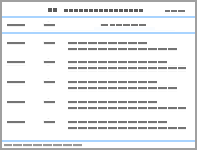
表1 miR-199a-5p在A549和A549/PTX细胞中的表达水平
Tab.1
Expression levels of miR-199a-5p in A549 and A549/PTX cells $\bar{x}$±
表2 不同浓度PTX对A549和A549/PTX细胞增殖抑制率的影响
Tab.2
Effects of different concentrations of PTX on proliferation inhibition rate of A549 and A549/PTX cells %,$\bar{x}$±
miRNAs通过下调下游靶点的表达来调节许多生物功能。WT-HSF-1的3'-UTR与miR-199a-5的结合位点为3'-UTR:5'-AGCCUCGGGUCUUGGGCACUGGU-3';miR-199a-5p:3'-CUUGUCCAUCAG--ACUUGUGACCC-5'。MUT-HSF-1的3'-UTR与miR-199a-5的结合位点为3'-UTR:5'-AGCCUCGCGG7UCUUGGG-GCACAAC-3';miR-199a-5p:3'-CUUGUCCAUCAG--ACUUGUGACCC-5'。显示HSF-1的3'-UTR存在与miR-199a-5p结合的位点。为了进一步证实miR-199a-5p与HSF-1之间的相互作用, 本研究进行了双荧光素酶实验,结果显示,与miR-NC组比较,转染WT-HSF-1可显著降低miR-199a-5p组A549/PTX细胞中荧光素酶活性(
表3 2组A549/PTX细胞荧光素酶活性
Tab.3
Luciferase activity of A549/PTX cells in two groups $\bar{x}$±

图1
miR-199a-5p和HSF-1在各组A549/PTX细胞中的表达水平($\bar{x}±s$,
A.正常对照组;B.miR-NC组;C.miR-199a-5p组;D.si-NC组;E.si-HSF-1组;F.miR-199a-5p+HSF-1组。①与 miR-NC 组比较,
Fig.1
Expression levels of miR-199a-5p and HSF-1 in A549/PTX cells in each group($\bar{x}±s$,
A.normal control group;B.miR-NC group;C.miR-199a-5p group;D.si-NC group;E.si-HSF-1 group;F.miR-199a-5p+HSF-1 group.①Compared with miR-NC group,
为进一步观察A549/PTX细胞增殖和凋亡情况,采用CCK-8法和Annexin V-FITC/PI双染法,结果显示,与miR-NC组比较,miR-199a-5p组A549/PTX细胞PTX IC50明显下调,细胞凋亡率明显增高(

图2
流式细胞仪检测各组A549/PTX细胞凋亡
A.正常对照组;B.miR-NC组;C.miR-199a-5p组;D.si-NC组;E.si-HSF-1组;F.miR-199a-5p+HSF-1组。
Fig.2
The apoptosis of A549/PTX cells in each group was detected by flow cytometry
A.normal control group;B.miR-NC group;C.miR-199a-5p group;D.si-NC group;E.si-HSF-1 group;F.miR-199a-5p+HSF-1 group.
表4 各组A549/PTX细胞增殖、凋亡情况分析
Tab.4
Analysis of proliferation and apoptosis of A549/PTX cells in each group $\bar{x}$±
为进一步明确miR-199a-5p影响细胞耐药性的机制,采用Western blotting法检测HSP90、HSP60和耐药性相关蛋白P-gp的表达,见

图3
6组A549/PTX细胞中HSP90、HSP60和P-gp蛋白水($\bar{x}±s$,
A.正常对照组;B.miR-NC组;C.miR-199a-5p组;D.si-NC组;E.si-HSF-1组;F.miR-199a-5p+HSF-1组。①与 miR-NC 组比较,
Fig.3
Protein levels of HSP90,HSP60 and P-gp in A549/PTX cells in six groups($\bar{x}±s$,
A.normal control group;B.miR-NC group;C.miR-199a-5p group;D.si-NC group;E.si-HSF-1 group;F.miR-199a-5p+HSF-1 group.①Compared with miR-NC group,
迄今为止,手术切除和化疗已成为多数NSCLC治疗的常见选择,然而,随着化疗药物应用的增加,耐药性已经成为当前治疗的一个巨大瓶颈[10]。因此,阐明NSCLC的耐药分子机制迫在眉睫。本研究以敏感性细胞株A549和耐药细胞株A549/PTX为研究对象,通过检测miR-199a-5p和HSF-1 mRNA表达水平,提示miR-199a-5p和HSF-1可能与A549的耐药机制有关。同时经CCK-8实验证实A549/PTX细胞对PTX的IC50高于A549细胞的IC50,证实了A549/PTX具有PTX耐药性。因此选择其作为后续探究耐药机制的对象,首先经双荧光素酶证实miR-199a-5p与HSF-1存在相互作用关系。随后分别通过过表达miR-199a-5p或敲低HSF-1来证实二者A549/PTX细胞增殖与凋亡的关系来说明其参与耐药细胞增殖和凋亡。为了进一步证实二者是否参与肺癌细胞的耐药机制,引入了耐药相关蛋白检测,并且进一步经回补实验证实二者之间的关系。以上结果证实了上述提出的猜想,说明miR-199a-5p靶向HSF-1提高NSCLC对PTX的敏感性。
越来越多的研究表明,miRNA参与各种细胞过程,在人类癌症的发生发展中发挥重要作用,也影响细胞的化学耐药性[11]。如miR-936在喉鳞状细胞癌组织中下调,其可抑制肿瘤细胞增殖、迁移和侵袭,并提高对多柔比星和顺铂的敏感性[4]。此外,研究表明,miR-199a-5p与肿瘤细胞增殖、侵袭、凋亡及药物敏感性有关[12,13]。近期研究表明,miR-199a-5p在NSCLC组织和细胞中显著低表达,过表达miR-199a-5p可显著抑制细胞的增殖及致瘤性,是NSCLC的潜在肿瘤抑制因子[14];亦有研究证实,miR-199a-5p的失调与NSCLC的耐药性有关[5]。然而,对miR-199a-5p在NSCLC PTX耐药中的确切作用知之甚少。本研究发现,miR-199a-5p在耐药细胞株A549/PTX表达显著低于敏感性细胞株A549,证实了miR-199a-5p可能与NSCLC的PTX耐药有关。同时,笔者通过探究不同浓度的PTX对耐药/敏感细胞株的影响,证明了耐药细胞株A549/PTX对PTX的IC50值明显高于A549细胞株。为了进行功能研究,在耐药细胞株A549/PTX过表达miR-199a-5p,结果显示,过表达miR-199a-5p可显著降低A549/PTX细胞PTX的IC50值,增加细胞凋亡。进一步研究还表明,上调miR-199a-5p可明显降低P-gp蛋白水平。据报道P-gp是一种ATP结合盒(ABC)药物外排泵,可降低细胞中药物的浓度,参与肿瘤细胞的化学抗性[15]。以上结果表明,上调miR-199a-5p明显提高NSCLC对PTX的敏感性,然而其作用机制尚不清楚。
为了进一步探究miR-199a-5p提高NSCLC对PTX的敏感性的作用机制。经生物学预测和双荧光素酶研究显示,A549/PTX细胞中,miR-199a-5p通过结合HSF-1的3'-UTR的互补位点,在mRNA和蛋白质水平上均显著降低了HSF-1表达,并降低了HSP90、HSP60蛋白水平,以上数据证实HSF-1可作为miR-199a-5p在NSCLC耐药细胞株中的直接靶点。据报道,HSF-1是在肿瘤生物学(如恶性转化、致癌等)中具有关键作用的广泛表达的高度保守的转录因子,可在应激后激活细胞的热休克反应,诱导HSP蛋白合成,如HSP90、HSP60等[6,16]。人类肿瘤细胞中致癌蛋白HSF-1和HSP的过度表达,有助于恶性肿瘤形成并介导化疗和放疗的抵抗[17]。此外,HSF-1的敲除和低浓度HSP90抑制剂联合治疗可显著提高肺癌细胞的放射敏感性[7]。本研究结果表明,HSF-1在耐药细胞株A549/PTX中的表达高于敏感细胞株A549,敲低HSF-1可明显降低A549/PTX细胞对PTX的IC50值和P-gp蛋白水平,促进细胞凋亡,提示HSF-1与NSCLC耐药性有关。另外,LIANG等[18]研究表明miR-644a可通过抑制HSF-1表达,促进肝癌细胞凋亡。推测miR-199a-5p可通过抑制HSF-1提高NSCLC对PTX的敏感性。为了验证此猜想,本研究在转染miR-199a-5p过表达的同时上调HSF-1表达(由于共转染miR-199a-5p过表达质粒与HSF-1过表达空载体与仅转染miR-199a-5p过表达质粒的效果一样,故仅设置miR-199a-5p+HSF-1组与miR-199a-5p组比较)。结果显示,上调HSF-1可明显逆转miR-199a-5p过表达对NSCLC的PTX IC50、凋亡率以及P-gp蛋白的影响。以上数据表明miR-199a-5p通过HSF-1调控增殖、凋亡以及化疗抗性相关蛋白水平影响NSCLC对PTX的耐药性。
综上所述,miR-199a-5p负靶向HSF-1降低NSCLC PTX耐药性,可能是通过调控HSP90、HSP60和P-gp表达实现的,本研究在前人研究的基础上完善了miR-199a-5p参与NSCLC的PTX耐药机制研究,可为NSCLC耐药性治疗提供新的思路。然而本研究仅是针对细胞实验进行了探究,并未在动物模型中验证miR-199a-5p是否靶向调控HSF-1对耐PTX NSCLC的生长具有抑制作用,后续将针对此项不足重点探究,以完善miR-199a-5p在NSCLC耐药性中的作用机制。
| [1] |
|
| [2] |
|
| [3] |
|
| [4] |
|
| [5] |
DOI:10.3892/or
URL
[本文引用:2]
|
| [6] |
Hsf-1 (heat shock factor-1) is a transcription factor that is known to regulate cellular heat shock response through its binding with the multispecific transporter protein, Ralbp1. Results of present studies demonstrate that Hsf-1 causes specific and saturable inhibition of the transport activity of Ralbp1 and that the combination of Hsf-1 and POB1 causes nearly complete inhibition through specific bindings with Ralbp1. Augmentation of cellular levels of Hsf-1 and POB1 caused dramatic apoptosis in non-small cell lung cancer cell line H358 through Ralbp1 inhibition. These findings indicate a novel model for mutual regulation of Hsf-1 and Ralbp1 through Ralbp1-mediated sequestration of Hsf-1 in the cellular cytoskeleton and Hsf-1-mediated inhibition of the transport activity of membrane-bound Ralbp1.
DOI:10.1074/jbc.M708703200
PMID:18474607
[本文引用:2]
|
| [7] |
|
| [8] |
Heat stress can particularly affect the kidney because of its high rate of adenosine triphosphate consumption. Competition between apoptosis and autophagy-mediated survival always exists in damaged tissue. And Hsp90 can enhance cellular protection to resist heat stress. However, the relationship between Hsp90 and the above competition and its underlying mechanism in the kidney are unclear. The present study found that heat stress induced obvious histopathological and oxidative injury, which was connected with cellular apoptosis and autophagy in the kidney and was associated with the levels of Hsp90 expression or function. The data showed that during heat stress, Hsp90 activated the PKM2-Akt signaling pathway to exert antiapoptotic effects and induce Hsp70 expression regulated by HSF-1, stimulated autophagy-mediated survival through the HIF-1α-BNIP3/BNIP3L pathway, and finally protected the kidney from heat-stress injury. Moreover, the nuclear translocation of PKM2, (p-) Akt, HSF-1, and HIF-1α was enhanced by heat stress, but only intranuclear p-Akt and HSF-1 were specifically influenced by Hsp90, contributing to regulate the cellular ability of resisting heat-stress damage. Our study provided new insights regarding the molecular mechanism of Hsp90 in the kidney in response to heat-stress injury, possibly contributing to finding new targets for the pharmacological regulation of human or animal acute kidney injury from heat stress in future research.
[本文引用:1]
|
| [9] |
DOI:10.1111/tca.v13.9
URL
[本文引用:1]
|
| [10] |
Non-small cell lung cancer (NSCLC) has long been one of the most lethal types of cancer due to its lack of typical clinical symptoms at early stages and high risk of tumour recurrence, even following complete surgical resection. Multicourse chemotherapy based on cisplatin (CDDP) is the standard adjuvant treatment for NSCLC; however, its benefits for the overall survival of patients are limited. In this study, NSCLC cells possessing CDDP-resistant characteristics (N5CP cells), obtained from surgical resection of clinical specimens of patients with NSCLC, were cultured and screened to generate research models. This study aimed to identify the mechanism underlying tumour cell resistance to CDDP and to identify a novel treatment for NSCLC following CDDP failure. CDDP-mediated NF-E2 related factor 2 (Nrf2)/light chain of System x (xCT) pathway activation was associated with the resistance of cells to CDDP. Therefore, erastin/sorafenib regulation of Nrf2 or xCT expression may alter the sensitivity of tumour cells to CDDP. The small molecules erastin and sorafenib effectively induced N5CP cell ferroptosis, which was mediated by the accumulation of intracellular lipid reactive oxygen species. Additionally, low doses of erastin or sorafenib could be used in association with CDDP to effectively trigger N5CP cell ferroptosis. Furthermore, it was indicated that erastin and sorafenib, alone or in combination with a low dose of CDDP, effectively inhibited the growth of N5CP cells. Therefore, ferroptosis inducers, including erastin and sorafenib, may be considered a novel treatment regimen for patients with NSCLC, particularly patients with CDDP failure. Copyright: © Li et al.
DOI:10.3892/ol.2019.11066
PMID:31897145
[本文引用:1]
|
| [11] |
|
| [12] |
|
| [13] |
|
| [14] |
MicroRNA (miR)-199a-5p expression is downregulated in a variety of malignancies, including non-small cell lung cancer (NSCLC), and its low expression is associated with a poor prognosis. However, to the best of our knowledge, the mechanism underlying miR-199a-5p downregulation in NSCLC and its target effectors remain to be elucidated. The present study revealed the downregulation of miR-199a-5p expression in NSCLC tissues and cell lines compared with in para-carcinoma tissues and a lung epithelial cell line. Further experiments indicated that the methylation levels of the miR-199a promoter were markedly higher in NSCLC tissues compared with in para-carcinoma tissues. The DNA methyltransferase inhibitor 5-Aza-2'-deoxycytidine markedly increased the expression levels of miR-199a-5p in NSCLC cells. Furthermore, it was identified that miR-199a-5p mimics transfection decreased the expression levels of A-kinase anchoring protein 1 (AKAP1) at both the mRNA and protein levels by targeting the 3' untranslated region of AKAP1 mRNA. The experiments demonstrated that miR-199a-5p overexpression inhibited the proliferation and tumorigenicity of NSCLC cells, whereas overexpression of AKAP1 partially recovered the malignant phenotypes, suggesting that AKAP1 may be a downstream effector targeted by miR-199a-5p. Collectively, the present findings indicated that miR-199a-5p may be a novel regulator of AKAP1, and that miR-199a-5p may be a potential tumor suppressor in NSCLC. Copyright: © Yang et al.
DOI:10.3892/ol.2021.12695
PMID:33868472
[本文引用:1]
|
| [15] |
DOI:10.1002/med.v41.1
URL
[本文引用:1]
|
| [16] |
DOI:10.1002/med.v41.1
URL
[本文引用:1]
|
| [17] |
The inhibition of heat shock protein 90 (Hsp90) a molecular chaperone for multiple oncogenic client proteins is considered as a promising approach to overcome radioresistance. Since most Hsp90 inhibitors activate HSF-1 that induces the transcription of cytoprotective and tumor-promoting stress proteins such as Hsp70 and Hsp27, a combined approach consisting of HSF-1 knockdown (k.d.) and Hsp90 inhibition was investigated. A specific HSF-1 k.d. was achieved in H1339 lung cancer cells using RNAi-Ready pSIRENRetroQ vectors with puromycin resistance. The Hsp90 inhibitor NVP-AUY922 was evaluated at low concentrations—ranging from 1–10 nM—in control and HSF-1 k.d. cells. Protein expression (i.e., Hsp27/Hsp70, HSF-1, pHSF-1, Akt, ß-actin) and transcriptional activity was assessed by western blot analysis and luciferase assays and radiosensitivity was measured by proliferation, apoptosis (Annexin V, active caspase 3), clonogenic cell survival, alkaline comet, γH2AX, 53BP1, and Rad51 foci assays. The k.d. of HSF-1 resulted in a significant reduction of basal and NVP-AUY922-induced Hsp70/Hsp27 expression levels. A combined approach consisting of HSF-1 k.d. and low concentrations of the Hsp90 inhibitor NVP-AUY922 reduces the Hsp90 client protein Akt and potentiates radiosensitization, which involves an impaired homologous recombination mediated by Rad51. Our findings are key for clinical applications of Hsp90 inhibitors with respect to adverse hepatotoxic effects.
[本文引用:1]
|
| [18] |
In this study, we investigated the role of microRNA-644a (miR-644a) in the growth and survival of hepatocellular carcinoma (HCC) cells. MiR-644a levels were lower in HCC tissues than in adjacent peri-cancerous tissues (n = 135). MiR-644a expression was inversely correlated with heat shock factor 1 (HSF1) expression, tumour diameter and TNM stage. Moreover, HepG2 and SMMC-7721 cell lines showed lower miR-644a expression than normal L-O2 hepatocytes. MiR-644a overexpression in HepG2 and SMMC-7721 cells increased apoptosis by downregulating HSF1. Dual luciferase reporter assays confirmed the presence of a miR-644a binding site in the 3'-untranslated region (3'-UTR) of HSF1. Xenograft tumours derived from SMMC-7721 cells transfected with a miR-664a mimic showed less growth than tumours derived from untransfected controls. Protein chip analysis revealed that miR-644a-overexpressing SMMC-7721 and HepG2 cells strongly expressed pro-apoptotic BH3-only proteins, such as BID, BAD, BIM, SMAC, Apaf-1 and cleaved caspases-3 and -9. These findings suggest miR-644a promotes apoptosis in HCC cells by inhibiting HSF1.
DOI:10.1186/s12964-018-0244-z
PMID:29898735
[本文引用:1]
|


