中国科技论文统计源期刊 中文核心期刊
美国《化学文摘》《国际药学文摘》
《乌利希期刊指南》
WHO《西太平洋地区医学索引》来源期刊
日本科学技术振兴机构数据库(JST)
第七届湖北十大名刊提名奖
美国《化学文摘》《国际药学文摘》
《乌利希期刊指南》
WHO《西太平洋地区医学索引》来源期刊
日本科学技术振兴机构数据库(JST)
第七届湖北十大名刊提名奖


 , 王菲
, WANG Fei
, 王菲
, WANG Fei

目的 评价万古霉素治疗新生儿严重细菌感染时的疗效及其血药浓度监测情况,为临床合理用药提供参考。方法 采用回顾性调查方法,收集应用万古霉素进行抗感染治疗的新生儿102例,对其疾病分布、血药浓度监测、生化检查、病原学检查、药物敏感试验等结果进行统计分析,并利用Mehrotra建立的新生儿万古霉素PK模型对24 h药物浓度-时间曲线下面积与最小抑菌浓度比值(AUC24/MIC)靶值进行预测。结果 102例患儿中临床第一诊断为新生儿败血症者比例最高;初次血药浓度监测范围在10~20 μg·mL-1的患儿占36.27%;经使用万古霉素治疗后,C反应蛋白(CRP)、血肌酐(Cr)、尿素(Urea)、总胆红素(T-BiL)、丙氨酸氨基转移酶(ALT)、天冬氨酸氨基转移酶(AST)均显著下降;分离培养出革兰阳性菌73例,得到AUC24/MIC靶值73个,大多数靶值远小于《万古霉素临床应用中国专家共识(2011年版)》推荐值(400)。结论 万古霉素治疗由革兰阳性菌引起的新生儿重症感染疗效确切,但须进行血药浓度监测,以提高安全性和有效性。
Objective To evaluate the efficacy of vancomycin used to treat severe bacterial infections of neonates and to provide a reference for clinical drug application. Methods In total,102 neonates treated with vancomycin were retrospectively analyzed. Disease distribution,results of therapeutic drug monitoring,bio-chemical examination,etiological examination and drug sensitive test were statistically analyzed. PK model established by Mehrotra was applied to calculate the ratio of drug concentration-area under the curve in 24 h and minimal inhibitory concentration (AUC24/MIC). Results Among the 102 cases,patients diagnosed with neonatal sepsis accounted for the highest percentage. And 36.27% of the patients had a trough concentration of vancomycin within the range of 10-20 μg·mL-1 in the first serum concentration test. After a treatment of vancomycin,clinical biomarker values of CRP,Cr,Urea,T-BiL,ALT and AST were decreased significantly. Totally,73 cases of Gram-positive bacteria were isolated and cultured and AUC24/MIC values were calculated. Most of them were much less than 400 (which is recommended by the expert consensus document). Conclusion Vancomycin has a definite efficacy in treating severe infections caused by Gram-positive bacteria in neonates. However,therapeutic drug monitoring should be applied in order to enhance security and effectiveness.
新生儿尤其是早产儿免疫系统发育不成熟,出生后易发生细菌感染,其中不乏重症感染。万古霉素常用于治疗耐甲氧西林金黄色葡萄球菌(MRSA)、凝固酶阴性葡萄球菌(CoNS)、肠球菌属等革兰阳性菌所致的新生儿严重感染。万古霉素具有肾毒性和耳毒性,对新生儿患者尤其应谨慎使用,应实行个体化给药,避免血药浓度过高,防止不良反应发生。但若万古霉素的治疗浓度过低,也易诱导产生耐药菌,导致治疗失败。因此,万古霉素应用于新生儿时必须进行血药浓度监测,并根据监测结果及时调整剂量[1,2,3]。为了考察我院新生儿科临床使用万古霉素及血药浓度监测情况,抽取2014 年1月— 2016年12月我院新生儿重症监护室相关病历,参考《万古霉素临床应用中国专家共识(2011年版)》(以下简称《共识》)、万古霉素药品说明书及国内外学术文献,对万古霉素的临床使用情况进行评价,报道如下。
采用回顾性调查方法,选取我院2014年1月1日—2016年12月31日收治的应用万古霉素进行抗感染治疗的新生儿,共139例。通过查阅病历,获取患儿的相关临床信息。我院使用的万古霉素由日本Eli Lilly Japan K.K.公司生产,注册证号:H20080356,规格:每瓶0.5 g。
纳入标准:①患儿出院日期为2014年1月1日—2016年12月31日;②住院期间使用万古霉素并进行至少1次血药谷浓度监测;③应用万古霉素前后均有患儿相关临床检查记录;④患儿家长均知情同意并签署知情同意书。排除标准:①病历资料不完整者;②用药前后检查记录不全者。
1.2.1 治疗策略 由于纳入本次研究的患儿普遍病情危重,随时有生命危险,临床上根据患儿症状、体征、生化检查、影像结果等,由临床医师对疑似革兰阳性菌所致严重感染的患儿经验给予万古霉素进行抗感染治疗。于使用万古霉素前取样进行病原学检查与药物敏感试验。待得到结果后(一般为送样后3~5 d),根据具体情况调整用药:若检出革兰阴性菌或真菌,停用万古霉素,改用针对病原体的抗菌药物进行治疗;若检出革兰阳性菌,且药物敏感结果显示有其他可应用于儿科的低级别抗菌药物对其敏感,停用万古霉素换用低级别抗菌药物进行降级抗感染治疗;若检出革兰阳性菌,且药物敏感结果显示无其他适用低级别抗菌药物对其敏感时,继续使用万古霉素进行抗感染治疗。
1.2.2 用药方案 万古霉素给药方案依据药品说明书,每次给药剂量为10~15 mg·kg-1,出生7 d以内的患儿每12 h给药一次,出生7~30 d的患儿每8 h给药一次,每次均使用微量静脉泵给药,持续时间为1 h。
万古霉素血药浓度采用化学发光微粒子免疫检测法(CMIA)进行测定,应用雅培公司Architect I1000系统、万古霉素测定试剂盒、质控盒与标准曲线盒,定量范围为3.0~100.0 μg·mL-1。于第4或第5剂给药前采血测定稳态谷浓度。目标谷浓度为10~20 μg·mL-1。
患儿的生化检查、病原学检查、药物敏感试验结果由我院检验科提供。治疗过程中,密切监测患儿使用万古霉素治疗前后的各项生化指标变化情况,包括C反应蛋白(CRP)、血肌酐(Cr)、尿素(Urea)、总胆红素(T-BiL)、丙氨酸氨基转移酶(ALT)、天冬氨酸氨基转移酶(AST)。对患儿样本进行细菌培养与鉴定,利用纸片扩散法进行药物敏感试验,利用琼脂稀释法测定万古霉素的最小抑菌浓度(MIC)。
根据《共识》可知,AUC24/MIC为预测万古霉素临床和细菌学疗效的最佳药动学药效学(PK/PD)靶值[3]。研究表明,保证AUC24/MIC≥400是万古霉素充分发挥抗菌效力的关键。AUC24可以通过如下公式计算:
AUC24
由于国内缺乏新生儿万古霉素PK/PD模型的研究,通过Mehrotra建立的新生儿万古霉素PK模型对患儿万古霉素清除率(CL)进行预测:
CL=0.18×(
其中
万古霉素具有一定的肾毒性、耳毒性,故在诊疗过程中,密切关注患儿肾功能及听力状况。于患儿住院期间,用药前后分别检查患儿肾功能,以判断是否有肾毒性发生。肾毒性判断标准:经万古霉素治疗后,如有≥ 2个测定显示血肌酐升高44.2 μmol·L-1或从基线增幅超过50 %,且无其他原因可以解释时,判断为万古霉素导致的肾毒性[7]。出院后,患儿于高危儿随访门诊复查肾功能,判断万古霉素远期是否对患儿肾功能造成影响。纳入研究的所有患儿于出院前完成初次自动听性脑干反应测试。住院期间未通过测试的患儿出院后于听力中心完成复筛,根据初筛和复筛结果判断是否有耳毒性发生。
根据《抗菌药物临床研究指导原则》,抗菌药物临床疗效按痊愈、显效、进步、无效4级评定。痊愈:治疗后症状、体征、实验室及致病菌检查均恢复正常;显效:治疗后病情明显好转,但上述4项中有1项未完全恢复正常;进步:用药后病情有所好转,但不够明显;无效:用药后无明显进步或有所加重。痊愈和显效合计为有效,并据此计算有效率 [8]。
应用R软件(R i386 3.2.5)进行统计,采用Wilcoxon秩和检验,以
本研究共纳入符合标准的患儿102例,男69例,女33例,其中早产儿82例,包括7例超早产儿和21例极早产儿。患儿胎龄25.29~41.43周,平均(33.85±3.60)周,纳入研究时矫正胎龄26.00~43.43周,平均(35.06±3.82)周;出生时体质量0.78~3.56 kg,平均(1.93±0.67) kg,纳入研究时的矫正体质量0.76~3.50 kg,平均(1.94±0.67) kg;住院时间7~66 d,平均(30.49±15.25) d。临床第一诊断为新生儿败血症61例,新生儿坏死性小肠结肠炎19例,新生儿肺炎12例,其他诊断10例。
102例患儿中共进行血药浓度监测117次,其中15例患儿进行了血药浓度复测。根据
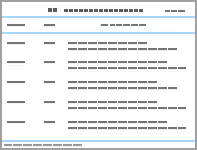
表1 初次谷浓度监测结果
Tab.1 Results of initial trough concentrations
将患儿按初次谷浓度监测结果是否大于10 μg·mL-1分为两组,利用Wilcoxon秩和检验,比较两组患儿的基本特征差异。根据
2.3.1 生化检查 经使用万古霉素进行治疗后,患儿的临床指标CRP、Cr、Urea、T-BiL、ALT、AST均值均显著下降(
表3 用药前后临床指标
Tab.3
Clinical parameters before and after vancomycin administration
2.3.2 病原学检查与药物敏感试验 102例患儿在接受万古霉素治疗前,均进行了病原学检查,结果见
表4 病原学检查结果
Tab.4 Results of etiological examination
检出的革兰阳性菌中,万古霉素MIC=4 μg·mL-1的2例,MIC=2 μg·mL-1的31例,MIC=1 μg·mL-1的37例,MIC=0.5 μg·mL-1的3例。其中,2例仅对万古霉素和利奈唑胺敏感;40例除对万古霉素、利奈唑胺敏感外,仅对利福平或喹诺酮类敏感;其余31例对其他低级别抗菌药物敏感。检出的24例金黄色葡萄球菌中有8例为MRSA。
44例患儿根据药物敏感试验结果停用万古霉素,改用其他抗菌药物进行治疗。其余58例患儿继续使用万古霉素。继续使用万古霉素的患儿中仍包括了7例病原学检查阴性的患儿和9例药物敏感试验结果显示检出病原体对其他低级别抗菌药物敏感的患儿。医师对22例患儿根据血初次药浓度监测结果进行了剂量上调,对2例进行了剂量下调;34例患儿虽然初次血药浓度监测结果小于10 μg·mL-1,但医师并未相应上调万古霉素剂量。
通过Mehrotra建立的新生儿万古霉素PK模型,得到73个AUC24/MIC预测值。AUC24/MIC的范围为70.24~628.31,均值为226.20±119.62。《共识》指出,当AUC24/MIC≥400时,可以使得细菌清除迅速,患者临床症状好转加快。本次研究中,大于400的靶值仅有9个。
在使用万古霉素治疗过程中,患儿的Cr水平整体呈显著下降趋势,未发现万古霉素相关的肾毒性反应。出院后高危儿随访门诊中,未见有患儿肾功能异常。ALT、AST在用药后显著降低,可见在治疗剂量下,万古霉素并未表现出明显的肝毒性。全部患儿在住院期间均进行了自动听性脑干反应测试,有10例未通过,出院后在听力中心进行了听力复筛,均未见听力异常。
102例患儿中,经万古霉素治疗痊愈42例,显效36例,进步13例,治疗无效死亡3例,患儿家长放弃治疗出院8例,有效率76.47%。
血清CRP水平是提示细菌感染的一项敏感而客观的指标,常用于新生儿严重感染性疾病的诊断及预后判断,且与疾病的严重程度呈正相关[9]。根据
由T-BiL指标的监测结果可知,使用万古霉素治疗前患儿的该指标明显高出正常值,治疗后均趋于正常,这可能是新生儿在严重感染时,容易发生病理性黄疸,导致T-BiL异常升高。在严重感染得到有效控制后,病理性黄疸逐步消退,T-BiL值趋于正常,也从一个侧面反映万古霉素控制感染的有效性[11]。
据
根据
表2 初次谷浓度监测结果小于10 μg·mL-1与大于10 μg·mL-1患儿的基本特征比较
Tab.2 Comparison of characteristics between the patients whose initial trough concentrations less than 10 μg·mL-1 and those more than 10 μg·mL-1
临床上使用抗菌药物时,为了更快地达到目标浓度,常首先给予负荷剂量,随后给予维持剂量。这样的给药方案有助于保持血药浓度,在血药浓度达到稳态后,剂量调整也更为容易。遗憾的是,在新生儿万古霉素的抗感染治疗中,国内外类似给药方案的PK/PD研究十分有限。给予负荷剂量的给药方案是否优于说明书描述的分次给药方案尚待进一步考证。
本次研究中AUC24/MIC靶值多数远小于《共识》要求的400。造成靶值偏小的原因主要有:①万古霉素日剂量(D24)值偏低;②MIC值偏高。从总的万古霉素血药浓度监测结果可知,有相当一部分患儿日剂量偏小。本次研究所得MIC值中,31例为2 μg·mL-1,2例为4 μg·mL-1,所占比例达45.21%。已有研究表明,在MIC≥2 μg·mL-1并使用临床常用给药方案的情况下,AUC24/MIC≥400的目标几乎不能实现[13]。因此,临床医师在使用万古霉素进行治疗时,应充分考虑上述影响AUC24/MIC靶值的因素,根据血药浓度监测结果,及时调整给药剂量,避免出现过低的谷浓度。此外,万古霉素的MIC值与临床治疗结局息息相关,在MIC≥2 μg·mL-1时应适当增加万古霉素日剂量或者换用其他抗菌药物进行治疗[3]。
万古霉素的主要不良反应为肾毒性与耳毒性。由
本次研究中也未观察到万古霉素相关的耳毒性不良反应。虽有患儿在住院期间未通过自动听性脑干反应测试,但均通过了听力复筛测试。其他相关研究亦认为万古霉素所致的耳毒性十分罕见[18]。
万古霉素治疗革兰阳性菌引起的新生儿感染疗效确切,但经验性用药后血药谷浓度达标率低,可能导致耐药菌产生,应重视血药浓度监测,保证谷浓度维持在10~20 μg·mL-1有效范围内。间隔8 h给药较间隔12 h能显著提高谷浓度达标率,医师在开展血药浓度监测的前提下可以优先考虑。MIC偏高患儿需考虑增大给药日剂量来克服不敏感性,但同时应密切注意可能造成的不良反应,应监测血药浓度和血肌酐水平,保证万古霉素治疗的安全性和有效性。此外,为了更好地实现新生儿个体化给药,应建立新生儿万古霉素PK/PD模型,为临床合理用药提供进一步参考[19]。
The authors have declared that no competing interests exist.
