中国科技论文统计源期刊 中文核心期刊
美国《化学文摘》《国际药学文摘》
《乌利希期刊指南》
WHO《西太平洋地区医学索引》来源期刊
日本科学技术振兴机构数据库(JST)
第七届湖北十大名刊提名奖
美国《化学文摘》《国际药学文摘》
《乌利希期刊指南》
WHO《西太平洋地区医学索引》来源期刊
日本科学技术振兴机构数据库(JST)
第七届湖北十大名刊提名奖


 , 何雁南
, HE Yannan
, 何雁南
, HE Yannan

生物技术药物近年来飞速发展,其质量控制也越来越受到关注。脱酰胺化反应是生物技术药物质量控制中不可忽视的一方面,特别是脱酰胺化产生的异天冬氨酸(isoAsp)。该文描述天冬酰胺(Asn)残基的脱酰胺化,以及脱酰胺化对生物技术药物的影响。对国内外脱酰胺化的检测方法进行汇总,包括处理方法和仪器分析方法。其中对isoAsp位点的鉴定和含量测定进行较为详细地介绍。开展脱酰胺化的研究对我国生物技术药物的质量控制具有积极的意义。
Quality control of biotech drugs has attracted increasing attentions in recent years. Deamidation reaction is one of the major concerns in quality control of biotech drugs, due to the generation of isoaspartic acid(isoAsp). This paper describes the deamidation of asparagine(Asn) residues and its effects on the biological drugs. The detection methods currently used in China and overeas for this reaction, including pretreatment protocols and instrumental analysis were described. The identification and determination of isoaspartyl sites were also described in detail, along with the positive impact on the development of biotech drugs in China by the studies on deamidation reactions.
近年来,我国生物医药行业迅速蓬勃发展。据艾美仕(Intercontinental Marketing Services,IMS)预测,到2020年,我国生物医药市场将成为仅次于美国的全球第二大生物医药市场,其中抗体药物和蛋白药物等生物技术药物未来可产生3000亿~5000亿元市场。据2016年不完全统计,我国已批准上市的生物技术药有44种[1],并且获批品种数量还在逐年增加。随着《中华人民共和国药典》2015年版的实施,生物技术药物的质量控制将会大幅提高,质量标准逐步与国际接轨,药品质量将达到国际水平。
生物技术药物不同于传统的小分子药物,生产、储存及运输条件等因素的改变都会引起其蛋白的异构、变性,从而引起难以预测的临床药物不良反应。脱酰胺化(deamidation)是常见的蛋白翻译后修饰形式,普遍存在蛋白、多肽类药物中。异天冬氨酸(isoaspartic acid,isoAsp)是脱酰胺化的特异性降解产物,其存在量能反映药物脱酰胺化的程度。因此,国外生物药品生产企业在向美国食品药品管理局(FDA)、欧盟药品管理局(EMA)申报药品资料时都会提供该申报药品脱酰胺化的相关检测数据。饶春明等[2]对2015年版《中华人民共和国药典》生物技术药质量控制相关内容进行切实详尽的阐述,并以人用重组 DNA 蛋白制品为例,其中指出氨基酸序列测定时应考虑各种可能的翻译后修饰(如脱酰胺化、氧化、异构化等)[3]。韦薇等[4]将脱酰胺化列入重组单克隆抗体产品相关物质或杂质研究范围。这些生物技术药物发生脱酰胺化的可能性非常高,其结果有待研究与分析。
脱酰胺化反应的发生是个极其复杂的过程,isoAsp的产生速度取决于多种因素,包括蛋白质多肽的原始序列、构象、pH值和温度等。在没有固定空间结构的肽中,位于Asn或Asp的C端残基起主要作用;作为最灵活和酸性(主链酰胺)的Asn-甘氨酸(glycine,Gly)(NG)在生理条件下表现出最高的脱酰胺速率(半衰期约1 d); Asn-丝氨酸(serine,Ser)(NS)和Asn-组氨酸(histidine,His)(NH),在酸催化条件下,除NG外脱酰胺速率比大多数其他序列要快得多;由于脯氨酸(proline,Pro)中含有仲胺,因此Asn-Pro(NP)并没有观察到脱酰胺反应。总而言之,蛋白质多肽中含NG结构很可能发生,含NS结构可能发生,而含NP大多不发生脱酰胺化。在生理条件下,Asp异构化速率约为Asn的1/40[10]。而琥珀酰亚胺中间体通常以3:1的比例水解成isoAsp和Asp[11,12]。生物信息学分析和实验研究均表明,蛋白质中Asn(~4%)和Asp(~5%)生成isoAsp概率均较高,而isoAsp是普遍存在且发挥着不同作用。
isoAsp的形成可以说是最常见的蛋白质翻译后修饰(post-translational modification,PTM)之一,并且它是最小的PTM。首先,鉴定含有isoAsp的蛋白质已经非常困难,而且还需在蛋白质中将其精确定位;其次,isoAsp和Asp是相同质量的异构体,并不能通过质谱法直接将二者进行区分;最后,isoAsp的产生是个动态变化的过程,建立准确定量的检测方法十分困难。因此寻找准确合适的方法将其区分并测定,是许多实验研究人员努力的方向。
少量多肽药物不需酶切,如重组人胰岛素、重组人生长激素等,加入适当浓度的盐酸或缓冲液,在室温放置24 h,采用高效液相色谱(HPLC)法可以直接有效地分离脱胺组分或产物。《中华人民共和国药典》2015年版已收入上述两个品种,并对其对应的脱胺组分有相应的检查要求[21]。徐军等[5]对《中华人民共和国药典》重组人胰岛素注射液中有关物质检查方法进行优化,并用质谱(mass spectrometry,MS)鉴定B3和B3iso脱氨人胰岛素。
生物技术药物相对分子质量大,通常需使用胰蛋白酶等内切蛋白酶进行消化水解成多肽片段(必要时进行富集),然后在一定的温度下,将肽段在醋酸铵或碳酸氢铵缓冲液中进行孵化,最后利用酶法[异天冬氨酸甲基转移酶(protein
①PIMT。该方法是最常见最有效的用于蛋白药物中isoAsp定性定量检测手段之一[15,22],通常采用ISOQUANT® Isoaspartate Kit试剂盒进行测定。其原理是利用PIMT特异性,通过催化
ALFARO等[23]应用PIMT选择性地将isoAsp生成其甲酯,再将不稳定甲酯在水溶液中加入强亲核试剂,如肼(hydrazine)形成酰肼(hydrazide),采用基质辅助激光解吸电离质谱(matrix assisted laser desorption ionization-mass spectrometry,MALDI-MS)可以检测出比原物质相对分子质量大14的酰肼产物,从而有效地确定脱酰胺化位点。此外,稳定的酰肼产物还可以用醛树脂进行富集或者加入具有荧光基团的丹磺酰氯进行选择性修饰生成含磺酰基团的产物(sulfonyl hydrazide),再通过含紫外(ultraviolet,UV)检测器(检测波长为280 nm)或荧光检测器的HPLC进行定量分析。肽酰肼类物质具有很高选择性和显著亲和力,富集效果好,此方法的出现使检测复杂的系统isoAsp成为可能,实现了对isoAsp的有效定位与定量检测。
②Asp-N可以选择性水解Asp而不影响isoAsp。NI等[24]利用Asp-N这一特性,提高isoAsp的检测峰度,通过电子捕获/转移质谱法(electron capture dissociation/electron transfer dissociation-MS,ECD/ ETD-MS)对isoAsp进行精确的检测和定性定量分析。该方法的缺点是:在样品前处理过程中,此酶Asp-N活性条件下的pH容易引起样品的脱酰胺化的发生,从而造成一定假阳性的结果。
③蛋白内切酶(endoprotease Glu-C)。在蛋白质脱酰胺化的分析中,常用pH值 8.0 的酶解反应条件,而在此条件下样品容易发生新的脱酰胺化,所测得的脱酰胺水平远高于样品中的实际值[25]。为了避免和减少样品前处理过程中发生的这些假阳性现象,LIU等[26]发现,在pH 值4.5条件下,Glu-C同样可以有效酶解样品,且样品在酶解过程中几乎不发生新的脱酰胺化,从而使测得的脱酰胺水平更接近样品中的真实值。这一发现降低检测大分子蛋白药物中isoAsp假阳性现象,能够真实有效地分析样品中isoAsp的情况,进一步完善了脱酰胺化的检测方法。
④同位素标记(18O)。蛋白质在脱酰胺生成Asp与isoAsp的过程中不可避免与水(H2O)进行反应,因此研究者利用18O对其进行定位检测,并且取得很好的成果[27]。LIU等[28]则通过酸碱法在
2.2.1 HPLC法 HPLC法是蛋白质分离最常用最有效的分析方法,在脱酰胺化中主要用于相应脱氨组分、isoAsp的定量测定等。
2.2.2 电泳法 蛋白质脱酰胺后会引入负电荷,使其保留时间增加,因此电泳法也被用作脱酰胺化的检测[30]。十二烷基硫酸钠聚丙烯酰胺凝胶电泳法(sodium dodecyl sulfatepolyacrylamide gel electrophoresis,SDS-PAGE)是早期采用的检测方法之一[31]。随着电泳技术的发展,新的电泳技术也在逐步应用。等电焦集电泳(isoelectric focusing electro-phoresis,IEF)是依据蛋白质分子等电点(isoelectric point,IP) 的不同来作分离,其解析度非常好,因此在蛋白质脱酰胺化中也有应用[32,33]。上述两种电泳法得到的电泳图可以较直观地反映脱酰胺组分。毛细管电泳(capillary electrophoresis,CE)或高效毛细管电泳(high performance capillary electrophoresis,HPCE)是凝胶电泳技术的发展,HPLC分析的补充。与普通SDS-PAGE比较,CE具有分辨率高、分离效率快等优点;与HPLC比较,CE分离机制不同,可应用于HPLC不易分离的样品。但在某些程度上,其方法复杂,结果重复性差。结合了质谱的CE可以对样品进行更全面的分析,可对蛋白质复合物及翻译后修饰产物进行分析。
《中华人民共和国药典》2015年版三部收录电泳法(通则0541),其主要用于蛋白质鉴别、相对分子质量及IP检测。张莹[31]对重组人胰岛素中脱胺胰岛素检测方法(PAGE、HPLC、CE)进行介绍。LEWIS等[34]和SKOTTNE等[35]分别采用SDS-PAGE对重组人生长激素不同的脱酰胺产物进行分离。NIELSEN等[36]采用CE对生物合成人胰岛素和人生长激素不同脱酰胺产物进行分离,并定量测定。
2.2.3 离子交换色谱法(ion exchange chromatography,IEC) 20世纪90年代初期,IEC被用于蛋白质脱酰胺的分析[37],但Asp与isoAsp两者不易分离使其在脱酰胺研究上存在局限性,随着IEC与HPLC的结合,有了进一步的发展。ZHANG等[33]将单克隆抗体中的多肽片段与PIMT进行酶促反应,通过强阳离子交换(strong cation exchange,SCX)-HPLC分离各型脱酰胺产物,用HPLC-UV测定其isoAsp总量。VLASAK等[38]通过离子交换(cation exchange,CEX)-HPLC分离、结合质谱,鉴定重组人源化单克隆IgG1抗体(humanized IgG1 monoclonalantibody,MAb)的轻链互补决定区1(complementarity determining region 1,CDR1)中Asn33脱酰胺化,用ISOQUANT Kit检测其含量。
2.2.4 质谱法 质谱法是目前最广泛应用到该领域的准确定位的检测方法。①ECD/ ETD。Asp与isoAsp相对分子质量相同,研究者通过采用ETD/ECD-MS,发现二者会各自产生一对独特的报告离子:isoAsp(C+57和Z-57),Asp(Z-44和(M + nH)(n-1)+·-60),从而区分二者。但是有时报告离子的丰度比较低而不易检测[39,40]。②LC-MS。发生脱酰胺反应后,Asn生成Asp和isoAsp,相对分子质量增加1000,相对分子质量所发生的变化可利用MS精确检测。根据多肽序列标签法结合MS/MS确定发生脱酰胺化的氨基酸,从而达到对样品定性的目的。LC-MS在蛋白质脱酞胺的研究中应用日益广泛。HUANG等[41]利用LC-MS/MS分析MAb在体内发生的脱酰胺反应,发现重链CDR2区的Asn55发生了脱酰胺,极大地降低其折叠活性,建立体内快速、灵敏、微量检测蛋白的方法。③MALDI-MS。MALDI所形成的离子多为带单电荷的准分子离子,故质谱图中的离子与多肽和蛋白的相对分子质量存在一一对应关系,可直接准确地测定蛋白质和多肽的相对分子质量,是准确测定生物大分子质量的首选方法。LIU等[26]则通过酸碱法在
2.2.5 联合应用 由于isoAsp检测的复杂性,为了更好地确认发生脱酰胺化的位点,并且能有效地将Asp与isoAsp分离,多种检测技术联合应用被人们广泛采用。ZHANG等[42]在对重组人白细胞介素11进行脱酰胺化研究时,采用SDS-PAGE、HPLC结合胰蛋白酶肽图、CE结合Asp-N肽图以及LC/MS四种仪器方法进行分析,对发生脱酰胺化的位点进行准确定位,最后利用PIMT采用SCX-HPLC检测方法对isoAsp的总量进行定量测定。
综上所述,在生物技术药物脱酰胺化检测中,每种方法都有其特点(
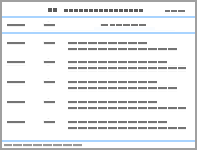
表1 左氧氟沙星治疗BK病毒感染的文献总结
目前,我国生物技术药品中涉及脱酰胺产物的检测项目较少,且未对生物技术药品中的isoAsp含量进行检测作任何要求,相关定性定量检测方法几乎处于空白。开展建立高效、准确测定生物技术药物中脱酰胺产物,特别是isoAsp的含量方法,使生物技术药物质量标准与国际接轨,可以对生产及市场流通的生物技术药物的质量起到监管的作用,从而更好地保障广大人民的生命健康和用药安全。脱酰胺化检测技术不断发展,如何将这些检测方法更加合理地应用到生物技术药物的实际检测中去,建立高效、准确的质量标准是值得我们思考的课题。
The authors have declared that no competing interests exist.
| [1] |
为确保生物技术药物安全和有效,国家食品药品监督管理总局发布了一系列法规和指南,中国食品药品检定研究院建立了有效的重组药物质量控制技术体系。笔者简要回顾生物技术制药领域重要发展阶段和我国重组药物研究开发情况,详细介绍我国30年来重组药物质量控制技术体系的建立和应用情况,内容包括:质量标准研究依据及法规要求,《中国药典》三部重组药物质量标准以及新版药典对重组药物质量控制的相关要求;1986年以来国家科技课题对中检院生物技术药质量控制技术体系的支持以及相关重组药物质量标准及其各类检定方法如生物学活性测定、蛋白含量测定、理化分析与蛋白结构鉴定、纯度与杂质测定等方法的建立与应用情况;生物学活性测定和含量测定国家标准品的研究建立以及用于肽图分析和等电点测定用的重组药物理化对照品质量标准建立和鉴定;2001年以来由重组药物室完成的包括注册检验、进口检验、抽验检验、委托检验、合同检验等各类生物技术药检验共计5 920批次检验报告结果分析。
[本文引用:1]
|
| [2] |
2015年版《中国药典》已出版,为更好地了解和执行2015年版《中国药典》,笔者首先简要回顾了2010年版《中国药典》在出版后的生物技术药质量控制执行情况,列举了相关问题,说明及时学习和了解2015年版《中国药典》及相关文件的必要性。然后依据各相关法规和2015年版《中国药典》三部对与生物技术药质量控制密切相关的内容进行介绍,内容包括:质量标准研究依据及法规要求;凡例以及凡例第二十六条对标准品、参考品、对照品等标准物质的相关规定;生物制品通则以及与生物技术药生产与质量控制密切相关的6个规程;人用重组DNA技术产品总论和人用重组单克隆抗体产品总论;各论以及以我国2013年度评价性抽验注射用重组人干扰素α2a为例分析检定规程相关内容;检测方法通则以及新增附录干扰素生物学活性测定法第二法(报告基因法)。讨论分析了2015年版《中国药典》收载的产品各论制造与检定规程的优缺点以及当时制定质量标准时的法规与技术背景;重点讨论了肽图分析在重组产品蛋白质结构分析以及生产工艺稳定性评价方面的重要性,新增人用重组DNA技术产品总论部分关键性技术要求,液相质谱等新技术在生物技术药蛋白质结构分析以及对照品鉴定等方面的应用。
[本文引用:1]
|
| [3] |
|
| [4] |
重组生物技术制备的单克隆抗体(以下简称重组单抗)是生物制品中一类重要的药物类别。近年来,由于其精确的靶向杀伤和中和等生物学效应,重组单抗在肿瘤、自身免疫性疾病等方面受到了广泛的研究和应用,并且在神经学、眼科学等其他疾病领域的研究也开始逐步发展起来。目前,国内生产的重组单抗主要采用真核细胞培养表达的方法,在工艺研发和质量研究方面,药品企业对主要有效成分的结构研究和质量控制关注较多;但是对产品组成中的杂质和相关物质研究较少或关注度不够。考虑到这些杂质或相关物质是重组单抗产品中的重要组成部分,将会影响到产品的质量、临床应用的安全性和有效性,应在研究中予以重视。本文对重组单克隆抗体产品中相关杂质和相关物质的研究和评价进行了探讨。
[本文引用:1]
|
| [5] |
建立了有效分离重组人胰岛素注射液中B3和B3iso脱氨人胰岛素的反相高效液相色谱(RP-HPLC)法,并采用高效液相色谱-四极杆-飞行时间质谱联用技术(HPLC-MS/MS)对其进行氨基酸序列的鉴定。在《中国药典》2010版重组人胰岛素注射液有关物质检查分析方法的基础上,优化流动相pH值,以0.2 mol/L硫酸盐缓冲液(pH 3.6)-乙腈(90∶10)作为A相,乙腈-水(50∶50)为B相,梯度洗脱,分别收集杂质峰1和杂质峰2,脱盐浓缩后,用丝氨酸蛋白酶(V8酶)酶切,取部分酶切溶液经三(2-羧乙基)膦盐酸盐(TCEP)还原,分别得到还原和非还原肽段溶液,利用LC-MS/MS鉴定氨基酸序列,未知杂质分别为重组人胰岛素B3位发生脱氨和异构化的产物,即B3和B3iso脱氨人胰岛素。将优化后的方法与《中国药典》方法对市售重组人胰岛素注射液进行有关物质的对比分析,已上市厂家的重组人胰岛素注射液均有不同程度的B3和B3iso脱氨人胰岛素存在。该方法不影响重组人胰岛素其它有关物质的检测,可用于监控人胰岛素注射液产品储存过程中脱氨类杂质的增长趋势。
[本文引用:2]
|
| [6] |
目的:建立对重组人血管内皮生长因子抑制剂进行异天门冬氨酸(Isoasp)含量检测的方法。方法:利用ISOQUANT异天门冬氨酸检测试剂盒并结合HPLC的方法检测重组人血管内皮生长因子抑制剂原液和成品中的Isoasp含量,并对该方法进行加标回收率试验、精密度和准确性的验证。结果:40、25、6.25 pmol·L-1的3种浓度对照品的加标回收率均在80%~120%的范围内。对1批原液和1批成品的各3个样品分别进行测定,原液和成品中每摩尔蛋白的Isoasp含量平均值分别为(0.066±0.010)、(0.093±0.008)mol,RSD分别为15.2%和8.6%,原液和成品中各1个样品的25 pmol·L-1对照品的加标回收率分别为90.2%和108.1%。结论:经方法学验证,本文所建立的方法可作为该产品的Isoasp含量的常规检测方法,也为融合蛋白及单抗类制品的Isoasp含量检测提供借鉴。
[本文引用:2]
|
| [7] |
Abstract: The primary sequence dependence of deamidation has been quantitatively explained on the basis of a simple steric and catalytic model. Application to the known deamidation rates of peptides produces a table of coefficients that permits calculation of the known deamidation rates and prediction of deamidation rates for peptide sequences that have not yet been measured. This work permits a better understanding of deamidation, provides a prediction procedure for protein engineering, and facilitates improved computation of peptide and protein primary, secondary, tertiary, and quaternary structure deamidation rates.
[本文引用:1]
|
| [8] |
Our objective was to compare the relative rates of asparaginyl and glutaminyl deamidation in fragment 22–29 of the polypeptide hormone glucagon in acidic aqueous solutions. Reaction mixtures containing 22–29 (FVQWLMNT) or its degradation products were degraded at 60°C in dilute hydrochloric acid or phosphate buffer in the pH range 1–3. Degradation products were separated by high‐performance liquid chromatography and identified by amino acid sequencing, amino acid analysis, liquid chromatography‐mass spectrometry (LC‐MS), and matrix‐assisted laser desorption and ionization (MALDI). Nine major degradation products were identified, including asparaginyl and glutaminyl deamidated forms, aspartyl peptide cleavage of the asparaginyl deamidated products, and a cyclic imide intermediate. The pH dependences of rate constants for individual pathways were consistent with acid catalysis. Previous investigators have reported a greater susceptibility of asparagine residues to deamidation in neutral and alkaline solutions due to the formation of a more stable five‐membered succinimide intermediate. It has been suggested that asparagine may be more labile under acidic conditions also. We have observed a more facile deamidation for the glutamine residue under the acidic condition studied. It is proposed that the lower reactivity of the asparagine residue may be due to a decreased electrophilicity of its side chain carbonyl carbon imparted by a parallel cleavage pathway at this residue. 08 2002 Wiley‐Liss, Inc. and the American Pharmaceutical Association J Pharm Sci 91:2332–2345, 2002
[本文引用:1]
|
| [9] |
Non-enzymatic deamidation of asparagine and glutamine residues in proteins and peptides are reviewed by first outlining the well-described reaction mechanism involving cyclic imide intermediates, followed by a discussion of structural features which influence the reaction rate. The second and major part describes analytical techniques that allow studying deamidation in proteins using recombinant human growth hormone and recombinant hirudin as examples. Finally, the significance of non-enzymatic deamidation with respect to the production of pharmaceutical proteins is discussed
[本文引用:1]
|
| [10] |
One mechanism for the spontaneous degradation of polypeptides is the intramolecular attack of the peptide bond nitrogen on the side chain carbonyl carbon atom of aspartic acid and asparagine residues. This reaction results in the formation of succinimide derivatives and has been shown to be largely responsible for the racemization, isomerization, and deamidation of these residues in several peptides under physiological conditions (Geiger, T. & Clarke, S. J. Biol. Chem. 262, 785 w794 (1987)). To determine if similar reactions might occur in proteins, I examined the sequence and conformation about aspartic acid and asparagine residues in a sample of stable, well-characterized proteins. There did not appear to be any large bias against dipeptide sequences that readily form succinimides in small peptides. However, it was found that aspartyl and asparaginyl residues generally exist in native proteins in conformations where the peptide bond nitrogen atom cannot approach the side chain carbonyl carbon to form a succinimide ring. These orientations also represent energy minimum states, and it appears that this factor may account for a low rate of spontaneous damage to proteins by succinimide-linked reactions. The presence of aspartic acid and asparagine residues in other conformations, such as those in partially denatured, conformationally flexible regions, may lead to more rapid succinimide formation and contribute to the degradation of the molecule. The possible role of isoimide intermediates, formed by the attack of the peptide oxygen atom on the side chain carboxyl group, in protein racemization, isomerization, and deamidation is also considered.
[本文引用:1]
|
| [11] |
Most protein molecules undergo some degree of spontaneous deamidation in vivo . This process may also occur during the production, isolation, purification, formulation and storage of pharmaceutical proteins. Deamidation is a potential source of microheterogeneity for pharmaceutical proteins, and this is an important issue that needs to be addressed, not only by the manufacturers but also by the national control agencies. This article provides an overview of the scientific and regulatory issues pertinent to deamidation of pharmaceutical proteins.
[本文引用:1]
|
| [12] |
Formation of 0205-linked Asp-Xaa peptide bonds 09“ isoaspartyl (isoAsp) sites 09“ arise in proteins via succinimide-linked deamidation of asparagine or dehydration of aspartate, reactions which represent a major source of spontaneous protein damage under physiological conditions. Accumulation of atypical isoaspartyl sites is minimized in vivo by the activity of protein L-isoaspartyl O09“methyltransferase (PIMT), which regenerates a normal peptide bond. Loss of PIMT has harmful consequences, especially in neurons; thus, formation of isoAsp sites and their subsequent correction by PIMT is widely believed to constitute an important pathway of protein damage and repair. Recent evidence is mounting, however, that deamidation and isoaspartate formation may, in some instances, constitute a novel mechanism for intentional modification of protein structure. Herein we describe the mechanism of Asx rearrangement, summarize the evidence that PIMT serves an important repair function, and then focus on emerging evidence that deamidation and isoAsp formation may sometimes have a useful function.
[本文引用:1]
|
| [13] |
Abstract The crystal structure of purine-specific ribonuclease (RNase) U2 from Ustilago sphaerogena has been solved by the molecular replacement methods using RNase T1 as a search model. The structure, with 114 amino acid residues, 141 water molecules, and a sulfate ion, is refined to an R factor of 0.143 at 1.8 A resolution. As evidenced by the electron densities, residues 49 and 50 are revised to Glu 49 and Asp 50, respectively, and also Asp 45 is identified as a beta-isomerized form to L-isoaspartate with a beta-peptide linkage. RNase U2 consists of a beta-hairpin at residues from 7 to 14, a 4.4-turn alpha-helix from 16 to 32, a central beta-sheet with five strands, and a protruding beta-turn from 74 to 77. As for the catalytic site residues, His 41, Glu 62, and Arg 85 are located as constituents of the central beta-sheet, and Tyr 39 and His 101 are situated at either end of the beta-sheet. The side chains of Tyr 39, Glu 62, Arg 85, and His 101 are hydrogen-bonded to the sulfate ion which marks the RNA phosphate position. Though the side chain of His 41 is pointing away from the sulfate, small conformational adjustments of His 41 enable the side chain to interact with either the phosphate or the ribose group of RNA. The loop region from Tyr 44 to Asp 50 is ascribed to the base recognition site where Glu 49 is involved in adenine recognition. beta-Isomerized Asp 45 suggests that this region is conformationally flexible and alterable.
[本文引用:1]
|
| [14] |
The isomerization of Asp101 to isoaspartate autocatalytically proceeds via a succinimide intermediate in hen egg-white lysozyme at a mildly acidic condition. The crystal structures of succinimide and isoaspartate forms of the lysozyme proteins, each complexed with a tri- N -acetylchitotriose ligand, have been determined at 1.8 03 resolution, and distinctively elucidate coplanar cyclic aminosuccinyl and β-linked isoaspartyl residues. Compared with the liganded native protein with normal Asp101, succinimide 101 protrudes toward the ligand, and isoaspartate 101 extends away from the ligand. The formations of these residues caused the loss of three hydrogen-bonds between the ligand and the side-chains of Asp101 and Asn103 along with 0.5 03 displacement of the ligand location.
[本文引用:1]
|
| [15] |
http://linkinghub.elsevier.com/retrieve/pii/S0731708599002307
[本文引用:2]
|
| [16] |
DOI:10.1021/bi972372z
URL
[本文引用:1]
|
| [17] |
DOI:10.1021/bi951526c
URL
[本文引用:1]
|
| [18] |
In vitro aging at pH 7.4, 37 degrees C causes natural sequence recombinant human growth hormone (rhGH), methionyl rhGH, and human pituitary growth hormone to become substrates for bovine brain protein carboxyl methyltransferase, an enzyme that modifies the "side chain" alpha-carboxyl group present at atypical isoaspartyl linkages. The substrate capacity of rhGH increased at a rate of 1.8 methyl-accepting sites/day/100 molecules of hormone. Reversed-phase high performance liquid chromatography (HPLC) of trypsin digests of aged rhGH revealed two altered peptides not present in digests of control rhGH. These two fragments, which had the amino acid compositions of residues 128-134 (Leu-Glu-Asp-Gly-Ser-Pro-Arg) and 146-158 (Phe-Asp-Thr-Asn-Ser-His-Asn-Asp-Asp-Ala-Leu-Leu-Lys), contained the majority of the induced methylation sites, 22 and 58%, respectively. Isoaspartate can result from deamidation of asparagine or isomerization of aspartate. Isomerization of Asp-130, the only candidate site in 128-134, was corroborated by coelution of the altered fragment with the synthetic isoaspartyl peptide upon reversed-phase HPLC. Evidence is presented that the altered 146-158 fragment is a mixture of two peptides resulting from deamidation of Asn-149 to form 70-80% isoaspartate and 20-30% aspartate at this position. The position of isoaspartate in the altered 146-158 fragment was deduced from mass spectrometry, which indicated a single deamidated asparagine; from methylation stoichiometry, which indicated only one methylation site; and from automated Edman degradation, which showed an absence of asparagine and a low yield of aspartate at position 149. These results show that isoaspartate formation from both aspartate and asparagine is a significant, and possibly the major, source of spontaneous covalent alteration of rhGH and that enzymatic carboxyl methylation provides a powerful tool for assessing this type of modification.
[本文引用:1]
|
| [19] |
Abstract The normal functioning immune system is programmed to attack foreign pathogens and other foreign proteins while maintaining tolerance to self-proteins. The mechanisms by which tolerance is broken in the initiation of autoimmunity are not completely understood. In the present study, mice immunized with the murine cytochrome c peptide 90-104 showed no response by the B or T cell compartments. However, immunization with the isoaspartyl form of this peptide, where the linkage of Asp(93) to Leu(94) occurs through the beta-carboxyl group, resulted in strong B and T cell autoimmune responses. Antibodies elicited by immunization with the isoaspartyl form of self-peptide were cross-reactive in binding to both isoforms of cytochrome c peptide and to native cytochrome c self-protein. In a similar manner, immunization of mice with the isoaspartyl form of a peptide autoantigen of human systemic lupus erythematosus (SLE) resulted in strong B and T cell responses while mice maintained tolerance to the normal aspartyl form of self-antigen. Isoaspartyl linkages within proteins are enhanced in aging and stressed cells and arise under physiological conditions. These post-translationally modified peptides may serve as an early immunologic stimulus in autoimmune disease.
[本文引用:1]
|
| [20] |
L-Asparaginyl and L-aspartyl residues in proteins are subject to spontaneous degradation reactions that generate isomerized and racemized aspartyl derivatives. Proteins containing L-isoaspartyl and D-aspartyl residues can have altered structures and diminished biological activity. These residues are recognized by a highly conserved cytosolic enzyme, the protein L-isoaspartate (D-aspartate) O-methyltransferase (EC 2.1.1.77). The enzymatic methyl esterification of these abnormal residues in vitro can lead to their conversion (i.e., repair) to normal L-aspartyl residues and should therefore prevent the accumulation of potentially dysfunctional proteins in vivo as cells and tissues age. Particularly high levels of the repair methyltransferase are present in the brain, although enzyme activity is present in all vertebrate tissues. To define the physiological relevance of this protein-repair pathway and to determine whether deficient protein repair would cause central nervous system dysfunction, we used gene targeting in mouse embryonic stem cells to generate protein L-isoaspartate(D-aspartate) O-methyltransferase-deficient mice. Analysis of tissues from methyltransferase knockout mice revealed a striking accumulation of protein substrates for this enzyme in the cytosolic fraction of brain, heart, liver, and erythrocytes. The knockout mice showed significant growth retardation and succumbed to fatal seizures at an average of 42 days after birth. These results suggest that the ability of mice to repair L-isoaspartyl- and D-aspartyl-containing proteins is essential for normal growth and for normal central nervous system function.
[本文引用:1]
|
| [21] |
|
| [22] |
|
| [23] |
Isoaspartate formation is a ubiquitous post-translation modification arising from spontaneous asparagine deamidation or aspartate isomerization. The formation of isoaspartate inserts a methylene group into the protein backbone, generating a "kink", and may drastically alter protein structure and function, thereby playing critical roles in a myriad of biological processes, human diseases, and protein pharmaceutical development. Herein, we report a chemo-enzymatic detection method for the isoaspartate protein, which in particular allows the affinity enrichment of isoaspartate-containing proteins. In the initial step, protein isoaspartate methyltransferase selectively converts isoaspartates into the corresponding methyl esters. Subsequently, the labile methyl ester is trapped by strong nucleophiles in aqueous solutions, such as hydrazines to form hydrazides. The stable hydrazide products can be analyzed by standard proteomic techniques, such as matrix-assisted laser desorption ionization and electrospray ionization mass spectrometry. Furthermore, the chemical trapping step allows us to introduce several tagging strategies for product identification and quantification, such as UV-vis and fluorescence detection through a dansyl derivative. Most significantly, the hydrazide product can be enriched by affinity chromatography using aldehyde resins, thus drastically reducing sample complexity. Our method hence represents the first technique for the affinity enrichment of isoaspartyl proteins and should be amendable to the systematic and comprehensive characterization of isoaspartate, particularly in complex systems.
[本文引用:1]
|
| [24] |
DOI:10.1021/ac101806e
URL
[本文引用:1]
|
| [25] |
DOI:10.1021/ac061017o
URL
[本文引用:1]
|
| [26] |
Common yet often overlooked, deamidation of peptidyl asparagine (Asn or N) generates aspartic acid (Asp or D) or isoaspartic acid (isoAsp or isoD). Being a spontaneous, non-enzymatic protein post-translational modification, deamidation artifact can be easily introduced during sample preparation, especially proteolysis where higher-order structures are removed. This artifact not only complicates the analysis of bona fide deamidation but also affects a wide range of chemical and enzymatic processes; for instance, the newly generated Asp and isoAsp residues may block or introduce new proteolytic sites, and also convert one Asn peptide into multiple species that affect quantification. While the neutral to mildly basic conditions for common proteolysis favor deamidation, mildly acidic conditions markedly slow down the process. Unlike other commonly used endoproteases, Glu-C remains active under mildly acid conditions. As such, as demonstrated herein, deamidation artifact during proteolysis was effectively eliminated by simply performing Glu-C digestion at pH 4.5 in ammonium acetate, a volatile buffer that is compatible with mass spectrometry. Moreover, nearly identical sequence specificity was observed at both pH's (8.0 for ammonium bicarbonate), rendering Glu-C as effective at pH 4.5. In summary, this method is generally applicable for protein analysis as it requires minimal sample preparation and uses the readily available Glu-C protease.
[本文引用:2]
|
| [27] |
Asparagine (Asn) deamidation and aspartic acid (Asp) isomerization are spontaneous and common alterations occurring in pharmaceutical protein drugs in solution. Because those reactions may cause functional changes, it is important to identify the product-related substances, especially when biopharmaceuticals are under development. In this study, we used H 2 18O to identify Asn deamidation and Asp isomerization sites on a recombinant humanized monoclonal antibody (mAb) by using high-performance liquid chromatography–mass spectrometry (HPLC–MS). This strategy takes advantage of reactions whereby 18O is incorporated into the protein molecule. The mAb was lyophilized and reconstituted in H 2O or H 2 18O, followed by incubation at 50 °C for 1 month. Samples were reduced/carboxymethylated and digested by trypsin and then subjected to HPLC–MS and HPLC–tandem mass spectrometry (MS/MS) analysis. Among all of the peptide fragments analyzed, there were two in which deamidation and/or isomerization was observed. In one peptide fragment, an obvious mass shift (653 Da) at Asn was observed in the newly produced peptide when the mAb was incubated in H 2 18O, whereas it was barely feasible to identify this mass shift in H 2O. In the other peptide fragment, isomerization of Asp was identified after incubation in H 2 18O, although it was impossible to distinguish when using H 2O. By means of this procedure, identification of deamidation and isomerization sites can be accomplished easily even when they are difficult or impossible to detect by the usual peptide mapping.
[本文引用:1]
|
| [28] |
DOI:10.1021/ac400984r
URL
[本文引用:1]
|
| [29] |
DOI:10.1021/ac202652z
URL
[本文引用:1]
|
| [30] |
Capillary electrophoresis (CE) was compared with reversed-phase liquid chromatography for its ability to separate native and deamidated peptides. CE is shown to provide superior resolution of these peptides due to its charge-based separation mechanism. Fraction collection performed using a standard CE instrument equipped with a 96-well plate permits subsequent characterization by nanospray mass spectrometric (MS) analysis. Additional in-depth analysis by MS/MS is able to provide the location of the deamidation site based on y-ion mass shifts of 1 Da.
[本文引用:1]
|
| [31] |
20世纪80年代前药用胰岛素多用猪、牛、羊胰腺提取、纯化制得.随着科学的进步,目前已成功地用DNA重组技术进行大规模生产[1,2].
[本文引用:2]
|
| [32] |
DOI:10.1021/bi972372z
URL
[本文引用:1]
|
| [33] |
Monoclonal antibody (mAb) therapy applications have been growing rapidly in recent years. Like other proteins, therapeutic mAbs can under go various enzymatic and non-enzymatic reactions that can affect their structural integrity and stability. Among the degradation reactions, isoaspartate (isoAsp) formation is one of the major sources of charge heterogeneity of mAbs. This paper reports the detection and quantification of isoAsp in a recombinant mAb and its charge isoforms resolved by cation exchange high performance liquid chromatography. The assay utilizes the enzyme protein isoaspartyl methyltransferase in conjunction with strong cation exchange separation and UV detection (at 260 nm) of S-adenosyl- l-homocysteine, which is produced stoichiometrically in the enzymatic reaction. The mAb is found to contain an average 0.2 mol of isoAsp per mol of protein, however, various charge isoforms were found to contain different levels of isoAsp. The most acidic isoforms contain approximately 0.7 mol of isoAsp per mol of protein, and no isoAsp is detected in the most basic isoform. It appears that the majority of isoAsp in the mAb is formed as a result of asparagine deamidation.
[本文引用:2]
|
| [34] |
The major desamido form of human growth hormone (hGH) results from deamidation of asparagine 152. Peptide mapping and amino acid sequencing were used in the identification. This desamido form (hGHAsp152) could be produced by incubation of the undeamidated hormone in an alkaline medium. Another minor deamidated form which contained glutamic acid at 137 (hGHGlu137) also was identified in preparations of hGH. This form was not produced by alkaline treatment of hGH. Limited hydrolysis of hGH with subtilisin produced two cleaved forms, one with cleavages at positions 139 and 149 and another with cleavages at 139 and 146. hGHAsp152 underwent only one type of modification, cleavage at positions 139 and 146. Hydrolysis of hGHGlu137 resulted in cleavages in the region of 139 to 149 identical with those noted with hGH, but in addition, proteolysis had occurred in the region of 95 to 127, an area where hGH was not attacked by subtilisin. That Glu at 137 modified cleavage points was also indicated by the greater resistance of hGHGlu137 to hydrolysis by subtilisin as compared to hGH. The results demonstrate that deamidation can alter points of proteolytic cleavage. If proteolytic processing of hGH is found to be of physiologic significance, deamidation may be a way of directing specific cleavages.
[本文引用:1]
|
| [35] |
http://www.eje-online.org/cgi/doi/10.1530/acta.0.1180014
[本文引用:1]
|
| [36] |
The separation power of capillary zone electrophoresis was examined using highly purified and well-characterized biosynthetic human insulin, growth hormone, their derivatives, and related proteins. Mixtures of proteins were chosen to illustrate practical applications of this technique. Proteins differing slightly in structure, but equivalent in net charge, were not completely separated. Degradation of insulin by dilute acid treatment was followed by capillary zone electrophoresis, native polyacrylamide gel electrophoresis, and reversed-phase liquid chromatography. Excellent correlation was observed between these techniques. Simple equipment requirements and analysis times on the order of 10 min make capillary zone electrophoresis attractive for analytical protein separations.
[本文引用:1]
|
| [37] |
|
| [38] |
Despite technological advances, detection of deamidation in large proteins remains a challenge and the use of orthogonal methods is needed for unequivocal assignment. By a combination of cation-exchange separation, papain digestion, and a panel of mass spectrometry techniques we identified asparagine deamidation in light chain complementarity determining region 1 (CDR1) of a humanized IgG1 monoclonal antibody. The reaction yields both Asp and isoAsp, which were assigned by Edman degradation and by isoAsp detection using protein isoaspartate methyltransferase. The deamidated antibody variants were less potent in antigen binding compared to the nondegraded antibody. Changes in near-UV CD spectra, susceptibility to papain cleavage in an adjacent CDR2 loop, and the tendency of the newly formed isoAsp to undergo isomerization suggest local perturbations in the structure of the isoAsp-containing antibody.
[本文引用:1]
|
| [39] |
Electron-transfer dissociation allows differentiation of isoaspartic acid and aspartic acid residues using the same c + 57 and z 61 57 peaks that were previously observed with electron capture dissociation. These peaks clearly define both the presence and the position of isoaspartic acid residues and they are relatively abundant. The lower resolution of the ion trap instrument makes detection of the aspartic acid residue’s diagnostic peak difficult because of interference with side-chain fragment ions from arginine residues, but the aspartic acid residues are still clearly observed in the backbone cleavages and can be inferred from the absence of the isoaspartic acid diagnostic ions.
[本文引用:1]
|
| [40] |
-57, and % isoaspartyl content based on the ECD spectra of known isoaspartyl/aspartyl mixtures of synthetic peptides. The observed linearity appears to be sequence independent because the relationship exists despite sequence variations and changes in backbone fragment abundances when isoaspartyl and aspartyl residues are interchanged. Furthermore, a new method to calculate the relative abundances of isomer from protein deamidation without synthetic peptides is proposed and tested using a linear peptide released by protein digestion that contains the deamidation site. The proteolytic peptide can be rapidly aged to the expected 3:1 (isoaspartyl:aspartyl) mixture to generate a two-point calibration standard for ECD analysis. The procedure can then be used to determine the relative abundance of deamidation products from in vivo or in vitro protein aging experiments.
[本文引用:1]
|
| [41] |
The spontaneous nonenzymatic deamidation of glutaminyl and asparaginyl residues of peptides and proteins has been observed both in vitro and in vivo. Deamidation may change the structure and function of a peptide or protein, potentially resulting in decreased bioactivity, as well as alterations in pharmacokinetics and antigenicity of the protein pharmaceutical. Therefore, it is necessary to monitor the effect of storage and formulation conditions on deamidation of a protein drug candidate. Of particular interest is the investigation of in vivo deamidation mechanisms of protein drug candidates. Several methods are available to characterize the deamidation of peptides and proteins. We present here a LC/MS/MS method used to evaluate the deamidation of an antibody after in vivo administration. A humanized monoclonal IgG1 antibody (MAb) has several "hot spots" for spontaneous deamidation. One site, amino acid residue Asn55 located in the CDR2 region of the heavy chain, is of particular interest since deamidation at this site greatly decreases the binding activity. MAb was administered to cynomolgus monkeys by intravenous and subcutaneous routes. At various times after dosing, monkey serum was prepared and MAb captured by the immobilized antigen or a goat anti-human IgG Fcgamma antibody. The captured MAb was treated with trypsin followed by endoproteinase Glu-C. The digests were separated on RP-HPLC and analyzed by MS/MS on Q-Tof Global mass spectrometer. Using this method, we were able to determine the deamidation half-life of amino acid residue Asn55 in vivo and the ratio of the deamidated derivatives, i.e., isoAsp55 and Asp55. The method is rapid and sensitive with low-nanogram quantities of protein detected in the biological matrix.
[本文引用:1]
|
| [42] |
Abstract PURPOSE; The aim of this study was to investigate asparagine (Asn) deamidation and aspartate (Asp) isomerization and to measure the content of isoaspartate (isoAsp) in recombinant human interleukin-11 (rhIL-11). METHODS: The rhIL-11 control and heat stressed samples were characterized with trypsin and endoproteinase Asp-N peptide mapping, sodium dodecyl sulfate polyacrylamide gel electrophoresis (SDS-PAGE), reversed-phase high performance liquid chromatography (RP-HPLC), electrospray ionization mass spectrometry (ESI MS) and capillary electrophoresis (CE). The total isoAsp content and bioactivity were also assessed. RESULTS: Stress of rhIL11 at 30 degrees C for 6 weeks in liquid resulted in significant isomerization of Asp45 and Asp47. Isomerization of Asp51 and deamidation of Asn49 were also detected at low levels. The stressed rhIL-11 molecule contained 0.3 mol of isoAsp per mol of protein, compared to only 0.007 mol/mol of protein in the control. CONCLUSIONS: Asp and Asn residues, located in a loop structure of rhIL-11, undergo isoAsp formation under stressed conditions.
[本文引用:1]
|
