中国科技论文统计源期刊 中文核心期刊
美国《化学文摘》《国际药学文摘》
《乌利希期刊指南》
WHO《西太平洋地区医学索引》来源期刊
日本科学技术振兴机构数据库(JST)
第七届湖北十大名刊提名奖
美国《化学文摘》《国际药学文摘》
《乌利希期刊指南》
WHO《西太平洋地区医学索引》来源期刊
日本科学技术振兴机构数据库(JST)
第七届湖北十大名刊提名奖


 , 龙明辉, 曹丽芝
, LONG Minghui, CAO Lizhi
, 龙明辉, 曹丽芝
, LONG Minghui, CAO Lizhi

目的 利用蒙特卡罗模拟优化头孢菌素用于胸外科手术的预防方案,为临床合理制定方案提供参考。方法 以头孢唑林和头孢呋辛为例,以100%
Objective Using Monte Carlo Simulation to estimate and optimize treatment regimens for cephalosporins administration in thoracic surgery so as to provide surgeons with some reference for choosing rational dosing regimens. Methods By using cefazolin and cefuroxime as examples and 100%
外科手术部位感染(surgical site infections,SSIs)至今仍是临床面临的一大问题,其发生率在经济欠发达地区高达5.6%,在经济发达的美国与德国也分别达到2.6%和1.6%[1,2,3]。SSIs不仅增加了住院时间与医疗成本,与那些经历相同手术而没有发生SSIs的患者相比,SSIs的发生也增加了患者的发病率和病死率[4,5,6]。围手术期抗菌药物预防目前已成为降低SSIs发生率的一种重要及常规手段,如应用合理,其发生率减少可高达50%[7]。2015年版《抗菌药物临床应用指导原则》推荐在胸外科手术中使用第1,2代头孢菌素预防手术过程污染,但对具体的给药方案(包括给药剂量、频次、重复给药间隔(必要时)等)却并未明确指出[8]。而且目前也仍然缺乏有关这类抗菌药物用于胸外科手术抗菌预防方案优化的研究资料。鉴于此,笔者将以在外科预防中具有循证医学证据的1,2代头孢菌素的代表头孢唑林和头孢呋辛为例,利用蒙特卡罗模拟优化两药用于胸外科手术的预防方案,以期为临床合理选择抗菌预防方案提供参考,同时也为其他抗菌药物被选择作为外科预防的替代药物时其方案的制定提供方法上的借鉴。
至今,国内外对外科抗菌预防的药动学/药效学(pharmacokinetics,pharmacodynamics,PK/PD)目标仍然没有确定。但在抗菌治疗领域,时间依赖性抗菌药物的抗菌活性与给药间期内游离药物浓度水平位于最低抑菌浓度(minimum inhibitory concentration,MIC)以上的时间占一个给药间期的比例(%
1.2.1
因一室模型中有如下关系:
假设给药间隔为τ,那么式中,
1.2.2 群体PK参数及目标菌株的MIC群体分布值 两药在健康志愿者体内的PK参数为,头孢唑林
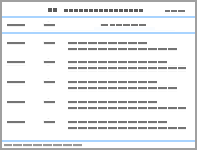
表1 头孢唑林与头孢呋辛对各目标菌株的MIC群体分布值
Tab.1 MIC population distributions of cefazolin and cefuroxime on the targeted organisms %
1.2.3 蒙特卡罗模拟(Monte Carlo simulation,MCS) 根据PK/PD模型对用药方案分别进行蒙特卡洛模拟,当MIC为某一特定值时,可获得靶指数的达标概率(probability of target attainment,PTA);当MIC为菌株群体的分布值时,可计算PK/PD指数对于目标的累积反应分数(cumulative fraction of response,CFR)[22]。通过比较PTA或CFR的大小,评价和确定给药方案,PTA最高或CFR≥90%者可能为最优选择。本试验应用Oracle Crystal Ball(V7.2.2)软件将各给药方案对其目标菌群分别进行MCS。假设药动参数服从正态分布,MIC服从自定义分布,
头孢唑林与头孢呋辛不同给药剂量给药后在规定的时间点内对各目标菌的CFR。见
表2 各药不同剂量给药后不同时间点内对抗目标菌的CFR
Tab.2 CFRs of the tested drugs against the targeted organisms at different doses and time points after infusion %
根据PK/PD模型对给药方案进行蒙特卡罗模拟以评价和优化抗菌方案在抗菌治疗领域已相当普遍,但利用其探讨外科抗菌预防方案却相对缺乏。随着细菌对抗菌药物敏感性的持续性变迁,以前外科抗菌预防用的经验方案如今也可能渐渐失去预防效果。因此探讨或动态拟定合理的预防方案显得非常重要。蒙特卡罗模拟通过对各因素的随机模拟可匹配出符合要求的方案,在药学界已成为选择优化抗菌方案的一种重要手段[23]。笔者利用PK/PD理论和蒙特卡罗模拟根据《中国医师药师临床用药指南》与美国《外科抗菌预防临床实践指南》推荐的用法用量对头孢唑林1,2,3 g和头孢呋辛0.75,1.5 g用于胸外科手术抗菌预防的效果做了理论上的预测。美国《外科抗菌预防临床实践指南》指出,一般体质量的患者外科抗菌预防使用头孢唑林2 g即可,当体质量大于120 kg,则应增加至3 g。但研究显示体质量相似的肥胖患者围手术期使用头孢唑林2,3 g的90 d切口感染率相似[24]。提示头孢唑林2,3 g的预防效果相似。本文数据也提示,除大肠埃希菌外,2与3 g头孢唑林对其他目标菌在给药后的相同时间内能获得基本持平的CFR。推测3 g头孢唑林并不能有效增加目标菌的抗菌药物暴露水平。这与上述研究结果相似。
关于术中追加间隔,《抗菌药物临床应用指导原则》2015版并未指出,仅指出手术时间较短者(<2 h)术前预防用抗菌药物一剂即可,如>3 h或超过所用药物半衰期的2倍以上,术中应追加一次。而美国《外科抗菌预防临床实践指南》指出头孢唑林2或3 g,在历时较长的外科手术中术中均应每4 h追加一次。研究显示,对于通常手术历时短于4 h的肥胖外科手术术前头孢唑林2 g单次给药即可对甲氧西林敏感的葡萄球菌(meticillin-susceptible S.aureus,MSSA)达到足够的组织浓度水平(>MSSA的MIC)并可持续到给药后4.8 h,术中无需重复及3或4 g的大剂量给药[25]。提示当手术时间短于4 h时,术前头孢唑林2 g单次给药即可,长于4 h时术中应每隔4 h追加头孢唑林2 g。本实验数据也显示,头孢唑林3 g对于金黄色葡萄球菌在给药后4 h内能完全达到,头孢唑林2 g能基本达到≥90%的CFR。据此推测,头孢唑林2 g对于手术短于4 h者术前给药一次即可,否则术中应每隔4 h重复追加一剂。这与上述研究结果相似。其实,即使头孢唑林1 g对金黄色葡萄球菌也能在给药后3 h内达到≥90%的CFR。因此,对于以金黄色葡萄球菌为污染菌的胸外科手术,当手术时间短于3 h时头孢唑林1 g术前给药一次即可,超过3 h或超过该药半衰期(t1/2约为1.94 h)2倍(约4 h)以上,术中应追加一剂。这与我国《抗菌药物临床应用指导原则》2015版相符,也符合《中国医师药师临床用药指南》中有关头孢唑林用于外科手术预防感染的推荐用法用量。
头孢唑林用于以大肠埃希菌和肺炎链球菌为污染菌的胸外科手术的抗菌预防效果,目前仍缺乏足够的临床资料可供参考。从文中数据可知,对于大肠埃希菌,头孢唑林1 g在给药后6 h内任意时间点均未达到≥90%的CFR,2 g仅在给药后2 h内,3 g仅在给药后3 h内能达到≥90%的CFR。提示在以大肠埃希菌为污染菌的胸外科手术中,需使用2 g及以上的头孢唑林才可能达到抗菌预防目的,如手术时间短于2 h,术前头孢唑林2或3 g给药一剂即可;如长于2 h或更长时,术中应每隔2~3 h重复追加头孢唑林2或3 g以使目标菌充分暴露在足够的抗菌药物浓度水平下。相反,对于肺炎链球菌,头孢唑林1 g即可在给药后6 h内持续达到≥90%的CFR。推测对以肺炎链球菌为污染菌的胸外科手术,只要手术时间短于6 h头孢唑林1 g术前单次给药就足以达到抗菌预防目的。但实践中并不能确定污染手术的具体菌种,因此也就无法根据菌种精确制定抗菌预防方案。因此在胸外科手术中为达到抗菌预防目的,如手术历时较短(<2~3 h),笔者推荐术前单剂头孢唑林2或3 g即可;如手术时间长于3 h,术中应每隔3 h左右追加2 g,或每隔4 h左右追加3 g。
头孢呋辛用于胸外科手术的抗菌预防效果国内外可用的临床资料较为有限。国内仅少数研究显示头孢呋辛用于胸外科手术预防感染的有效性[26,27]。但本实验数据显示,对各目标菌,即使头孢呋辛1.5 g几乎在给药后6 h内的任意时间点也无法达到≥90%的CFR。提示,头孢呋辛1.5 g用于预防胸外科手术部位感染可能并无良效。这与上述研究结果相驳。但必须注意的是,上述研究结果是基于十几年前的细菌药物敏感性得到的,随着时间的推移,持续的细菌耐药性变迁可能会导致以前的研究结果对现在并不具有代表性。因此,应注意不同地区或医院得到的分离菌即使对同一种抗菌药物其敏感性也是有差异的,这种差异也可能导致不同地区间头孢呋辛预防效果的差异。因此在某一地区或医院头孢呋辛抗菌预防效果不佳,或许在另一地区或医院可获得较好的效果。同时,由于延长输注给药可在不改变药物剂量的情况下改善β-内酰胺类抗生素的PK/PD性能,现已被推荐用于外科抗菌预防[28]。因此,传统输注显示头孢呋辛预防效果不理想,也许延长输注能增加其PK/PD性能。
笔者虽对两药不同剂量下用于胸外科手术的抗菌预防效果作了初步预测,但有几点值得注意:①外科预防PK/PD目标阈值的设立。目前建立的PK/PD目标阈值均来源于抗菌治疗领域而非外科预防领域,在外科预防领域尚无完全认可的PK/PD目标阈值可供参考。但研究显示足够的药物浓度水平对切口感染的重要性以及低浓度水平与高感染发生率有显著相关性[29];在抗菌治疗领域100%
The authors have declared that no competing interests exist.
| [1] |
Health-care-associated infection is the most frequent result of unsafe patient care worldwide, but few data are available from the developing world. We aimed to assess the epidemiology of endemic health-care-associated infection in developing countries. We searched electronic databases and reference lists of relevant papers for articles published 1995–2008. Studies containing full or partial data from developing countries related to infection prevalence or incidence—including overall health-care-associated infection and major infection sites, and their microbiological cause—were selected. We classified studies as low-quality or high-quality according to predefined criteria. Data were pooled for analysis. Of 271 selected articles, 220 were included in the final analysis. Limited data were retrieved from some regions and many countries were not represented. 118 (54%) studies were low quality. In general, infection frequencies reported in high-quality studies were greater than those from low-quality studies. Prevalence of health-care-associated infection (pooled prevalence in high-quality studies, 15·5 per 100 patients [95% CI 12·6–18·9]) was much higher than proportions reported from Europe and the USA. Pooled overall health-care-associated infection density in adult intensive-care units was 47·9 per 1000 patient-days (95% CI 36·7–59·1), at least three times as high as densities reported from the USA. Surgical-site infection was the leading infection in hospitals (pooled cumulative incidence 5·6 per 100 surgical procedures), strikingly higher than proportions recorded in developed countries. Gram-negative bacilli represented the most common nosocomial isolates. Apart from meticillin resistance, noted in 158 of 290 (54%) Staphylococcus aureus isolates (in eight studies), very few articles reported antimicrobial resistance. The burden of health-care-associated infection in developing countries is high. Our findings indicate a need to improve surveillance and infection-control practices. World Health Organization.
[本文引用:1]
|
| [2] |
Abstract By use of the National Nosocomial Infections Surveillance (NNIS) System's surgical patient surveillance component protocol, the NNIS basic risk index was examined to predict the risk of a surgical site infection (SSI). The NNIS basic SSI risk index is composed of the following criteria: American Society of Anesthesiologists score of 3, 4, or 5; wound class; and duration of surgery. The effect when a laparoscope was used was also determined. Overall, for 34 of the 44 NNIS procedure categories, SSI rates increased significantly (P< .05) with the number of risk factors present. With regard to cholecystectomy and colon surgery, the SSI rate was significantly lower when the procedure was done laparoscopically within each risk index category. With regard to appendectomy and gastric surgery, use of a laparoscope affected SSI rates only when no other risk factors were present. The NNIS basic SSI index is useful for risk adjustment for a wide variety of procedures. For 4 operations, the use of a laparoscope lowered SSI risk, requiring modification of the NNIS basic SSI risk index.
[本文引用:1]
|
| [3] |
|
| [4] |
Since 1997, a surgical-site infections (SSI) surveillance network (INCISO) has been implemented in volunteer general surgical units in Northern France. For three months each year, all patients who undergo a surgical procedure are consecutively reviewed for their peri-operative condition and traced for outcome with a 30-day follow-up. Of the 38973 surgical patients included over a three-year period, 1344 (3.4%) developed SSI and 568 died (1.5%) including 78 with an SSI. Organ-space and deep incisional SSI were associated with a higher mortality and required re-operation more frequently than did superficial incisional SSI. SSI incidence and mortality varied according to the surgical procedure. SSI was a significant predictor of mortality, independently of NNIS risk index and other survival predictors. Thirty-eightper cent of deaths in SSI patients were attributable to infection. Hence, the significant impact of SSI on mortality and morbidity in surgical patients is now an additional reason to reinforce compliance of surgical staff with preventive measures and hygiene practices.
[本文引用:1]
|
| [5] |
Objective: To determine mortality, morbidity, and costs attributable to surgical-site infections (SSIs) in the 1990s. Design: A matched follow-up study of a cohort of patients with SSI, matched one-to-one with patients without SSI. Setting: A 415-bed community hospital. Study Population: 255 pairs of patients with and without SSI were matched on age, procedure, National Nosocomial Infection Surveillance System risk index, date of surgery, and surgeon. Outcome Measures: Mortality, excess length of hospitalization, and extra direct costs attributable to SSI; relative risk for intensive care unit (ICU) admission and for readmission to the hospital. Results: Of the 255 pairs, 20 infected patients (7.8%) and 9 uninfected patients (3.5%) died during the postoperative hospitalization (relative risk [RR], 2.2; 95% confidence interval [CI95], 1.14.5). Seventy-four infected patients (29%) and 46 uninfected patients (18%) required ICU admission (RR, 1.6; CI95,1.3-2.0). The median length of hospitalization was 11 days for infected patients and 6 days for uninfected patients. The extra hospital stay attributable to SSI was 6.5 days (CI95, 5-8 days). The median direct costs of hospitalization were $7,531 for infected patients and $3,844 for uninfected patients. The excess direct costs attributable to SSI were $3,089 (CI95, $2,139-$4,163). Among the 229 pairs who survived the initial hospitalization, 94 infected patients (41%) and 17 uninfected patients (7%) required readmission to the hospital within 30 days of discharge (RR, 5.5; CI95, 4.0-7.7). When the second hospitalization was included, the total excess hospitalization and direct costs attributable to SSI were 12 days and $5,038, respectively. Conclusions: In the 1990s, patients who develop SSI have longer and costlier hospitalizations than patients who do not develop such infections. They are twice as likely to die, 60% more likely to spend time in an ICU, and more than five times more likely to be readmitted to the hospital. Programs that reduce the incidence of SSI can substantially decrease morbidity and mortality and reduce the economic burden for patients and hospitals.
[本文引用:1]
|
| [6] |
This retrospective review of reported surgical site () rates in Europe was undertaken to obtain an estimated scale of the problem and the associated economic burden. Preliminary literature searches revealed incomplete datasets when applying the National Surveillance System criteria. Following an expanded literature search, studies were selected according to the number of parameters reported, from those identified as critical for accurate determination of rates. Forty-eight studies were analysed. None of the reviewed studies recorded all the data necessary to enable a comparative assessment of the rate to be undertaken. The estimated range from selected studies analysed varied widely from 1.5-20% - a consequence of inconsistencies in data collection methods, surveillance criteria and wide variations in the surgical procedures investigated - often unspecified. SSIs contribute greatly to the economic costs of surgical procedures - estimated range: 1.47-19.1 billion Euro dollars. The analysis suggests that the true rate of SSIs, currently unknown, is likely to have been previously under-reported. Consequently, the associated economic burden is also likely to be underestimated. A significant improvement in study design, data collection, analysis and reporting will be necessary to ensure that baseline rates are more accurately assessed to enable the evaluation of future cost-effective measures.
[本文引用:1]
|
| [7] |
|
| [8] |
|
| [9] |
The broad-spectrum cephalosporins exhibit time-dependent bactericidal activity and produce prolonged postantibiotic effects only with staphylococci. The duration of time that serum levels exceed the minimum inhibitory concentration (MIC) is the important pharmacodynamic parameter correlating with efficacy for these drugs. Maximal efficacy for cephalosporins in several animal infection models is approached when serum levels are above the MIC for 60%–70% of the dosing interval for Enterobacteriaceae and streptococci and for 40%–50% of the dosing interval for Staphylococcus aureus . Based on MIC 90 values of 0.5 μg/ml for enteric bacilli and 4 μg/ml for S. aureus, these time above MIC goals can be easily met in infected and/or elderly patients following 1–2 g of cefotaxime at 12-h intervals. Full knowledge of the interrelationships between pharmacokinetics and pharmacodynamics is important for determining effective dosage regimens for the broad-spectrum cephalosporins.
[本文引用:1]
|
| [10] |
Studies of beta-lactam pharmacodynamics in infected patients are sparse. In this study, classification and regression tree (CART) and logistic regression analyses were used to identify which pharmacodynamic indices and magnitudes were significant predictors of meropenem efficacy for 101 adult patients with lower respiratory tract infections (LRTI). Using demographic data, a validated population pharmacokinetic model was employed to predict pharmacokinetic parameters and free serum concentrations in the studied patients. Pharmacodynamic indices [percentage of the dosing interval that free drug concentrations remain above the MIC (% fT > MIC), f(maximum concentration of drug in serum) (fC(max))/MIC, fC(min)/MIC, and f(area under the concentration-time curve) (fAUC)/MIC] were calculated based on the baseline pathogen with the highest drug MIC for each patient. The median (range) of percent fT > MIC, fC(max)/MIC, fC(min)/MIC, and fAUC/MIC were 100% (0 to 100%), 728.8 (0.8 to 15,777), 19.9 (0.01 to 278), and 3,605.4 (2.7 to 60,865.9), respectively. CART identified the following breakpoints as significant predictors for microbiological response: >54% fT > MIC, a fC(max)/MIC > 383, and a fC(min)/MIC > 5; fC(min)/MIC > 5 was the only significant predictor of clinical response. Due to 100% fT > MIC achieved in the majority of LRTI patients, fC(min)/MIC was the statistically significant parameter associated with meropenem clinical and microbiological response in the adults with LRTI. The findings for LRTI patients can be applied to optimize meropenem dose regimens to achieve clinical success and microbiological eradication in clinical practice.
[本文引用:2]
|
| [11] |
|
| [12] |
Patients admitted to intensive care unit (ICU) with Klebsiella pneumoniae infections are characterized by high mortality. The aims of the present study were to investigate the population pharmacokinetics parameters and to assess the probability of target attainment of meropenem in critically ill patients to provide information for more effective regimens. Twenty-seven consecutive patients were included in the study. Meropenem was administered as 3-h intravenous (i.v.) infusions at doses of 1-2 g every 8 or 12 h. Meropenem plasma concentrations were measured by a high-performance liquid chromatography (HPLC) method, and a population pharmacokinetics analysis was performed using NONMEM software. Meropenem plasma disposition was simulated for extended (3 h; 5 h) or continuous i.v. infusions, and the following parameters were calculated: time during which free drug concentrations were above minimum inhibitory concentration (MIC) (fT > MIC), free minimum plasma concentrations above 4× MIC (fCmin > 4× MIC), probability of target attainment (PTA), and cumulative fraction of response (CFR). Gender and severity of sepsis affected meropenem clearance, whose typical population values ranged from 6.22 up to 12.04 L/h (mean ± standard deviation (SD) value, 9.38 ± 4.47 L/h). Mean C min value was 7.90 ± 7.91 mg/L, suggesting a high interindividual variability. The simulation confirmed that 88 and 97.5 % of patients achieved effective C min > 4× MIC values after 3- and 5-h i.v. infusions of meropenem 2 g × 3/day, respectively. On the contrary, the same total daily doses reached the target C min > 4× MIC values in 100 % of patients when administered as continuous i.v. infusions. Several factors may influence meropenem pharmacokinetics in ICU patients. Continuous i.v. infusions of meropenem seem to be more effective than standard regimens to achieve optimal therapeutic targets.
[本文引用:2]
|
| [13] |
|
| [14] |
Abstract Antibiotic levels in bone and fat were measured in patients undergoing knee replacement to determine the time that should elapse between intravenous injection and tourniquet inflation. The tissue levels increased progressively with time, and there was wide variation in absorption rate between patients and between the two cephalosporins assessed. Five minutes should probably be left between systemic injection and inflation of the tourniquet, though two minutes may be long enough for drugs which are rapidly absorbed.
[本文引用:1]
|
| [15] |
Twenty-four patients receiving total knee arthroplasty (TKA) were randomized into one of three groups based on tourniquet inflation one, two, or five minutes after administration 1 g cefazolin. Simultaneous serum, soft-tissue, and bone samples were obtained at regular intervals during surgery. All soft-tissue and bone samples were corrected for cefazolin content. The percentage of cefazolin penetration into soft tissue and bone was calculated using the area under the concentration time curve. Adequate cefazolin concentrations for soft tissue and bone were defined as greater than or equal to 4 x minimum inhibitory concentration90 (MIC90 = 1 microgram/ml) of cefazolin to Staphylococcus aureus and coagulase-negative staphylococci. Patients were similar in age, actual body weight, creatinine clearance, and length of tourniquet inflation. The median percentage of cefazolin penetration into soft tissue and bone for the five-, two-, and one-minute groups was 14.5% and 4.6%, 6.7% and 3.0%, and 5.9% and 4.6%, respectively; the percentage of penetration into soft tissue between the five- and one-minute groups was statistically significant. A higher percentage of patients achieved the desired cefazolin concentration (greater than or equal to 4 micrograms/g) if a five-minute interval was selected. The five-minute group achieved the highest mean ratios of concentration to MIC compared with the two- and one-minute groups, although the differences were not statistically significant. The standard 1 g of cefazolin with a five-minute interval between administration and tourniquet inflation resulted in adequate mean soft-tissue and bone concentrations for prophylaxis during TKA with a tourniquet time less than two hours. Additional doses are not warranted after tourniquet release.
[本文引用:1]
|
| [16] |
A randomised prospective trial was undertaken of antibiotic prophylaxis given at various intervals before inflation of the tourniquet for arthroplasty of the knee. Cefuroxime assays of bone and subcutaneous fat from samples collected throughout the operation demonstrated that an interval of 10 minutes was necessary to obtain adequate prophylaxis. Improvement in the timing of antibiotic prophylaxis may result in a reduction in the incidence of infection.
[本文引用:1]
|
| [17] |
目的介绍近年来国内外蒙特卡罗模拟在抗生素药动学和药效学中的作用。方法以美国哈特福德抗生素研究和发展中心的OPTAMA研究为例,对蒙特卡罗模拟在抗生素药动学和药效学中的应用进行综合、分析和归纳。结果蒙特卡罗模拟作为一种利用随机数字或伪随机数字的统计取样方法,可以将抗生素的药动学(患者药动学参数)和药效学(MIC数据)有机结合,它可以预测抗生素给药方案的目标获得概率(probability of target attainment,PTA)。结论蒙特卡罗模拟为抗生素药动学和药效学研究提供了一种新的方法,可为抗生素经验治疗和个体化治疗提供合理给药方案。
[本文引用:1]
|
| [18] |
为了制订给药方案,作者对第一、二、三代9种头孢菌素在健康志愿者中的药物动力学进行了研究,包括头孢唑啉、头孢拉定、头孢羟氨苄、头孢呋辛、头孢噻肟、头孢唑肟、头孢曲松、头孢他啶和头孢克肟。测定了单剂给药后的血尿浓度,计算了药动学参数,并进行了比较,全部注射给药头孢菌素血药浓度均高,以头孢曲松为最高,口服者头孢克肟最低。消除半减期多为1~2小时,然头孢曲松长达8小时。大部分头孢菌素自肾排泄,给药后24小时内自尿中排出给药量的86% ̄96%,而头孢曲松、头孢克肟和头孢噻肟则分别排出37%、24%和51%。根据本研究中获得的药动学资料,提出不同头孢菌素类治疗各种感染的给药方案。
[本文引用:0]
|
| [19] |
|
| [20] |
为贯彻落实《抗菌药物临床应用指导原则》,加强医疗机构抗菌药物临床应用的监督和管理,国家卫生计生委合理用药专家委员会和全国细菌耐药监测网日前发布了《2015年全国细菌耐药监测报告》,现予全文刊登,以促进合理用药,提高抗菌药物临床应用水平。
[本文引用:1]
|
| [21] |
|
| [22] |
目的 根据药动/药效(PK/PD)理论应用蒙特卡洛模拟评价和优化普外科的抗菌药物给药方案。方法 调查普外科临床应用抗菌药物的情况,将静脉滴注亚胺培南、左氧氟沙星和阿米卡星各给药方案对大肠埃希菌、肺炎克雷伯菌、鲍曼不动杆菌、铜绿假单胞菌进行蒙特卡洛模拟,并计算各方案平均疗程以评价疗效。结果 亚胺培南5种给药方案500 mg bid、500 mg tid、500 mg qid、1.0 g bid和1.0 g tid对大肠埃希菌、肺炎克雷伯菌的CFR值均大于目标值,其中500 mg bid的CFR较小且平均疗程较长;各方案对铜绿假单胞菌、鲍曼不动杆菌的CFR均未达标。左氧氟沙星2种给药方案200 mg bid、400 mg qd和阿米卡星3种给药方案200 mg qd、200 mg bid、400 mg qd对目标菌群的CFR模拟值均未达目标,但计算结果符合浓度依赖型药物特点。结论 亚胺培南5种给药方案对大肠埃希菌、肺炎克雷伯菌的最优方案为500 mg tid;对铜绿假单胞菌、鲍曼不动杆菌效果不理想应考虑联合用药。左氧氟沙星、阿米卡星各方案对目标菌群效果均不理想,应结合药敏实验结果用药或考虑联合用药,浓度依赖型抗菌药物每日2次的传统给药方案不能使血药浓度达到目标,建议调整为每日1次。
[本文引用:1]
|
| [23] |
The objective of this study was to assess the profile of a variety of dosing regimens for common intravenous antibiotics against contemporary Enterobacter cloacae, Escherichia coli, Klebsiella pneumoniae and Pseudomonas aeruginosa isolates collected in Canada during 2009, using pharmacodynamic modelling techniques. Monte Carlo simulation was conducted for standard and/or prolonged infusion regimens of cefepime, ceftazidime, ceftriaxone, ciprofloxacin, doripenem, ertapenem, meropenem and piperacillin/tazobactam. The cumulative fraction of response (CFR) was calculated using bactericidal targets for each regimen against each species. All cefepime, doripenem, ertapenem and meropenem regimens achieved optimal exposures against Enterobacteriaceae, whereas target attainment was organism and dose dependent for the other agents. These results support that the currently recommended antimicrobial dosing regimens generally attain acceptable exposures to achieve the requisite pharmacodynamic targets against the Enterobacteriaceae species; however, they fall short of obtaining optimal bactericidal exposures against P aeruginosa.BACKGROUND: With diminishing antimicrobial potency, the choice of effective empirical therapy has become more challenging. Thus, the pharmacodynamic evaluation of potential therapies is essential to identify optimal agents, doses and administration strategies.METHODS: Monte Carlo simulation was conducted for standard and/or prolonged infusion regimens of cefepime, ceftazidime, ceftriaxone, ciprofloxacin, doripenem, ertapenem, meropenem and piperacillin/tazobactam. Minimum inhibitory concentrations were obtained for Escherichia coli (n=64 respiratory isolates), Enterobacter cloacae (n=53), Klebsiella pneumoniae (n=75) and Pseudomonas aeruginosa (n=273) throughout Canada. The cumulative fraction of response (CFR) was calculated using bactericidal targets for each regimen against each species. A CFR 90% was defined as optimal.RESULTS: All cefepime, doripenem, ertapenem and meropenem regimens achieved optimal exposures against Enterobacteriaceae, whereas target attainment was organism and dose dependent for the other agents. Prolonged infusion doripenem and meropenem 1 g and 2 g every 8 h, along with standard infusion doripenem and meropenem 2 g every 8 h, were the only regimens to attain optimal exposures against P aeruginosa. Ciprofloxacin had the lowest CFR against P aeruginosa, followed by cefepime. Among the P aeruginosa isolates collected in the intensive care unit (ICU) compared with the wards, differences of 0.5% to 10% were noted in favour of non-ICU isolates for all agents; however, marked differences (10% to 15%) in CFR were observed for ciprofloxacin in favour of ICU isolates.CONCLUSION: Standard dosing of cefepime, doripenem, ertapenem and meropenem has a high likelihood of obtaining optimal pharmacodynamic indexes against these Enterobacteriaceae. For P aeruginosa, aggressive treatment with high-dose and/or prolonged infusion regimens are likely required to address the elevated resistance rates of respiratory isolates from Canada.
[本文引用:1]
|
| [24] |
Abstract Background: A fixed dose of cefazolin results in serum concentrations that decrease as body mass increases. Current national guidelines suggest a pre-operative cefazolin dose of two grams may be insufficient for patients 120 kg; thus a three gram dose is recommended. These recommendations, however, are based on pharmacokinetic rather than outcome data. We evaluate the efficacy of pre-operative cefazolin two gram and three gram doses as measured by the rate of surgical site infection (SSI). Patients and methods: We conducted a retrospective review of adult patients 100 kg who were prescribed cefazolin as surgical prophylaxis between September 1, 2012 and May 31, 2013 at an academic medical center. Patients were excluded if cefazolin was prescribed but not administered, had a known infection at the site of surgery, or inappropriately received cefazolin prophylaxis based on surgical indication. The SSIs were identified by documentation of SSI in the medical record or findings consistent with the standard Centers for Disease Control and Prevention definition. Inpatient and outpatient records up to 90 days post-operative were reviewed for delayed SSI. Results: Four hundred eighty-three surgical cases were identified in which pre-operative cefazolin was prescribed. Forty-seven patients were excluded leaving a total of 436 patients for final analysis: 152 in the cefazolin two gram group and 284 in the three gram group. Baseline demographics were similar between groups with a mean follow-up duration of 77 days for both groups. Unadjusted SSI rates were 7.2% and 7.4% (odds ratio [OR] 0.98, p = 0.95), for the two gram and three gram groups, respectively. When differences in follow-up between groups were considered and logistic regression was adjusted with propensity score, there remained no difference in SSI rates (OR 0.87, 95% confidence interval 0.36-2.06, p = 0.77). Conclusion: In otherwise similar obese surgical patients weighing 100 kg, the administration of a pre-operative cefazolin two gram dose is associated with a similar rate of SSI compared with patients who received a three gram dose.
[本文引用:1]
|
| [25] |
|
| [26] |
目的 评价预防性使用单剂头孢呋辛对普通胸外科手术后感染的预防效果。方法 通过随机对照试验,将264例普胸手术患者随机分成单剂组(n=134)和多剂组(n=130),比较两组的术后感染率、平均住院时间和平均住院费用。结果 单剂组的术后感染率(8.96%)与多剂组的术后感染率(7.69%)不具有显著性差异(P>0.05),两组的住院时间也无显著性差异(P>0.05)。但是单剂组的平均住院费用比多剂组少1345.90元(P<0.05)。结论 单剂头孢呋辛是预防普胸手术后感染有效的抗生素方案。
[本文引用:1]
|
| [27] |
目的:评价我院胸外科手术抗生素预防用药方案的效果,为临床合理用药提供参考。方法:将我院胸外科手术患者856例分为按我院制订的预防用药方案组642例(应用头孢呋辛或头孢唑啉)及未按方案用药的对照组214例(第1、2、3代头孢类及其它抗菌药物),评价2组临床疗效。结果:方案组与对照组比较,术后体温及血常规检查无显著性差异(P0.05);术后感染率方案组低于对照组(分别为2.34%、5.61%,P0.05)。结论:本院制订的预防用药方案可作为胸外科手术抗生素预防用药的选择。
[本文引用:1]
|
| [28] |
DOI:10.1086/510590
URL
[本文引用:1]
|
| [29] |
The objective of this study was to characterize the relationship between gentamicin concentrations during surgery and the development of wound infection following colorectal operations. Despite decades of research in surgical prophylaxis, the relationship between intraoperative antibiotic concentrations and postoperative infection and the concentrations required for effective prophylaxis have not been established. A pharmacodynamic analysis was conducted using data from a previous prospective, randomized, double-blind clinical study which compared two dosage regimens of gentamicin plus metronidazole for prophylaxis in connection with elective colorectal surgery. Univariate and multivariate analyses of risk factors for postoperative wound infection were conducted, and the relationship between intraoperative gentamicin concentrations and surgical outcome was characterized. The gentamicin concentration at the time of surgical closure was one of the strongest independent risk factors for infection (P = 0.02), along with the presence of diabetes mellitus (P = 0.02), stoma (P = 0.04), and advanced age (P = 0.05). Gentamicin concentrations at closure of less than 0.5 mg/liter were associated with an infection rate of 80% (representing 8 of 10 patients with concentrations below that level) (P = 0.003). Receiver operating characteristic curve analysis identified a critical closure concentration of 1.6 mg/liter for effective surgical prophylaxis (P = 0.002; sensitivity, 70.8%; specificity, 65.9%). This study provides new and important information on antibiotic pharmacodynamics in surgical prophylaxis. It demonstrates the critical effect of the antibiotic concentration at closure on wound infection and suggests a significant association between the concentration and other well-established risk factors, like the timing of preoperative antibiotic administration and surgery duration.
[本文引用:1]
|
