中国科技论文统计源期刊 中文核心期刊  
美国《化学文摘》《国际药学文摘》
《乌利希期刊指南》
WHO《西太平洋地区医学索引》来源期刊  
日本科学技术振兴机构数据库(JST)
第七届湖北十大名刊提名奖  
医药导报, 2023, 42(1): 60-67
doi: 10.3870/j.issn.1004-0781.2023.01.010
妊娠期使用抗抑郁药物的安全性评价*
Safety Evaluation of Selective Use of Antidepressants During Pregnancy
张珞妃1,2,, 杨莉2, 霍记平2,, 赵志刚2,

摘要:

探讨妊娠期使用抗抑郁药物的安全性,为临床用药提供参考。结合指南、文献及数据库检索等循证证据,对抗抑郁药物在妊娠期使用的致畸性、母婴妊娠结局、子代远期影响进行综述以评价安全性。妊娠期使用抗抑郁药物可能存在致畸、自然流产、新生儿戒断综合征、子痫前期和产后出血等风险,且会对后代产生一定远期影响。5-羟色胺再摄取抑制药在妊娠期使用安全性较高,其中舍曲林和西酞普兰推荐为一线用药。有必要开展妊娠期用药研究以获得更多循证证据支持。

关键词: 抗抑郁药; 5-羟色胺再摄取抑制药; 妊娠; 安全性

Abstract:

To explore the safety of antidepressant use during pregnancy and to provide a reference for antidepressant use during pregnancy.Based on clinical evidence such as guidelines,literature,and database search,the teratogenicity,maternal and infant pregnancy outcomes,and long-term effects of antidepressants in pregnancy were reviewed to evaluate their safety.The use of antidepressants during pregnancy may lead to teratogenesis,spontaneous abortion,neonatal withdrawal syndrome,preeclampsia and postpartum bleeding,and may have some long-term effects on offspring.Current evidence shows that serotonin reuptake inhibitors (SSRIs) are safe to be used in pregnancy,among which sertraline and citalopram are recommended as first-line drugs.It is necessary to carry out studies on the use of SSRIs in pregnancy to obtain more clinical evidence support.

Key words: Antidepressants; Serotonin reuptake inhibitors; Pregnancy; Security

开放科学(资源服务)标识码(OSID)

抑郁症是最常见的精神障碍之一,不仅严重影响患者健康,还会导致巨大的社会经济负担[1]。据统计,多达1/5的孕妇在怀孕期间伴发不同程度抑郁症,只有1/3的孕妇考虑服用抗抑郁药,其中约2/3达到缓解[2,3]。中断药物治疗会使抑郁症复发风险明显增高。妊娠期抑郁给孕妇自身带来危害的同时,还会增加胎儿中枢神经系统发育不良等风险。许多妊娠不良后果起因于抑郁本身或抗抑郁药物的使用,包括早产、流产、妊娠高血压、先兆子痫、低出生体质量、儿童运动和认知缺陷,以及各种后代行为异常和情绪困扰[2,4-5],因此科学合理选用抗抑郁药物对孕妇和胎儿健康至关重要。本文将基于循证证据对妊娠期常用抗抑郁药物进行用药安全风险评价,以期指导临床抗抑郁药物的合理选用。

1 妊娠期抗抑郁药物使用现状

据美国疾病预防与控制中心统计[6],抗抑郁药物可分为5-羟色胺再摄取抑制药(serotonin reuptake inhibitors,SSRI)、5-羟色胺-去甲肾上腺素再摄取抑制药(serotonin norepinephrine reuptake inhibitor,SNRI)、三环类抗抑郁药物(tricyclic antidepressants,TCA)、单胺氧化酶抑制药(monoamine oxidase inhibitor,MAOI)和其他抗抑郁药物等五大类。

MASARWA等[7]对涉及156 978例孕妇的11项研究进行荟萃分析,结果发现SSRI和SNRI是妊娠期女性最常用的抗抑郁药物,在过去10年里使用频率显著增加。据统计,10.7%育龄期女性[6]和5.6%妊娠期女性[8]使用过SSRI类药物,居所有抗抑郁药物用量之首。对田纳西医疗补助计划中的105 335例孕妇进行的回顾性研究显示,孕期使用抗抑郁药物比例从1999年的5.7%增加到2003年的13.4%,SSRI使用增加是主要原因[9]。研究围产期抗抑郁药物国际使用情况的荟萃分析结果显示,抗抑郁药物围产期使用率从高到低依次为SSRI(3.01%~4.66%)>SNRI(0.55%~0.73%)>TCA(0.38%~0.62%)>MAOI(40个队列中,只有2个队列报道了MAOI);舍曲林(1.1%)、西酞普兰(0.77%)和氟西汀(0.76%)居于SSRI使用前三位[10]

目前,妊娠期抑郁症患病率以及抗抑郁药物使用率正在逐年增高,而关于抗抑郁药物的妊娠期药动学研究数据十分有限。妊娠合并抑郁患者如何选择抗抑郁药物,如何进行剂量调整以达到最大获益风险比是目前面临的主要挑战。

2 妊娠期抗抑郁药物的安全风险评价
2.1 致畸性

2.1.1 SSRI SSRI通过增加神经递质血清素(5-羟色胺)的突触生物利用度来有效治疗抑郁症,5-羟色胺很容易穿过胎盘,影响某些细胞和组织发育,由此可能导致畸形,特别是心脏畸形[11,12]。一项队列研究[13]显示在妊娠早期使用SSRI可使心血管和隔膜缺陷畸形风险分别增加26%和27%。GAO等[12]对涉及9 085 954例新生儿的29个队列进行荟萃分析,结果显示SSRI的使用与主要先天性异常和先天性心脏缺陷的风险增加相关。

DE VRIES等[14]对涉及5 337 223例妊娠的20项研究进行随机效应荟萃分析,结果显示SSRI较TCA导致先天性心脏缺陷风险增加了1.3倍,而TCA未增加风险;帕罗西汀、氟西汀和舍曲林单独使用风险分别增加1.6,1.4和1.3倍。SHEN等[15]对涉及6 468 241例孕妇的12个队列研究进行荟萃分析,结果显示妊娠早期使用舍曲林会增加婴儿心血管相关畸形及心房和(或)室间隔缺损风险,与其他先天性异常之间未发现显著关联。但一项临床试验结果显示,妊娠期使用舍曲林并未使胎儿心脏功能表现出显著差异[16]。MYLES等[17]对SSRI的致畸性进行荟萃分析,发现氟西汀和帕罗西汀与重大畸形风险增加相关;帕罗西汀与心脏畸形风险增加相关;舍曲林和西酞普兰与先天性畸形无显著相关性。该研究建议氟西汀和帕罗西汀在妊娠早期和计划妊娠人群中应避免使用[17]

虽然以上部分研究结果不一致,但目前大多数研究[16,18-22]表明,SSRI在妊娠期间相对安全,导致严重不良反应风险较低,舍曲林和西酞普兰是SSRI中的一线推荐药物。

2.1.2 SNRI 妊娠期使用SNRI的致畸性相关研究数据有限,文拉法辛是唯一有足够数据纳入个体抗抑郁药物荟萃分析的SNRI[23],大多研究表明文拉法辛不增加先天性畸形的总体发生率[24,25,26]。妊娠早期接触文拉法辛与主要畸形风险增加无关[25],但与先天性心脏缺陷和呼吸缺陷相关[23,24]。DE VRIES等[14]进行荟萃分析发现,SNRI较TCA导致先天性心脏缺陷风险增加了1.7倍,而TCA未增加风险。

2.1.3 TCA ORNOY等[27]通过回顾性研究发现,产前接触TCA不增加主要先天性异常和神经发育问题的发生率。LUPATTELLI等[23]进行队列研究,结果表明妊娠早期使用TCA不增加先天性心脏缺陷的概率。澳大利亚药物评估委员会[28]指出,妊娠早期使用丙咪嗪与先天性缺陷风险增加无关。

但研究尚存争议。BERARD等[24]通过队列研究发现,妊娠早期服用TCA会增加胎儿先天性异常发生率,这与REIS等[29]回顾性研究结果一致;妊娠期使用TCA与眼、耳、面颈部和消化缺陷相关。

与TCA比较,SSRI和SNRI引起后代致畸风险更大[14],但总体风险率较低,同时GENTILE等[28]对TCA妊娠生殖安全性进行分析发现,妊娠早期选择TCA而非SSRI是不合理的,而在妊娠晚期使用TCA(氯丙咪嗪除外),安全性似乎有小幅提高。

2.2 母婴妊娠结局

NORDENG等[30]对63 395例孕妇进行队列研究发现,妊娠期抗抑郁药治疗仅与有限数量的较差母婴妊娠结局显著相关,这与GALBALLY等[31]队列研究结果一致。

2.2.1 自然流产 目前关于抗抑郁药物与自然流产的相关性仍存在争议,且研究数据有限。一项包括5451例孕妇的前瞻性队列研究发现,妊娠早期使用SSRI导致自然流产风险增加34%,而非SSRI类抗抑郁药物与自然流产风险增加无关[32]。UGUZ等[5]和NIKFAR等[33]进行荟萃分析同样发现,妊娠期服用SSRI会增加自然流产风险。

然而,一项样本量为1 005 319例孕妇的回顾性研究给出了不一样的观点,该研究表明妊娠期抗抑郁药物暴露相关自然流产风险仅略有增加,其中个体SSRI暴露与自然流产无关,非SSRI药物与自然流产风险增加相关,如文拉法辛[34]。但RICHARDSON等[35]通过观察性队列研究发现妊娠期使用文拉法辛不会导致自然流产风险增加。抗抑郁药物与自然流产风险相互关系需要更多证据支持。

2.2.2 新生儿戒断综合征(neonatal abstinence syndrome,NAS) 妊娠晚期服用抗抑郁药物可增加不良妊娠结局和NAS发生率[36]。一项队列研究表明,在SSRI暴露的婴儿中,30%出现戒断症状,其中13%出现严重戒断综合征(n=120)[37]。一项涉及93例SSRI诱发的NAS疑似病例回顾性数据分析研究表明(帕罗西汀:氟西汀:舍曲林:西酞普兰=64:14:9:7),SSRI中舍曲林和西酞普兰具有较低NAS风险,氟西汀次之,帕罗西汀最高[38]。CHANMBERS等[39]通过前瞻性研究同样发现,妊娠晚期使用氟西汀会增加NAS风险,这与COHEN等[40]的临床试验结果一致。一项前瞻性队列研究表明,舍曲林在脐带和母体血清浓度低于氟西汀,与其他SSRIs比较,舍曲林在分娩时胎儿暴露量更低,相应NAS风险更小[41]

目前妊娠SNRI/TCA暴露与NAS相关性研究数据有限,仅有少数研究表明妊娠期使用会增加NAS风险,其中TCA类药物NAS风险机制与毒副作用活性和药物半衰期有关[42,43]

考虑到妊娠期抑郁与产后抑郁症风险之间的密切联系及抗抑郁药物的戒断反应,建议患者在分娩期间继续服用抗抑郁药物,而不是在急性围产期改变治疗强度[40],但需综合考虑产前抗抑郁药物暴露导致NAS风险的大小。

2.2.3 子痫前期风险 一直以来,在妊娠中期使用抗抑郁药物与子痫前期或妊娠高血压风险增加相关[44]。一项涉及21 589例孕妇的对照临床试验发现[45],与非抑郁症妇女比较,抑郁症患者仅在妊娠早期接触抗抑郁药物的子痫前期风险无显著差异,在妊娠中期服用抗抑郁药物的子痫前期风险增加近70%;与未治疗抑郁症妇女比较,在妊娠中期服用抗抑郁药物的子痫前期风险显著增加。GALBALLY等[31]进行队列研究发现,服用SNRI的孕妇,妊娠高血压的发生率升高。一项基于7866例孕妇的大型前瞻性队列研究发现[46],在妊娠中期使用抗抑郁药物的女性与未使用抗抑郁药的女性比较,子痫前期风险增加了3倍,其中使用SNRI的女性子痫前期风险增加了6倍以上,显著高于SSRI和TCA。一项回顾性队列研究表明,和TCA比较,使用SSR的孕妇发生子痫前期的风险更高[47]。SNRI研究数据较多,其他抗抑郁药物的研究数据仍然较少。

2.2.4 产后出血风险 PERROTTA等[48]通过观察性研究发现妊娠期使用抗抑郁药物会导致产后出血风险增加,尤其是妊娠晚期;此外,一项荟萃分析结果表明出血风险增加程度还与抗抑郁药物种类有关,以SNRI为主;SSRI和TCA导致产后出血风险普遍低于SNRI[49]

2.3 子代远期影响

2.3.1 胃肠道功能异常 在SSRI暴露儿童中,泻药使用频率增加,表明妊娠期使用SSRI与儿童胃肠道功能异常之间可能存在关联[50]。SALISBURY等[51]对两项前瞻性队列研究进行分析,结果显示产前SSRI暴露与儿童胃肠道功能异常之间存在显著关联,但一篇综述结果显示SSRI暴露与抗腹泻药物使用的显著增加无关[52]。关于胎儿SSRI暴露对肠道神经系统和功能影响还需要更多循证证据证明。

SNRI类药物与儿童胃肠道功能异常之间是否存在关联,目前争议较大。与未接触TCA的儿童比较,在胎儿早期暴露于TCA的儿童中,泻药使用频率显著增加[52]。TCA可能通过抑制血清素再吸收转运蛋白(serotonin reabsorption transporter,SERT)和去甲肾上腺素转运蛋白(norepinephrine transporter,NET)来影响肠道神经系统发育,NET在个体发育早期就被检测到,并先于神经元分化,表明妊娠早期暴露于TCA可能会影响儿童肠道神经系统发育[50]

2.3.2 新生儿癫痫发作 UGUZ[53]对9项研究进行分析发现,妊娠期暴露于抗抑郁药物的新生儿癫痫发作风险增加;SSRI导致新生儿癫痫发作风险高于SNRI和TCA;与妊娠早期暴露比较,妊娠晚期暴露于抗抑郁药物与新生儿癫痫发作相关性更高。但基于相关研究数据的有限性与研究方法的局限性,这一结论仍存在争议。

2.3.3 儿童认知行为能力下降 妊娠期暴露于SSRI/SNRI与儿童语言和(或)认知缺陷风险增加相关[54]。对3 084例儿童进行队列研究发现,在子宫内暴露于SSRI或SNRI的儿童中,有21.43%的儿童在2个或更多领域的认知行为能力下降,相比之下,未暴露于SSRI或SNRI的儿童为16.16%[54]。一项前瞻性队列研究表明[55],妊娠期有SSRI暴露的儿童比无SSRI暴露儿童在6岁时的执行功能更差。不少研究报道妊娠期暴露于SSRI/SNRI与后代多动症和自闭症风险增加相关[5,56-57],然而其他研究没有发现这一关联[58,59,60],这表明可能存在其他影响因素[22]。UGUZ[61]报道,妊娠期使用SSRI、SNRI和TCA的后代多动症风险分别增加0.91~1.66,1.1~1.4和1.1~1.8倍。

以上证据表明,就儿童发育安全性方面,SSRI优于SNRI和TCA。

3 妊娠期抗抑郁药物药动学特点及剂量调整
3.1 药动学特点

3.1.1 SSRI和SNRI 探索抗抑郁药在胎盘的通透性和分布情况对于研究其对胎儿及新生儿的影响具有重要价值。RAMPONO等[62]对妊娠期SSRI和SNRI的胎盘转运进行临床试验,结果显示母体药物和活性代谢物从母体循环到胎儿循环均呈线性转移,其中西酞普兰、艾司西酞普兰、氟西汀和氟伏沙明及其代谢物在胎盘的分布普遍较高,脐带血/母体血药物浓度比值(cord blood/maternal blood drug concentration ratio,C/M)在0.70~0.86之间;舍曲林、N-去甲基舍曲林和帕罗西汀的C/M值明显降低(分别为0.36,0.4和0.15);文拉法辛及其O-去甲基代谢物的C/M值分别为0.72和1.08。一般来说抗抑郁药物胎盘转移的程度越大,NAS发生可能性越大,这还与新生儿自身药物代谢能力以及母体药物浓度有关。

一项临床试验发现多种细胞色素P450(CYP2D6、2C9、2B6、2C19)参与舍曲林代谢,对于妊娠期合并用药患者来说,舍曲林血药浓度不会因为同时给药抑制了特定的CYP亚型而显著增加,与其他抗抑郁药物比较更为安全[63]。COLOMBO等[64]通过临床试验对55例使用SSRI/SNRI治疗的孕妇妊娠晚期的血液进行药动学和药物遗传学分析,结果表明相对其他SSRI和SNRI,舍曲林、西酞普兰和艾司西酞普兰的药动学数据更稳定,安全性更高。

3.1.2 TCA 妊娠期TCA药动学研究数据有限。少数研究表明由于血浆体积、药物代谢酶活性和肾清除率的增加,血浆TCA浓度在妊娠中期开始降低,妊娠晚期降低更加显著[65,66]。SCHORETSANITIS等[67]对具体TCA在妊娠期的药动学特点进行荟萃分析,结果表明曲米帕明和去甲阿米替林在妊娠晚期血药浓度相对于妊娠早期血药浓度明显下降;氯米帕明、丙米嗪在妊娠晚期的血药浓度较妊娠早期下降,但不如前者明显。

3.2 剂量调整

妊娠期正确调整抗抑郁药物剂量是其使用有效性与安全性的前提,也是目前面临的挑战。

研究发现,大多数SSRI在妊娠晚期代谢加快,需增加剂量以维持疗效[68]。FREEMAN等[69]通过临床试验发现(n=6),从妊娠中期到晚期,舍曲林的口服清除率增加了15.7%,随妊娠进展,舍曲林血药浓度水平普遍下降,最低水平在妊娠晚期出现。SIT等[70,71]进行临床试验,结果表明西酞普兰、舍曲林和氟西汀在妊娠20~36周代谢速度增快,于产后12周内代谢速度减慢。除了SSRI,SNRI(文拉法辛)也被发现妊娠时药物浓度-时间曲线下面积低于产后[72],妊娠期使用也应调整剂量。

WISNEI等[65]在临床试验中随访了11例对TCA临床疗效良好的孕妇,结果显示妊娠晚期所需剂量为未怀孕时的1.3~2.0倍,平均增幅为1.6倍。同样,ALTSHULER等[73]案例报道结果表明(n=2),TCA在妊娠晚期血药浓度偏低。上述2项研究结果均提示妊娠晚期使用TCA应增加剂量以维持治疗效果。

目前研究证据表明,大多数抗抑郁药物(SSRI、SNRI和TCA等)在妊娠早期代谢速度变化不大,妊娠早期使用一般无需调整剂量;少数抗抑郁药物从妊娠中期开始代谢速度未显著加快,妊娠中期使用一般也无需调整剂量;大多数抗抑郁药物在妊娠晚期代谢速度显著加快,通常需要增加剂量来维持最佳的药物治疗[68,69,70,71,72]。分娩后,患者可能需要减少剂量至非妊娠期剂量或妊娠期最终剂量的2/3[74,75]

由于个体差异大,对于个体患者的剂量调整需要综合考虑病情严重程度、身体状况以及不同基因型对药物代谢的影响,实现个体化精准用药仍然是临床需要研究的重要问题。

4 基于循证证据的用药选择建议

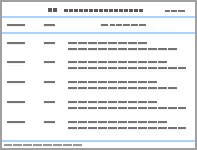
上述循证证据提示,不同种类药物对于特定风险存在差异,如SSRI致畸风险高于SNRI和TCA(总体致畸率低),SNRI产后出血和子痫前期风险均高于SSRI和TCA等,但选择用药时仍需要具体药物的循证证据支持,妊娠期具体抗抑郁药物使用推荐见表1 。

表1 妊娠期抗抑郁药物使用推荐
Tab.1 Recommendations for antidepressant use during pregnancy
药物 用药推荐 主要证据/数量(篇)
SSRI
舍曲林 非必要情况妊娠期不建议使用,经过评估在确认受益大于风险的前提下,可在妊娠期使用[18-20,32,77] 指南[77]:1
临床试验[16,40]:2
对照临床试验[19]:1
西酞普兰 舍曲林和西酞普兰推荐为整个妊娠期必要情况下一线用药[16-20,77] 队列研究[32,37,41]:3
前瞻性研究[39]:1
SSRI类药物妊娠晚期使用,NAS发生率较高,需做好新生儿护理[36,37];舍曲林和西酞普兰较其他SSRI 回顾性研究[29,38]:2
引起NAS风险低,妊娠晚期优先推荐使用[18-19,22,38,41] 荟萃分析[17,21,36]:3
综述[18,20,22]:3
药物 用药推荐 主要证据/数量(篇)
氟西汀 目前争议较大,不推荐为妊娠期一线用药,需慎用[17,20-21,39-40,77]
帕罗西汀 导致新生儿心脏畸形风险明确,妊娠各期均不推荐使用[17,20,29,77]
SNRI
文拉法辛 SNRI类药物在SSRI类药物使用无效时首先推荐使用,其中文拉法辛总体安全性较高[22-23,25-26,35] 队列研究[23,26]:2
观察性研究[35,49]:2
荟萃分析[25,48]:2
妊娠晚期有较大产后出血风险的孕妇,不建议使用SNRI类药物,可选用安全性高的SSRI或TCA类 综述[22]:1
药物[48,49]
TCA
阿米替林 一般不推荐妊娠早期选用TCA类抗抑郁药物[28-29,50,52] 对照临床试验[45]:1
在SSRI和SNRI类药物均使用效果不佳时首先推荐使用,其中阿米替林总体安全性较高[14,24,27] 回顾性研究[29]:1
TCA类药物(如阿米替林)妊娠中期使用导致子痫前期和妊娠期高血压风险低于SSRI和SNRI,可考虑 队列研究[24,31,46-47]:4
在高血压合并妊娠或有较高子痫前期风险的孕妇中于妊娠中期优先SSRI和SNRI使用[31,45-47]
TCA类抗抑郁药物(如阿米替林)妊娠晚期使用导致NAS风险较SSRI和SNRI低,可考虑妊娠晚期优先 荟萃分析[14,67]:2
使用[27,28]
氯米帕明 妊娠期不推荐使用[50,52,67] 综述[27-28,50,52]:4

表1 妊娠期抗抑郁药物使用推荐

Tab.1 Recommendations for antidepressant use during pregnancy

抗抑郁药物对子代精神运动和神经认知的不利影响与整个妊娠期的暴露有关,而胎儿结构异常通常与妊娠早期暴露有关[76],因此妊娠早期一般不建议使用抗抑郁药物。对于轻中度抑郁症,建议采取心理治疗,避免药物使用;对于严重/反复发作性抑郁症,应及时应用抗抑郁药治疗。舍曲林和西酞普兰致畸风险最低[17],必要时可作为妊娠期抑郁症的一线选择。

抗抑郁药物对围产期及对子代的长期影响仍然需要更多循证证据支持。在不同妊娠阶段,根据药物的清除率、合并用药情况、结合个体患者情况等进行个体化剂量调整,这仍然是临床需要解决的重要课题。

参考文献

[1] 牛雅娟. 《中国抑郁障碍防治指南》药物治疗解读[J]. 临床药物治疗杂志, 2018, 16(5):6-8.
[本文引用:1]
[2] JARDE A, MORAIS M, KINGSTON D, et al. Neonatal out-comes in women with untreated antenatal depression compared with women without depression:a systematic review and meta-analysis[J]. J Am Med Assoc Psychiatry, 2016, 73(8):826-837.
[本文引用:2]
[3] RUSH A J, TRIVEDI M H, WISNIEWSKI S R, et al. Acute and longer-term outcomes in depressed outpatients requiring one or several treatment steps:a STAR*D report[J]. Am J Psychiatry, 2006, 163(11):1905-1917.
[本文引用:1]
[4] WARTKO P D, WEISS N S, ENQUOBAHRIE D A, et al. Association of antidepressant continuation in pregnancy and infant birth weight[J]. J Clin Psychopharmacol, 2021, 41(4):403-413. The aim of the study was to evaluate the association of antidepressant continuation in pregnancy with infant birth weight among women using antidepressants before pregnancy. This retrospective cohort study used electronic health data linked with state birth records. We identified singleton live births (2001-2014) to enrolled women with 1 or more antidepressant prescriptions filled 6 months or less before pregnancy, including "continuers" (≥1 antidepressant fills during pregnancy, n = 1775) and "discontinuers" (no fill during pregnancy, n = 1249). We compared birth weight, small or large for gestational age (SGA or LGA), low birth weight (LBW; <2500 g), and macrosomia (>4500 g) between the 2 groups, using inverse probability of treatment weighting to account for pre-pregnancy characteristics, including mental health conditions. After weighting, infants born to antidepressant continuers weighed 71.9 g less than discontinuers' infants (95% confidence interval [CI], -115.5 to -28.3 g), with a larger difference for female infants (-106.4 g; 95% CI, -164.6 to -48.1) than male infants (-48.5 g; 95% CI, -107.2 to 10.3). For female infants, SGA risk was greater in continuers than discontinuers (relative risk [RR],1.54; 95% CI, 1.02 to 2.32). Low birth weight risk was greater in continuers with 50% or more of days covered (RR, 1.69; 95% CI, 1.11 to 2.58) and exposure in the second trimester (RR, 1.53; 95% CI, 1.02 to 2.29), as compared with discontinuers. Depending on infant sex, as well as duration and timing of use, continuation of antidepressant use during pregnancy may be associated with lower infant birth weight, with corresponding increases in LBW and SGA. Copyright © Copyright © 2021 Wolters Kluwer Health, Inc. All rights reserved.
The aim of the study was to evaluate the association of antidepressant continuation in pregnancy with infant birth weight among women using antidepressants before pregnancy. This retrospective cohort study used electronic health data linked with state birth records. We identified singleton live births (2001-2014) to enrolled women with 1 or more antidepressant prescriptions filled 6 months or less before pregnancy, including "continuers" (≥1 antidepressant fills during pregnancy, n = 1775) and "discontinuers" (no fill during pregnancy, n = 1249). We compared birth weight, small or large for gestational age (SGA or LGA), low birth weight (LBW; <2500 g), and macrosomia (>4500 g) between the 2 groups, using inverse probability of treatment weighting to account for pre-pregnancy characteristics, including mental health conditions. After weighting, infants born to antidepressant continuers weighed 71.9 g less than discontinuers' infants (95% confidence interval [CI], -115.5 to -28.3 g), with a larger difference for female infants (-106.4 g; 95% CI, -164.6 to -48.1) than male infants (-48.5 g; 95% CI, -107.2 to 10.3). For female infants, SGA risk was greater in continuers than discontinuers (relative risk [RR],1.54; 95% CI, 1.02 to 2.32). Low birth weight risk was greater in continuers with 50% or more of days covered (RR, 1.69; 95% CI, 1.11 to 2.58) and exposure in the second trimester (RR, 1.53; 95% CI, 1.02 to 2.29), as compared with discontinuers. Depending on infant sex, as well as duration and timing of use, continuation of antidepressant use during pregnancy may be associated with lower infant birth weight, with corresponding increases in LBW and SGA. Copyright © Copyright © 2021 Wolters Kluwer Health, Inc. All rights reserved.
DOI:10.1097/JCP.0000000000001410      PMID:34029294     
[本文引用:1]
[5] UGUZ F. Neonatal and childhood outcomes in offspring of pregnant women using antidepressant medications:a critical review of current meta-analyses[J]. J Clin Pharmacol, 2021, 61(2):146-158.
[本文引用:3]
[6] DAWSON A L, AILES E C, GILBOA S M, et al. Antidepre-ssant prescription claims among reproductive-aged women with private employer-sponsored insurance-United States 2008-2013[J]. MMWR Morb Mortal Wkly Rep, 2016, 65(3):41-46.
[本文引用:2]
[7] MASARWA R, BAR-OZ B, GORELIK E, et al. Prenatal exposure to selective serotonin reuptake inhibitors and serotonin norepinephrine reuptake inhibitors and risk for persistent pulmonary hypertension of the newborn:a systematic review,meta-analysis,and network meta-analysis[J]. Am J Obstet Gynecol, 2019, 220(1):57.
[本文引用:1]
[8] ANDRADE S E, RAEBEL M A, BROWN J, et al. Use of antidepressant medications during pregnancy:a multisite study[J]. Am J Obstet Gynecol, 2008, 198(2):194.
[本文引用:1]
[9] COOPER W O, WILLY M E, PONT S J, et al. Increasing use of antidepressants in pregnancy[J]. Am J Obstet Gynecol, 2007, 196(6):544.
[本文引用:1]
[10] MOLENAAR N M, BAIS B, VAN DEN BERG M P L, et al. The international prevalence of antidepressant use before,during,and after pregnancy:a systematic review and meta-analysis of timing,type of prescriptions and geographical variability[J]. J Affect Disord, 2020, 264:82-89.
[本文引用:1]
[11] SADLER T W. Selective serotonin reuptake inhibitors (SSRIs) and heart defects:potential mechanisms for the observed associations[J]. Reprod Toxicol, 2011, 32(4):484-489.
[本文引用:1]
[12] GAO S Y, WU Q J, SUN C, et al. Selective serotonin reup-take inhibitor use during early pregnancy and congenital malformations:a systematic review and meta-analysis of cohort studies of more than 9 million births[J]. BMC Med, 2018, 16(1):205.
[本文引用:2]
[13] ZHANG T N, GAO S Y, SHEN Z Q, et al. Use of selective serotonin-reuptake inhibitors in the first trimester and risk of cardiovascular-related malformations:a meta-analysis of cohort studies[J]. Sci Rep, 2017.DOI:10.1038/srep43085.
DOI:10.1038/srep43085      URL    
[本文引用:1]
[14] DE VRIES C, GADZHANOVA S, SYKES M J, et al. A systematic review and meta-analysis considering the risk for congenital heart defects of antidepressant classes and individual antidepressants[J]. Drug Saf, 2021, 44(3):291-312.
[本文引用:3]
[15] SHEN Z Q, GAO S Y, LI S X, et al. Sertraline use in the first trimester and risk of congenital anomalies:a systemic review and meta-analysis of cohort studies[J]. Br J Clin Pharmacol, 2017, 83(4):909-922.
[本文引用:1]
[16] KOLDING L, PEDERSEN L H, PETERSEN O B, et al. Sertraline use during pregnancy and effect on fetal cardiac function[J]. J Matern Fetal Neonatal Med, 2021, 34(22):3631-3638.
[本文引用:2]
[17] MYLES N, NEWALL H, WARD H, et al. Systematic meta-analysis of individual selective serotonin reuptake inhibitor medications and congenital malformations[J]. Aust N Z J Psychiatry, 2013, 47(11):1002-1012. It has been suggested that the commonly prescribed class of antidepressants selective serotonin reuptake inhibitors (SSRIs) are associated with birth defects. However, the teratogenic effect of individual SSRIs has not been previously compared using meta-analysis. To determine the strength of the association between individual SSRIs and major, minor, and cardiac malformation among infants born to women taking these medications. Electronic search of CINAHL, EMBASE, Medline, PsycINFO, and ISI Web of Science using the search terms (SSRI OR antidepressant) AND (obstetric outcome OR malformation OR birth outcome OR teratogen), supplemented by manual searching of published references and requests of primary researchers for unpublished data. There were 115 studies identified by electronic search and reviewed in full text, which yielded 16 papers reporting 36 data samples for major malformations, nine papers reporting 26 data samples for cardiac malformations, and four papers reporting seven data samples for minor malformations. Fluoxetine (OR 1.14, 95% CI 1.01-1.30) and paroxetine (OR 1.29, 95% CI 1.11-1.49) were associated with increased risk of major malformations. Paroxetine was associated with increased risk of cardiac malformations (OR 1.44, 95% CI 1.12-1.86). Sertraline and citalopram were not significantly associated with congenital malformation. Between-sample heterogeneity was low and a range of methodological considerations had no significant impact on effect size. There was little evidence of publication bias. Fluoxetine and paroxetine should be avoided in the first trimester and among those at risk of an unplanned pregnancy.
It has been suggested that the commonly prescribed class of antidepressants selective serotonin reuptake inhibitors (SSRIs) are associated with birth defects. However, the teratogenic effect of individual SSRIs has not been previously compared using meta-analysis. To determine the strength of the association between individual SSRIs and major, minor, and cardiac malformation among infants born to women taking these medications. Electronic search of CINAHL, EMBASE, Medline, PsycINFO, and ISI Web of Science using the search terms (SSRI OR antidepressant) AND (obstetric outcome OR malformation OR birth outcome OR teratogen), supplemented by manual searching of published references and requests of primary researchers for unpublished data. There were 115 studies identified by electronic search and reviewed in full text, which yielded 16 papers reporting 36 data samples for major malformations, nine papers reporting 26 data samples for cardiac malformations, and four papers reporting seven data samples for minor malformations. Fluoxetine (OR 1.14, 95% CI 1.01-1.30) and paroxetine (OR 1.29, 95% CI 1.11-1.49) were associated with increased risk of major malformations. Paroxetine was associated with increased risk of cardiac malformations (OR 1.44, 95% CI 1.12-1.86). Sertraline and citalopram were not significantly associated with congenital malformation. Between-sample heterogeneity was low and a range of methodological considerations had no significant impact on effect size. There was little evidence of publication bias. Fluoxetine and paroxetine should be avoided in the first trimester and among those at risk of an unplanned pregnancy.
DOI:10.1177/0004867413492219      PMID:23761574     
[本文引用:3]
[18] FISCHER F C, HARARI M M, WEISSKOPF E, et al. Risk-benefit balance assessment of SSRI antidepressant use during pregnancy and lactation based on best available evidence-an update[J]. Expert Opin Drug Saf, 2019, 18(10):949-963.
[本文引用:1]
[19] ALTAMURA A C, DE GASPARI I F, ROVERA C, et al. Safety of SSRIs during pregnancy:a controlled study[J]. Hum Psychopharmacol, 2013, 28(1):25-28.
[本文引用:0]
[20] WOMERSLEY K, RIPULLONE K, AGIUS M. What are the risks associated with different selective serotonin re-uptake inhibitors (SSRIs) to treat depression and anxiety in pregnancy? an evaluation of current evidence[J]. Psychiatr Danub, 2017, 29(Suppl 3):629-644.
[本文引用:0]
[21] RIGGIN L, FRANKEL Z, MORETTI M, et al. The fetal safety of fluoxetine:a systematic review and meta-analysis[J]. J Obstet Gynaecol Can, 2013, 35(4):362-369.
[本文引用:0]
[22] HENDSON L, SHAN V, TRKULJA S. Selective serotonin reuptake inhibitors or serotonin-norepinephrine reuptake inhibitors in pregnancy:infant and childhood outcomes[J]. Paediatr Child Health, 2021, 26(5):321-322.
[本文引用:2]
[23] LUPATTELLI A, MAHIC M, HANDAL M, et al. Attention-deficit/hyperactivity disorder in children following prenatal exposure to antidepressants:results from the Norwegian mother,father and child cohort study[J]. BJOG, 2021, 128(12):1917-1927.
[本文引用:3]
[24] BERARD A, ZHAO J P, SHEEHY O. Antidepressant use during pregnancy and the risk of major congenital malformations in a cohort of depressed pregnant women:an updated analysis of the Quebec Pregnancy Cohort[J]. Br Med J Open, 2017, 7(1):e013372.
[本文引用:3]
[25] LASSEN D, ENNIS Z N, DAMKIER P. First-trimester pre-gnancy exposure to venlafaxine or duloxetine and risk of major congenital malformations:a systematic review[J]. Basic Clin Pharmacol Toxicol, 2016, 118(1):32-36.
[本文引用:2]
[26] FURU K, KIELER H, HAGLUND B, et al. Selective sero-tonin reuptake inhibitors and venlafaxine in early pregnancy and risk of birth defects:population based cohort study and sibling design[J]. Br Med J, 2015.DOI:10.1136/bmj.h1798.
DOI:10.1136/bmj.h1798      URL    
[本文引用:1]
[27] ORNOY A, WEINSTEIN-FUDIM L, ERGAZ Z. Antidepre-ssants,antipsychotics,and mood stabilizers in pregnancy:what do we know and how should we treat pregnant women with depression[J]. Birth Defects Res, 2017, 109(12):933-956.
[本文引用:1]
[28] GENTILE S. Tricyclic antidepressants in pregnancy and puerperium[J]. Expert Opin Drug Saf, 2014, 13(2):207-225. Several concerns have been raised regarding the reproductive safety of the antidepressants most frequently used in clinical practice, such as selective serotonin reuptake inhibitors (SSRIs). This article aims to assess the risk/benefit ratio of the use of alternative pharmacological options, specifically tricyclic antidepressants (TCAs) in pregnancy and puerperium. Although TCAs have been prescribed for several decades, their own teratogenic potential to cause structural defects remains undetermined. However, some signals seem to exist suggesting that prenatal clomipramine exposure may increase the risk of cardiac defects. Moreover, TCAs have been associated with the risk of prenatal antidepressant exposure syndrome. Among TCAs, clomipramine seems to be associated with more severe and prolonged neonatal symptoms. However, some findings of this syndrome reported with SSRI use, such as persistent pulmonary hypertension of the newborn, necrotizing enterocolitis and QT prolongation, have not been described after TCA exposure. Hence, current evidence suggests that, as a group, a preference of TCAs over SSRIs in early pregnancy is not justified. In contrast, there appears to be a small gain in safety if TCAs (with the exception of clomipramine) are used in late pregnancy. Among this class of antidepressants, nortriptyline seems to be safest medication for use during breastfeeding.
Several concerns have been raised regarding the reproductive safety of the antidepressants most frequently used in clinical practice, such as selective serotonin reuptake inhibitors (SSRIs). This article aims to assess the risk/benefit ratio of the use of alternative pharmacological options, specifically tricyclic antidepressants (TCAs) in pregnancy and puerperium. Although TCAs have been prescribed for several decades, their own teratogenic potential to cause structural defects remains undetermined. However, some signals seem to exist suggesting that prenatal clomipramine exposure may increase the risk of cardiac defects. Moreover, TCAs have been associated with the risk of prenatal antidepressant exposure syndrome. Among TCAs, clomipramine seems to be associated with more severe and prolonged neonatal symptoms. However, some findings of this syndrome reported with SSRI use, such as persistent pulmonary hypertension of the newborn, necrotizing enterocolitis and QT prolongation, have not been described after TCA exposure. Hence, current evidence suggests that, as a group, a preference of TCAs over SSRIs in early pregnancy is not justified. In contrast, there appears to be a small gain in safety if TCAs (with the exception of clomipramine) are used in late pregnancy. Among this class of antidepressants, nortriptyline seems to be safest medication for use during breastfeeding.
DOI:10.1517/14740338.2014.869582      PMID:24383525     
[本文引用:2]
[29] REIS M, KALLEN B. Delivery outcome after maternal use of antidepressant drugs in pregnancy:an update using Swedish data[J]. Psychol Med, 2010, 40(10):1723-1733.
[本文引用:1]
[30] NORDENG H, VAN GELDER M M H, SPIGSET O, et al. Pregnancy outcome after exposure to antidepressants and the role of maternal depression:results from the norwegian mother and child cohort study[J]. J Clin Psychopharmacol, 2012, 32(2):186-194.
[本文引用:1]
[31] GALBALLY M, WATSON S J, BOYCE P, et al. The mother,the infant and the mother-infant relationship:what is the impact of antidepressant medication in pregnancy[J]. J Affect Disord, 2020, 272:363-370.
[本文引用:2]
[32] WU P, VELEZ EDWARDS D R, GORRINDO P, et al. Association between first trimester antidepressant use and risk of spontaneous abortion[J]. Pharmacotherapy, 2019, 39(9):889-898.
[本文引用:1]
[33] NIKFAR S, RAHIMI R, HENDOIEE N, et al. Increasing the risk of spontaneous abortion and major malformations in newborns following use of serotonin reuptake inhibitors during pregnancy:a systematic review and updated meta-analysis[J]. Daru, 2012, 20(1):75-84.
[本文引用:1]
[34] KJAERSGAARD M I, PARNER E T, VESTERGAARD M, et al. Prenatal antidepressant exposure and risk of spontaneous abortion:a population-based study[J]. PLoS One, 2013, 8(8):e72095.
[本文引用:1]
[35] RICHARDSON J L, MARTIN F, DUNSTAN H, et al. Pregnancy outcomes following maternal venlafaxine use:a prospective observational comparative cohort study[J]. Reprod Toxicol, 2019, 84:108-113.
[本文引用:1]
[36] GENTILE S. On categorizing gestational,birth,and neonatal complications following late pregnancy exposure to antidepressants:the prenatal antidepressant exposure syndrome[J]. CNS Spectr, 2010, 15(3):167-185.
[本文引用:1]
[37] LEVINSON CASTIEL R, MERLOB P, LINDER N, et al. Neonatal abstinence syndrome after in utero exposure to selective serotonin reuptake inhibitors in term infants[J]. Arch Pediatr Adolesc Med, 2006, 160(2):173-176.
[本文引用:1]
[38] SANZ E J, DE LAS CUEVAS C, KIURU A, et al. Selective serotonin reuptake inhibitors in pregnant women and neonatal withdrawal syndrome:a database analysis[J]. Lancet, 2005, 365(9458):482-487.
[本文引用:1]
[39] CHAMBERS C D, JOHNSON K A, DICK L M, et al. Birth outcomes in pregnant women taking fluoxetine[J]. N Engl J Med, 1996, 335(14):1010-1015.
[本文引用:1]
[40] COHEN L S, HELLER V L, BAILEY J W, et al. Birth out-comes following prenatal exposure to fluoxetine[J]. Biol Psychiatry, 2000, 48(10):996-1000.
[本文引用:2]
[41] GALBALLY M, LEWIS A J, LUM J, et al. Serotonin discon-tinuation syndrome following in utero exposure to antidepressant medication:prospective controlled study[J]. Aust N Z J Psychiatry, 2009, 43(9):846-854.
[本文引用:1]
[42] SHEA A K, WANG D Y, SNELGROVE J W, et al. Do ma-ternal pharmacogenetics impact the neonatal abstinence syndrome following in utero exposure to antidepressant medications?[J]J Obstet Gynaecol Can, 2021, 43(6):726-732.
[本文引用:1]
[43] TER HORST P G, JANSMAN F G A, VAN LINGEN R A, et al. Pharmacological aspects of neonatal antidepressant withdrawal[J]. Obstet Gynecol Surv, 2008, 63(4):267-279. Depression is common in reproductive age women, and continued pharmacologic treatment of depression during pregnancy may be necessary to prevent relapse, which could be harmful for both the fetus and the mother. Although data on drug safety are imperfect and incomplete, the benefits of antidepressant therapy during pregnancy generally outweigh the risks. Neonates who are exposed to antidepressant medications during gestation are at increased risk to have neonatal withdrawal syndrome, although the exact incidence of this complication is unknown because the definition of the syndrome is not clear and withdrawal reactions are probably underreported. Tricyclic antidepressant withdrawal syndrome is most likely related to muscarinergic activity and individual drug half-lives, and selective serotonin reuptake inhibitor withdrawal may be due to a decrease in available synaptic serotonin in the face of down-regulated serotonin receptors, the secondary effects of other neurotransmitters, and biological or cognitive sensitivity. Other factors that influence neonatal toxicity or withdrawal include the normal physiologic changes of pregnancy, the altered activity of CYP450 enzymes during pregnancy, drug-drug transporter (PgP and OCT3) interaction, and the presence of genetic polymorphisms in genes influencing drug metabolism. Further research is necessary. Obstetricians & Gynecologists, Family Physicians Learning Objectives: After completion of this article, the reader should be able to explain the importance of antidepressant therapy during pregnancy and postpartum, summarize the important neonatal effects of antidepressants, and describe the potential teratogenic effects of antidepressants.
Depression is common in reproductive age women, and continued pharmacologic treatment of depression during pregnancy may be necessary to prevent relapse, which could be harmful for both the fetus and the mother. Although data on drug safety are imperfect and incomplete, the benefits of antidepressant therapy during pregnancy generally outweigh the risks. Neonates who are exposed to antidepressant medications during gestation are at increased risk to have neonatal withdrawal syndrome, although the exact incidence of this complication is unknown because the definition of the syndrome is not clear and withdrawal reactions are probably underreported. Tricyclic antidepressant withdrawal syndrome is most likely related to muscarinergic activity and individual drug half-lives, and selective serotonin reuptake inhibitor withdrawal may be due to a decrease in available synaptic serotonin in the face of down-regulated serotonin receptors, the secondary effects of other neurotransmitters, and biological or cognitive sensitivity. Other factors that influence neonatal toxicity or withdrawal include the normal physiologic changes of pregnancy, the altered activity of CYP450 enzymes during pregnancy, drug-drug transporter (PgP and OCT3) interaction, and the presence of genetic polymorphisms in genes influencing drug metabolism. Further research is necessary. Obstetricians & Gynecologists, Family Physicians Learning Objectives: After completion of this article, the reader should be able to explain the importance of antidepressant therapy during pregnancy and postpartum, summarize the important neonatal effects of antidepressants, and describe the potential teratogenic effects of antidepressants.
DOI:10.1097/OGX.0b013e3181676be8      PMID:18348740     
[本文引用:1]
[44] AUSTIN M P. To treat or not to treat:maternal depression,SSRI use in pregnancy and adverse neonatal effects[J]. Psychol Med, 2006, 36(12):1663-1670.
[本文引用:1]
[45] AVALOS L A, CHEN H, LI D K. Antidepressant medication use,depression,and the risk of preeclampsia[J]. CNS Spectr, 2015, 20(1):39-47.
[本文引用:1]
[46] BERNARD N, FOREST J C, TARABULSY G M, et al. Use of antidepressants and anxiolytics in early pregnancy and the risk of preeclampsia and gestational hypertension:a prospective study[J]. BMC Pregnancy Childbirth, 2019, 19(1):146.
[本文引用:1]
[47] PALMSTEN K, HUYBRECHTS K F, MICHELS K B, et al. Antidepressant use and risk for preeclampsia[J]. Epidemiology, 2013, 24(5):682-691. Prior studies suggest that women who use antidepressants during pregnancy have an increased risk for preeclampsia, yet the comparative safety of specific antidepressants remains unclear. US nationwide Medicaid Analytic eXtract (MAX) data have not been used to study medication safety during pregnancy. We identified 100,942 pregnant women with depression from 2000 to 2007 MAX data. We used pharmacy dispensing records to ascertain exposure to selective serotonin reuptake inhibitor (SSRI), serotonin-norepenephrine reuptake inhibitor (SNRI), tricyclic, bupropion, other antidepressant monotherapy or polytherapy, and specific antidepressants, during the second trimester and first half of the third trimester. Relative risks (RRs) and 95% confidence intervals (CIs) were adjusted for delivery year, preeclampsia risk factors, depression severity proxies, other antidepressant indications, other medications, and healthcare utilization. The risk of preeclampsia was 5.4% among women with depression and no antidepressant exposure. Compared with these women, the risk for preeclampsia was higher among those receiving SNRI (RR: 1.52, 95% CI = 1.26-1.83) and tricyclic monotherapy (RR: 1.62, 95% CI = 1.23-2.12), but not SSRI monotherapy (RR: 1.00, 95% CI = 0.93-1.07) or other antidepressants. Compared with women receiving SSRI monotherapy, preeclampsia risk was higher among women with SNRI (RR: 1.54, 95% CI = 1.28-1.86) and tricyclic (RR: 1.64, 95% CI = 1.25-2.16) monotherapy. None of the specific SSRIs was associated with preeclampsia. The RR with venlafaxine was 1.57 (95% CI = 1.29-1.91) and with amitriptyline 1.72 (95% CI = 1.24-2.40). In this population, SNRIs and tricyclics were associated with a higher risk of preeclampsia than SSRIs.
Prior studies suggest that women who use antidepressants during pregnancy have an increased risk for preeclampsia, yet the comparative safety of specific antidepressants remains unclear. US nationwide Medicaid Analytic eXtract (MAX) data have not been used to study medication safety during pregnancy. We identified 100,942 pregnant women with depression from 2000 to 2007 MAX data. We used pharmacy dispensing records to ascertain exposure to selective serotonin reuptake inhibitor (SSRI), serotonin-norepenephrine reuptake inhibitor (SNRI), tricyclic, bupropion, other antidepressant monotherapy or polytherapy, and specific antidepressants, during the second trimester and first half of the third trimester. Relative risks (RRs) and 95% confidence intervals (CIs) were adjusted for delivery year, preeclampsia risk factors, depression severity proxies, other antidepressant indications, other medications, and healthcare utilization. The risk of preeclampsia was 5.4% among women with depression and no antidepressant exposure. Compared with these women, the risk for preeclampsia was higher among those receiving SNRI (RR: 1.52, 95% CI = 1.26-1.83) and tricyclic monotherapy (RR: 1.62, 95% CI = 1.23-2.12), but not SSRI monotherapy (RR: 1.00, 95% CI = 0.93-1.07) or other antidepressants. Compared with women receiving SSRI monotherapy, preeclampsia risk was higher among women with SNRI (RR: 1.54, 95% CI = 1.28-1.86) and tricyclic (RR: 1.64, 95% CI = 1.25-2.16) monotherapy. None of the specific SSRIs was associated with preeclampsia. The RR with venlafaxine was 1.57 (95% CI = 1.29-1.91) and with amitriptyline 1.72 (95% CI = 1.24-2.40). In this population, SNRIs and tricyclics were associated with a higher risk of preeclampsia than SSRIs.
DOI:10.1097/EDE.0b013e31829e0aaa      PMID:23873072     
[本文引用:1]
[48] PERROTTA C, GIORDANO F, COLOMBO A, et al. Post-partum bleeding in pregnant women receiving SSRIs/SNRIs:new insights rrom a descriptive observational study and an analysis of data from the FAERS database[J]. Clin Ther, 2019, 41(9):1755-1766.
[本文引用:1]
[49] JIANG H Y, XU L L, LI Y C, et al. Antidepressant use dur-ing pregnancy and risk of postpartum hemorrhage:a systematic review and meta-analysis[J]. J Psychiatr Res, 2016, 83:160-167.
[本文引用:1]
[50] NIJENHUIS C M, TER HORST P G J, DE JONG VAN DEN BERG L T W, et al. Disturbed development of the enteric nervous system after in utero exposure of selective serotonin re-uptake inhibitors and tricyclic antidepressants.Part1:literature review[J]. Br J Clin Pharmacol, 2012, 73(1):16-26.
[本文引用:2]
[51] SALISBURY A L, PAPANDONATOS G D, STROUD L R, et al. Prenatal antidepressant exposures and gastrointestinal complaints in childhood:a gut-brain axis connection[J]. Dev Psychobiol, 2020, 62(6):816-828.
[本文引用:1]
[52] NIJENHUIS C M, TER HORST P G, VAN REIN N, et al. Disturbed development of the enteric nervous system after in utero exposure of selective serotonin re-uptake inhibitors and tricyclic antidepressants.Part 2:testing the hypotheses[J]. Br J Clin Pharmacol, 2012, 73(1):126-134.
[本文引用:2]
[53] UGUZ F. The use of antidepressant medications during pregnancy and the risk of neonatal seizures:a systematic review[J]. J Clin Psychopharmacol, 2019, 39(5):479-484.
[本文引用:1]
[54] SINGAL D, CHATEAU D, STRUCK S, et al. In utero antide-pressants and neurodevelopmental outcomes in kinder-garteners[J]. Pediatrics, 2020, 145(5):e20191157.
[本文引用:2]
[55] DHALIWAL G, WEIKUM W M, JOLICOEUR-MARTINE-AU A, et al. Effects of maternal depression and prenatal SSRI exposure on executive functions and susceptibility to household chaos in 6-year-old children:prospective cohort study[J]. BJPsych Open, 2020, 6(5):e106.
[本文引用:1]
[56] LESHEM R, BAR OZ B, DIAV CITRIN O, et al. Selective serotonin reuptake inhibitors (SSRIs) and serotonin norepinephrine reuptake inhibitors (SNRIs) during pregnancy and the risk for autism spectrum disorder (ASD) and attention deficit hyperactivity disorder (ADHD) in the offspring:a true effect or a bias?A systematic review & meta-analysis[J]. Curr Neuropharmacol, 2021, 19(6):896-906.
[本文引用:1]
[57] KING B H. Assessing risk of autism spectrum disorder in children after antidepressant use during pregnancy[J]. J Am Med Assoc Pediatr, 2016, 170(2):111-112.
[本文引用:1]
[58] BOUKHRIS T, SHEEHY O, BERARD A. Antidepressant use in pregnancy and the risk of attention deficit with or without hyperactivity disorder in children[J]. Paediatr Perinat Epidemiol, 2017, 31(4):363-373.
[本文引用:1]
[59] BROWN H K, RAY J G, WILTON A S, et al. Association between serotonergic antidepressant use during pregnancy and autism spectrum disorder in children[J]. J Am Med Assoc, 2017, 317(15):1544-1552.
[本文引用:1]
[60] RAI D, LEE B K, DALMAN C, et al. Antidepressants during pregnancy and autism in offspring:population based cohort study[J]. Br Med J, 2017.DOI:10.1136/bmj.j281.
DOI:10.1136/bmj.j281      URL    
[本文引用:1]
[61] UGUZ F. Maternal antidepressant use during pregnancy and the risk of attention-deficit/hyperactivity disorder in children:a systematic review of the current literature[J]. J Clin Psychopharmacol, 2018, 38(3):254-259.
[本文引用:1]
[62] RAMPONO J, SIMMER K, ILETT K F, et al. Placental transfer of SSRI and SNRI antidepressants and effects on the neonate[J]. Pharmacopsychiatry, 2009, 42(3):95-100. We investigated placental transfer and neurobehavioural effects in neonates exposed to citalopram, escitalopram, fluoxetine, fluvoxamine, paroxetine or sertraline (SSRI's), or to venlafaxine (an SNRI). Women receiving antidepressants during pregnancy and their neonates were studied. Cord and maternal drug concentrations were measured at birth and in the neonates plasma on day 3. Neonates were also assessed using a range of neurobehavioral tests and compared to controls. Median cord/maternal distribution ratio was 0.7-0.86 (range) for SSRIs, 0.72 for the SNRI venlafaxine and 1.08 for the O-desmethyl metabolite. Neonatal abstinence scores were significantly higher (p<0.05) in exposed infants than controls on day 1. Brazelton scores for habituation, social-interactive, motor and autonomic clusters, and serotonin scores were significantly greater (p<0.05) in exposed infants. Transfer of SSRIs and SNRIs across the placenta was substantial. Neonates developed mild behavioral symptoms in the early perinatal period but these were self-limiting and similar for both SSRIs and the SNRI venlafaxine.
We investigated placental transfer and neurobehavioural effects in neonates exposed to citalopram, escitalopram, fluoxetine, fluvoxamine, paroxetine or sertraline (SSRI's), or to venlafaxine (an SNRI). Women receiving antidepressants during pregnancy and their neonates were studied. Cord and maternal drug concentrations were measured at birth and in the neonates plasma on day 3. Neonates were also assessed using a range of neurobehavioral tests and compared to controls. Median cord/maternal distribution ratio was 0.7-0.86 (range) for SSRIs, 0.72 for the SNRI venlafaxine and 1.08 for the O-desmethyl metabolite. Neonatal abstinence scores were significantly higher (p<0.05) in exposed infants than controls on day 1. Brazelton scores for habituation, social-interactive, motor and autonomic clusters, and serotonin scores were significantly greater (p<0.05) in exposed infants. Transfer of SSRIs and SNRIs across the placenta was substantial. Neonates developed mild behavioral symptoms in the early perinatal period but these were self-limiting and similar for both SSRIs and the SNRI venlafaxine.
DOI:10.1055/s-0028-1103296      PMID:19452377     
[本文引用:1]
[63] KOBAYASHI K, ISHIZUKA T, SHIMADA N, et al. Sertra-line N-demethylation is catalyzed by multiple isoforms of human cytochrome P450 in vitro[J]. Drug Metab Dispos, 1999, 27(7):763-766.
[本文引用:1]
[64] COLOMBO A, GIORDANO F, GIORGETTI F, et al. Corre-lation between pharmacokinetics and pharmacogenetics of selective serotonin reuptake inhibitors and selective serotonin and noradrenaline reuptake inhibitors and maternal and neonatal outcomes:results from a naturalistic study in patients with affective disorders[J]. Hum Psychopharmacol, 2021, 36(3):e2772.
[本文引用:1]
[65] WISNEI K L, PEREL J M, WHEELER S B. Tricyclic dose requirements across pregnancy[J]. Am J Psychiatry, 1993, 150(10):1541-1542.
[本文引用:2]
[66] GENTILE S. Tricyclic antidepressants in pregnancy and puerperium[J]. Expert Opin Drug Saf, 2014, 13(2):207-225. Several concerns have been raised regarding the reproductive safety of the antidepressants most frequently used in clinical practice, such as selective serotonin reuptake inhibitors (SSRIs). This article aims to assess the risk/benefit ratio of the use of alternative pharmacological options, specifically tricyclic antidepressants (TCAs) in pregnancy and puerperium. Although TCAs have been prescribed for several decades, their own teratogenic potential to cause structural defects remains undetermined. However, some signals seem to exist suggesting that prenatal clomipramine exposure may increase the risk of cardiac defects. Moreover, TCAs have been associated with the risk of prenatal antidepressant exposure syndrome. Among TCAs, clomipramine seems to be associated with more severe and prolonged neonatal symptoms. However, some findings of this syndrome reported with SSRI use, such as persistent pulmonary hypertension of the newborn, necrotizing enterocolitis and QT prolongation, have not been described after TCA exposure. Hence, current evidence suggests that, as a group, a preference of TCAs over SSRIs in early pregnancy is not justified. In contrast, there appears to be a small gain in safety if TCAs (with the exception of clomipramine) are used in late pregnancy. Among this class of antidepressants, nortriptyline seems to be safest medication for use during breastfeeding.
Several concerns have been raised regarding the reproductive safety of the antidepressants most frequently used in clinical practice, such as selective serotonin reuptake inhibitors (SSRIs). This article aims to assess the risk/benefit ratio of the use of alternative pharmacological options, specifically tricyclic antidepressants (TCAs) in pregnancy and puerperium. Although TCAs have been prescribed for several decades, their own teratogenic potential to cause structural defects remains undetermined. However, some signals seem to exist suggesting that prenatal clomipramine exposure may increase the risk of cardiac defects. Moreover, TCAs have been associated with the risk of prenatal antidepressant exposure syndrome. Among TCAs, clomipramine seems to be associated with more severe and prolonged neonatal symptoms. However, some findings of this syndrome reported with SSRI use, such as persistent pulmonary hypertension of the newborn, necrotizing enterocolitis and QT prolongation, have not been described after TCA exposure. Hence, current evidence suggests that, as a group, a preference of TCAs over SSRIs in early pregnancy is not justified. In contrast, there appears to be a small gain in safety if TCAs (with the exception of clomipramine) are used in late pregnancy. Among this class of antidepressants, nortriptyline seems to be safest medication for use during breastfeeding.
DOI:10.1517/14740338.2014.869582      PMID:24383525     
[本文引用:1]
[67] SCHORETSANITIS G, SPIGSET O, STINGL J C, et al. The impact of pregnancy on the pharmacokinetics of antidepressants:a systematic critical review and meta-analysis[J]. Expert Opin Drug Metab Toxicol, 2020, 16(5):431-440.
[本文引用:1]
[68] KOREN G, ORNOY A. Clinical implications o selective se-rotonin reuptake inhibitors-selective serotonin norepi-nephrine reuptake inhibitors pharmacogenetics during pregnancy and lactation[J]. Pharmacogenomics, 2018, 19(14):1139-1145.
[本文引用:2]
[69] FREEMAN M P, NOLAN JR P E, DAVIS M F, et al. Phar-macokinetics of sertraline across pregnancy and postpartum[J]. J Clin Psychopharmacol, 2008, 28(6):646-653.
[本文引用:2]
[70] SIT D K, PEREL J M, HELSEL J C, et al. Changes in anti-depressant metabolism and dosing across pregnancy and early postpartum[J]. J Clin Psychiatry, 2008, 69(4):652-658.
[本文引用:2]
[71] SIT D, PEREL J M, LUTHER J F, et al. Disposition of chiral and racemic fluoxetine and norfluoxetine across childbearing[J]. J Clin Psychopharmacol, 2010, 30(4):381-386. To add to the limited data on the clinical pharmacology of antidepressants during pregnancy, we examined the dose-corrected chiral and racemic levels (level/dose) of fluoxetine (FLX) and norfluoxetine (NorFLX) during pregnancy and early postpartum. The authors evaluated 17 pregnant women who received fluoxetine therapy. Doses were recorded weekly across gestation and postpartum. At 20, 30, and 36 weeks of gestation, during delivery, and 12 weeks after delivery, the depression level was assessed with the Hamilton Rating Scale for Depression (HRS-D), and plasma samples were analyzed for levels of S- and R-FLX and S- and R-NorFLX. The mean ratios of the chiral parent drug (S-FLX + R-FLX) to metabolite levels (S-NorFLX + R-NorFLX) decreased across pregnancy. The differences were significant between 20-36 weeks and 30-36 weeks. After delivery, the mean dose-corrected level of the active moiety S-FLX and the mean ratio of the chiral parent drug (S-FLX + R-FLX) to metabolite level (S-NorFLX + R-NorFLX) significantly increased between delivery and 12 weeks postpartum. Most of the fluoxetine-treated subjects experienced remitted depressive episodes and euthymic mood levels during pregnancy and postpartum. The findings extend earlier reports of increased antidepressant metabolism during pregnancy and refractory metabolism after delivery. These data may inform treatment decisions related to dosing in patients who receive fluoxetine during pregnancy.
To add to the limited data on the clinical pharmacology of antidepressants during pregnancy, we examined the dose-corrected chiral and racemic levels (level/dose) of fluoxetine (FLX) and norfluoxetine (NorFLX) during pregnancy and early postpartum. The authors evaluated 17 pregnant women who received fluoxetine therapy. Doses were recorded weekly across gestation and postpartum. At 20, 30, and 36 weeks of gestation, during delivery, and 12 weeks after delivery, the depression level was assessed with the Hamilton Rating Scale for Depression (HRS-D), and plasma samples were analyzed for levels of S- and R-FLX and S- and R-NorFLX. The mean ratios of the chiral parent drug (S-FLX + R-FLX) to metabolite levels (S-NorFLX + R-NorFLX) decreased across pregnancy. The differences were significant between 20-36 weeks and 30-36 weeks. After delivery, the mean dose-corrected level of the active moiety S-FLX and the mean ratio of the chiral parent drug (S-FLX + R-FLX) to metabolite level (S-NorFLX + R-NorFLX) significantly increased between delivery and 12 weeks postpartum. Most of the fluoxetine-treated subjects experienced remitted depressive episodes and euthymic mood levels during pregnancy and postpartum. The findings extend earlier reports of increased antidepressant metabolism during pregnancy and refractory metabolism after delivery. These data may inform treatment decisions related to dosing in patients who receive fluoxetine during pregnancy.
DOI:10.1097/JCP.0b013e3181e7be23      PMID:20631556     
[本文引用:2]
[72] KLIER C M, MOSSAHEB N, SARIA A, et al. Pharmaco-kinetics and elimination of quetiapine,venlafaxine,and trazodone during pregnancy and postpartum[R]. J Clin Psychopharmacol, 2007, 27(6):720-722.
[本文引用:2]
[73] ALTSHULER L L, HENDRICK V C. Pregnancy and psycho-tropic medication:changes in blood levels[R]. J Clin Psychopharmacol, 1996, 16(1):78-80.
[本文引用:1]
[74] WISNER K L, PEREL J M, PEINDL K S, et al. Effects of the postpartum period on nortriptyline pharmacokinetics[J]. Psychopharmacol Bull, 1997, 33(2):243-248.
The objective of this research was to investigate sequential serum levels and level/dose ratios of the tricyclic antidepressant nortriptyline (NTP) through the first 17 postpartum weeks. The initial NTP dose was given immediately postpartum to 16 mothers and increased gradually to 70 mg over the first week. A dose of 75 mg was prescribed until adjustment according to serum levels. Serum levels of NTP and its metabolites Z- and E-OH-NTP were determined. At postpartum Week 2, the women developed a mean level/dose (L/D) ratio for NTP of 1.11 (range 0.37 to 3.23), and subsequently experienced an increase in the L/D ratios which continued through Week 6. At Week 8, the NTP L/D ratios declined, and became relatively stable at Week 11 and beyond. For postpartum women treated with NTP, side effect profiles should be carefully followed during the first 6 weeks after delivery as a clinical marker for elevation of serum levels. Since our highest L/D ratios for NTP occurred at Week 6, a serum level is recommended at this time. If the dose needs to be lowered to maintain a nontoxic level, a repeat serum level should be obtained at Week 11, at which time an increase in dose may be required.
PMID:9230637     
[本文引用:1]
[75] CARVALHO A F, SHARMA M S, BRUNONI A R, et al. The safety,tolerability and risks associated with the Use of newer generation antidepressant drugs:a critical review of the literature[J]. Psychother Psychosom, 2016, 85(5):270-288.
[本文引用:1]
[76] GENTILE S. Neurodevelopmental effects of prenatal expo-sure to psychotropic medications[J]. Depress Anxiety, 2010, 27(7):675-686.
[本文引用:1]
[77] LARSEN E R, DAMKIER P, PEDERSEN L H, et al. Use of psychotropic drugs during pregnancy and breast-feeding[J]. Acta Psychiatr Scand Suppl, 2015, 132(445):1-28.
[本文引用:0]
资源
PDF下载数    
RichHTML 浏览数    
摘要点击数    

分享
导出

相关文章:
关键词(key words)
抗抑郁药
5-羟色胺再摄取抑制药
妊娠
安全性

Antidepressants
Serotonin reuptake inhibi...
Pregnancy
Security

作者
张珞妃
杨莉
霍记平
赵志刚

ZHANG Luofei
YANG Li
HUO Jiping
ZHAO Zhigang