中国科技论文统计源期刊 中文核心期刊
美国《化学文摘》《国际药学文摘》
《乌利希期刊指南》
WHO《西太平洋地区医学索引》来源期刊
日本科学技术振兴机构数据库(JST)
第七届湖北十大名刊提名奖
美国《化学文摘》《国际药学文摘》
《乌利希期刊指南》
WHO《西太平洋地区医学索引》来源期刊
日本科学技术振兴机构数据库(JST)
第七届湖北十大名刊提名奖


 , 张雯
, ZHANG Wen
, 张雯
, ZHANG Wen

近年来,老药新用的研究策略已成为药物研发的热点。许多临床上正用于疾病治疗的药物,以及曾经或正处于临床前或临床试验中的候选药物,被重新开发,应用于新的适应证的治疗。近年来阿司匹林、沙利度胺、西地那非、瑞德西韦等明星药物的重定位成功,推动了基于老药新用的药物研发。老药新用可基于临床治疗需求开展研究,也可以基于新适应证相关的新发现开展研究。该文在老药新用发展的历程和基本要求的基础上,重点论述了基于临床治疗需求的老药新用策略,这些策略包括根据新型疾病症状进行对症治疗的药物选择,根据新型疾病进行对因治疗的药物选择,以及针对新型疾病的经验治疗及相关的药物选择。
In recent years, drug repurposing had gained popularity in the field of drug discovery and development.Many existing drugs and drug candidates underwent preclinical and clinical trials were redeveloped for new indications.The development of drug repurposing were developed by successful re-purposing of some famous drugs, including aspirin, thalidomide, sildenafil, and remdesivir.The discussion on drug repurposing could be divided into two parts:one was based on clinical treatment needs;The other was based on the discovery of new indications.Here we reviewed three drug repurposing strategies based on clinical treatment needs.One strategy is to select drugs that were already on the market according to the symptoms of the new disease.With a comprehensive understanding of the pathology and available drug options, drug repurposing could be done based on the root causes.Besides, consulting consensual empirical treatment plans of new diseases could be another valid strategy.
开放科学(资源服务)标识码(OSID)
老药新用可分为两部分讨论,一是基于临床治疗需求的老药新用研究;二是基于新适应证发现的药物重定位新药研究。笔者在本文讨论围绕临床治疗需求的老药新用的三种策略。一种是根据新型疾病表现出的临床症状,选用已上市的药物进行对症治疗。在对病理机制的完整认识,以及有可选择的药物的前提下,药物选择可以根据新型疾病对因治疗的药物选择。除此之外,依据医生对于新型疾病的经验治疗和选药从而采取制定共识的方法是行之有效的措施。
在医药学发展的历史当中,始终围绕药物对不同疾病的作用进行着观察和研究,围绕新的疾病或缺少专用治疗药物的疾病,试用不同的已有药物就成了必然的选择[3-4,14]。例如,传统中医药在漫长的医疗实践过程中,对已知药物进行全方位的持续研究和应用,系统发展中药学理论和药物治疗方法[15]。在化学药物发展的历史阶段中,老药新用也充分体现在临床实践和基础研究之中[14]。
化学药物的老药新用比较早期的实例,是在20世纪50年代治疗高尿酸血症和痛风药物中发现[16,17]。当时高尿酸血症与痛风患者并无有效的治疗药物,丙磺舒是抗结核药物对氨基水杨酸的增效剂,可以延长对氨基水杨酸有效血药浓度的维持时间[18]。在1951—1952年的临床研究中,39例临床患者的数据揭示丙磺舒具有降尿酸的作用,口服丙磺舒0.5,1.0,2.0 mg·d-1,在1周内可降低血清尿酸27%,33%,42%,使丙磺舒成为首个降尿酸药物[19]。
发现了丙磺舒促尿酸排泄的作用后,痛风的治疗依然困扰着医学界。秋水仙碱具有抑制细胞有丝分裂作用的抗肿瘤药物,当时已有关于治疗痛风的探索。1961年,郁采蘩和哥特门(Gutman A B)通过对208例患者的长期临床观察,确证了秋水仙碱对痛风急性发作的改善作用[20]。截止到目前,秋水仙碱仍是唯一特异性用于痛风急性发作的化学药物。
老药新用在药物研发和临床治疗的长期实践中一直受到关注,近年来由于对新药发现和疾病治疗的迫切需求而受到进一步的重视。
老药新用是一种研究的模式或策略,其内涵包括复杂的科学问题,而作为一种研究模式或策略,可以在新药研发中更广泛的应用。比如在抗新冠病毒感染过程中,治疗药物研究不仅仅局限于上市药物,一些处于研发阶段的药物也被引入到临床研究中,成为老药新用的研究范围的扩展。例如,在2020年初针对瑞德西韦抗COVID-19进行的临床研究,就是老药新用扩展到未上市药物的实例[30]。
新药研发的过程是对候选药物进行物质和药理成药性的评价过程,根据国家药物管理的要求,一个新药的研发大致需要通过药物发现、临床前研究、临床研究三个阶段[31,32],而每个阶段都对应着巨大的投入。从已经上市的药物开发出一个新药,其过程与全新药物的开发比较,可以简化很多重要的过程,不仅可以节省大量的时间,而且可以大幅缩减研究力量和费用。老药新用与新药研发主要过程比较见
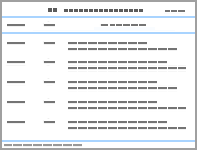
表1 老药新用与新药研发主要过程比较
Tab.1
Comparison of main processes of drug repurposing and
从研发过程的比较可以看出,从研究一个新药品种的目标出发,由于已上市药物的物质研究和安全性研究已经有了良好的基础,而且有了临床应用的基础,可以省略很多研究过程,如物质基础相关的生产工艺和标准,原料药与稳定性,以及药物的药动学过程以及安全性等药理学内容,都不会因为适应证的不同而产生巨大变化,可以省略研究过程,极大缩短药物研发的时间。因此,老药新用是新药研发领域备受重视的研发途径。
相比全新开发的药物,老药新用具有显著的优势。从对症治疗的需要来看,老药新用是治疗疾病的重要选择,在应对新型疾病时可以直接进行应用并观察其疗效。从新药研发的需求看,通过老药新用研发新药与一般的新药研发相比,研发程序更简捷,可以缩短研发过程,减少研发的时间和费用成本。
同时,在老药新用的研究中,有临床应用的经验可供参考。基于临床经验,对于药物可能产生的作用或副作用,以及不良反应,都有长期的认识,可以保证临床用药的安全性。同时,从用法用量到剂型规格,都有选择的范围,能够保证药物发挥预期的作用。
尽管老药新用对于疾病治疗具有极大的优势,但通过老药新用治疗新的疾病也存在显著的局限性,尤其是对疾病的病理机制和病变过程的认识上的局限性。由于已上市药物数据和数量有限[33],到目前为止,全球上市的化学药物也仅有几千种,可选择的范围有限。
从以上讨论可以看出,老药新用是新药研发的一条可靠的捷径,简单且高效。通过老药新用发现新药,无论在正常的药物研发过程中,还是在新发疾病出现或针对尚无药物治疗的疾病治疗药物研发中,都受到广泛的重视,甚至被认为是药物发现或新药研发的主流途径。实际上,无论何种形式的老药新用,都需要坚实的科学研究基础支撑。
老药新用的科学支撑主要表现在两个方面,第一个方面是对药物本身的认识。老药新用虽然研究的是已经在临床应用的药物,但老药新用依然需要建立在对药物充分认识的基础上。对药物在临床应用过程或实验室研究过程体现的不同药效,可以发展为药物的新适应证,这种发现对于老药新用的研究是重要的基础,围绕这种新的适应证,必须进行系统深入研究,才能够达到再定位的目的。
在老药新用研究中,对药物作用机制的全面认识。新的作用机制的认识可以解释新适应证的治疗科学依据,也能提示药物针对新适应证的治疗过程。对于药物的临床表现,通过经验的总结及分析,可以通过药物产生的副作用或不良反应,探索药物新的用途[34]。
老药新用虽然面对的是老药,但对其新用仍然是严肃的科学问题,是临床医学和药物研究的重要内容。围绕新发疾病,或尚没有治疗药物的疾病,开展老药新用的观察和研究表现为临床应用为主导的研究模式。
在面对新型疾病时,虽然对症治疗可以缓解症状,但并不一定能够达到治愈的目标。这就需要根据疾病的病因进行治疗,并根据病因选择药物。对因治疗的前提是,对病理机制的完整认识,以及有可选择的药物。
目前,有许多针对在COVID-19感染过程中的抗病毒药物研究,其中的许多已知或候选抗病毒药物,被用于临床试验或直接治疗。然而,采用抗病毒药治疗新发病毒性疾病,在早期的药物选择上忽略严重急性呼吸综合征冠状病毒2型(severe acute respiratory syndrome coronavirus 2,SARS-CoV-2)感染带来的更多的干扰因素,这也是早期抗病毒药物在治疗COVID-19没有奏效的主要原因[8]。在治疗新发细菌感染性疾病的治疗也是如此,目前普遍在选择敏感的抗生素时,同时考虑疾病的特点和影响因素。
面对新型疾病,虽然是以前没有发生的疾病,但临床医生仍可以根据经验进行治疗,而且面对新型疾病。医生可以根据自己的经验,判断使用的药物。根据经验和传统经验进行治疗,通常也可以达到更好的治疗效果;在长期应用中形成的老药新用方式和方法,可以使上述措施相对标准化,并根据已比较成熟的程序和规范,形成治疗方案、推荐应用的药物[36]。
老药新用是药物研发的一种模式,主要特点就是开发老药的新用途。一般认为老药新用是用已有的药物治疗新的疾病,是一个简单的过程。实际上,无论是从临床医学实践还是药物研发的要求出发,都需要科学的支撑。当下,社会各界希望能尽快发现可以控制、治疗COVID-19的药物。获得有效的治疗药物的有效手段之一,就是从临床已经在应用的药物中,寻找有效的药物。在2020年疫情初期,有大量的抗病毒药物进入临床研究的不同阶段,而其中相当一部分并未展示出较强的抗SARS-CoV-2感染的能力[5],在这种背景下,老药新用成为备受关注的新药发现和研发的重要途径。
深入全面理解临床应用药物的药理学背景和药物作用,对于正确使用这些药物是重要的基础。盲目采用试错的方法,发现老药新治疗作用的概率很低。同时,准确理解疾病的病理过程是科学合理用药重要条件,认识疾病的病理过程,选择合适的药物,才能够达到治疗疾病的目的。
关于基于已上市药物的新药研发,将在续文中讨论。
| [1] |
|
| [2] |
|
| [3] |
|
| [4] |
Currently, there are about 7000 identified rare diseases, together affecting 10% of the population. However, fewer than 6% of all rare diseases have an approved treatment option, highlighting their tremendous unmet needs in drug development. The process of repurposing drugs for new indications, compared with the development of novel orphan drugs, is a time-saving and cost-efficient method resulting in higher success rates, which can therefore drastically reduce the risk of drug development for rare diseases. Although drug repurposing is not novel, new strategies have been developed in recent years to do it in a systematic and rational way. Here, we review applied methodologies, recent accomplished progress, and the challenges associated in drug repurposing for rare diseases.
Copyright © 2021 Elsevier Ltd. All rights reserved.
DOI:10.1016/j.tips.2021.01.003
PMID:33563480
[本文引用:2]
|
| [5] |
|
| [6] |
|
| [7] |
|
| [8] |
|
| [9] |
Knowledge of the underpinnings of cancer initiation, progression and metastasis has increased exponentially in recent years. Advanced "omics" coupled with machine learning and artificial intelligence (deep learning) methods have helped elucidate targets and pathways critical to those processes that may be amenable to pharmacologic modulation. However, the current anti-cancer therapeutic armamentarium continues to lag behind. As the cost of developing a new drug remains prohibitively expensive, repurposing of existing approved and investigational drugs is sought after given known safety profiles and reduction in the cost barrier. Notably, successes in oncologic drug repurposing have been infrequent. Computational in-silico strategies have been developed to aid in modeling biological processes to find new disease-relevant targets and discovering novel drug-target and drug-phenotype associations. Machine and deep learning methods have especially enabled leaps in those successes. This review will discuss these methods as they pertain to cancer biology as well as immunomodulation for drug repurposing opportunities in oncologic diseases.
Copyright © 2019 Elsevier Ltd. All rights reserved.
DOI:10.1016/j.semcancer.2019.12.011
PMID:31904426
[本文引用:2]
|
| [10] |
|
| [11] |
|
| [12] |
|
| [13] |
|
| [14] |
|
| [15] |
|
| [16] |
|
| [17] |
|
| [18] |
|
| [19] |
DOI:10.3181/00379727-90-22094
PMID:13273509
[本文引用:1]
|
| [20] |
PMID:13787543
[本文引用:1]
|
| [21] |
|
| [22] |
|
| [23] |
|
| [24] |
|
| [25] |
|
| [26] |
|
| [27] |
While target-based drug discovery strategies rely on the precise knowledge of the identity and function of the drug targets, phenotypic drug discovery (PDD) approaches allow the identification of novel drugs based on knowledge of a distinct phenotype. Image-based high-content screening (HCS) is a potent PDD strategy that characterizes small-molecule effects through the quantification of features that depict cellular changes among or within cell populations, thereby generating valuable data sets for subsequent data analysis. However, these data can be complex, making image analysis from large HCS campaigns challenging. Technological advances in image acquisition, processing, and analysis as well as machine-learning (ML) approaches for the analysis of multidimensional data sets have rendered HCS as a viable technology for small-molecule drug discovery. Here, we discuss HCS concepts, current workflows as well as opportunities and challenges of image-based phenotypic screening and data analysis.
Copyright © 2020 Elsevier Ltd. All rights reserved.
DOI:S1359-6446(20)30226-9
PMID:32561299
[本文引用:1]
|
| [28] |
|
| [29] |
|
| [30] |
|
| [31] |
|
| [32] |
|
| [33] |
|
| [34] |
|
| [35] |
DOI:10.1002/jmv.25965
URL
[本文引用:1]
|
| [36] |
Neuropathic pain (NPP) is a kind of pain caused by disease or damage impacting the somatosensory system. Ion channel drugs are the main treatment for NPP; however, their irregular usage leads to unsatisfactory pain relief. To regulate the treatment of NPP with ion channel drugs in clinical practice, the Chinese Association for the Study of Pain organized first-line pain management experts from China to write an expert consensus as the reference for the use of ion channels drugs. Here, we reviewed the mechanism and characteristics of sodium and calcium channel drugs, and developed recommendations for the therapeutic principles and clinical practice for carbamazepine, oxcarbazepine, lidocaine, bulleyaconitine A, pregabalin, and gabapentin. We hope this guideline provides guidance to clinicians and patients on the use of ion channel drugs for the management of NPP.
©The Author(s) 2021. Published by Baishideng Publishing Group Inc. All rights reserved.
DOI:10.12998/wjcc.v9.i9.2100
PMID:33850929
[本文引用:1]
|
